admin
admineffectiveness of their operations and become more competitive.
“Improving productivity” has become the clarion call throughout and enhancing organisational effectiveness is currently the overriding mission of many companies, which some observers have even referred to as a “corporate obsession”.
Employee participation may be defined as any workplace process which “allows employees to exert some influence over their work and the conditions under which they work” (Strauss 1998).
It may be divided into two main approaches, direct participation and indirect or representative participation.
Direct participation involves the employee in job or task-oriented decision-making in the production process at the shop or office floor level.
Indirect or representative forms of participation include joint consultative committees, workers’ committee and works councils.
Effective communication between management and employees is required for participation, preferably involving a two-way information flow.
One of the recommendations that have been offered for improving organisational effectiveness has been to encourage extensive employee participation.
“Employee empowerment” has recently become a popular buzzword.
Many industrial psychologists both those acting as internal as well as external consultants have been actively engaged in installing employee participation systems within their client organisations.
However, it would appear that the advisability of such systems has not always been examined closely.
In fact, the decision to foster employee participation has often been based primarily on pure faith.
Advocates of employee participation, who often include management consultants, industrial psychologists as well as managers and executives believe that the vast majority of employees wish to become actively involved in their work.
They also believe that employees desire and have the ability, knowledge and expertise to assume greater responsibility in the workplace and can make some significant contribution to their organisations.
In addition, they think that employees seek to fulfil many of their psychological needs through their work and that participative management stimulates employee enthusiasm and willingness to carry out decisions in which they have been involved.
Accordingly, encouraging employee participation, they claim, satisfies employee inner needs and serves as a motivating vehicle resulting in greater productivity and effectiveness for the organisation.
High performance workplaces promote employee participation in decision-making because they understand that employees have a legitimate right to be involved in decisions that affect their working lives and that positive gains also accrue to business.
These gains include: Improved employee performance resulting from greater motivation, a positive workplace culture as an outcome from greater information sharing and improvements in productivity when employees are consulted over changes to job design and work practices.
Organisations are successful because they are good employers. They attract and retain the most skilled employees.
They involve employees in decisions impacting on the business and they actively encourage employee participation in decision-making.
To gain competitive advantage employers are encouraged to stimulate discussions around work-related issues.
They should spend time getting to know employees and make time to listen to problems, ideas and aspirations, while retaining the right to take action or not.
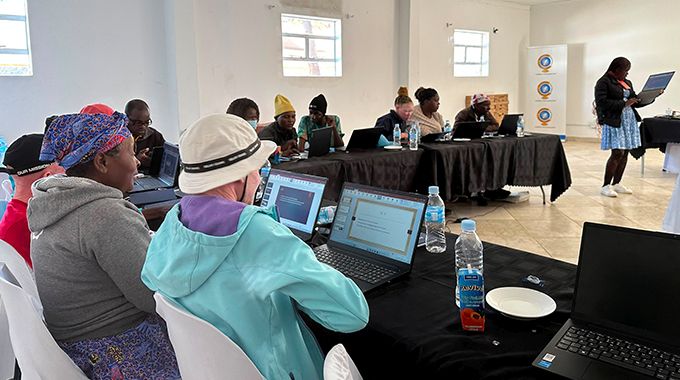
Strategies to encourage participation could include regular staff meetings in which each employee actively participates.
These need not be long, but regular meetings to keep employees in touch with each other and the work being done as well as discussions between individuals or groups of employees with immediate managers within the context of regular performance reviews.
They are also used to determine reviews of training and developmental needs, arm’s-length arrangements that enable individual employees to express their views through a third party such as their worker or union representative, a counsellor or advocate or through attitude surveys and suggestion schemes, and regular communications such as newsletters.
Unions and employee representative committees are a key channel to greater employee participation in decision-making.
They provide the opportunity to canvass ideas and to obtain feedback.
Work teams also provide a good opportunity for meaningful participation at the workplace level.
Research indicates that self-managed teams have greater motivation than individuals or loosely connected groups.
Everyone would not want to, and in fact cannot be involved in every workplace decision.
A collective voice through a more formal mechanism such as a joint consultative committee can ensure that employees’ views are taken into account.
A policy of “openness and honesty” with staff and unions is critical. Managers are also strongly warned against making promises they can’t keep. Always respond to ideas, and if they can’t be implemented, explain why.
An organisation that values and encourages employee participation in decision-making must be proactive.
As employees become more aware of and confident in their ability to impact on decisions, they will anticipate that their decisions will be acted on.
Organisations that value employee participation place as much emphasis on doing as they do on listening.
Delegate and encourage participation – encourage employees to take a level of responsibility for organising and doing their jobs without constant reference back to management.
Companies need to regularly seek employee feedback through the organisational climate survey and then act upon it.
Encourage employee suggestions and acknowledge employees for their roles in any improvements.
Ensure employees are aware of the outcomes of any strategies they have suggested to encourage participation.
Continually review and improve upon strategies to encourage participation. Remember that participation is not an end in itself neither is it a panacea to organisational success but the purpose is to improve working life and work performance. However, if well executed, results will flow your way.
l Taurai Musakaruka is Human Resources Practitioner. Feedback e-mail: [email protected]



Online Reporter
- Chronicle
- July 31, 2026
- 3 views
Zimbabwe sets pace as Beitbridge becomes Africa’s model border
Thupeyo Muleya, [email protected] The new state-of-the-art Beitbridge Border Post is changing how people and goods move between Zimbabwe, the region and the rest of the world. Backed by cutting-edge technology,…