Online Reporter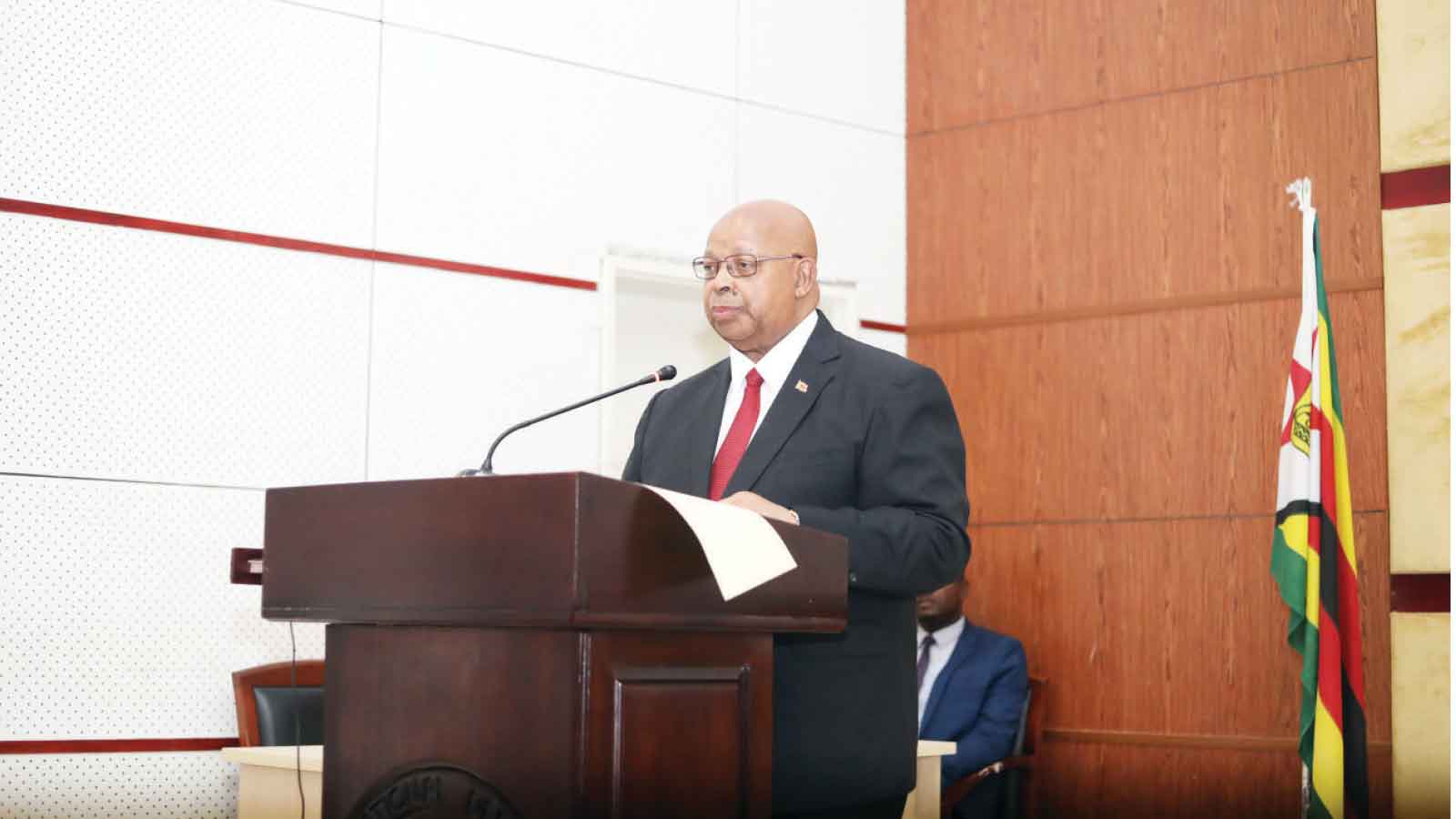
Nyore Madzianike
Senior Reporter
THE Government must urgently consider enacting legislation that specifically addresses the protection of critical national infrastructure across all economic sectors, which are increasingly exposed to both State‑sponsored and non‑State cyber threats.
The call was made by Speaker of Parliament Advocate Jacob Mudenda while presenting a paper titled “Enhancing National Security Through Effective Legislation: Zimbabwe’s Parliamentary Imperative”, before National Defence Course No. 14 of 2025 at the Zimbabwe National Defence University in Harare yesterday.
The Commandant and Vice‑Chancellor of the Zimbabwe National Defence University, Air Vice Marshal Micheal Tedzani Moyo, and other senior officers attended the presentation.
Advocate Mudenda said the country was now facing unprecedented levels of sophistication resulting from the application of artificial intelligence (AI), necessitating the enactment of such legislation. He added that Cabinet should play a proactive role in initiating the legislative process.
“In particular, Zimbabwe must urgently consider the enactment of legislation that specifically addresses the protection of critical national infrastructure, encompassing the energy, water, financial and communications sectors, which are increasingly exposed to both State‑sponsored and non‑State cyber threats of unprecedented sophistication in this era of artificial intelligence application,” said Advocate Mudenda.
He noted that while Government had made notable strides in strengthening the legal framework governing national security, more needed to be done to keep pace with rapidly evolving threats.
“In enacting this law, Parliament directly addressed a critical lacuna in Zimbabwe’s national security regulatory framework for cyberspace and data protection,” said Advocate Mudenda.
He cited international best practice, referencing Estonia’s response to a major cyberattack, which led to that country overhauling its digital security architecture.
Advocate Mudenda emphasised the need for continuous legislative review to match the fast‑changing threat landscape.
“In these circumstances, Parliament must remain vigilant to ensure that this legislation is regularly reviewed and updated as the threat landscape continues to evolve with alacrity,” he said.
The Speaker also highlighted the importance of the National Security Council Act in strengthening coordination at the highest level of Government.
“The promulgation of the National Security Council Act (H.B. 2, 2022) further consolidated Zimbabwe’s security legislative framework by establishing a coherent statutory framework for the coordination of national security policy at the apex of Government.
“Notwithstanding these advances, the rapid proliferation of social media platforms continues to pose threats to national security through the industrialised dissemination of misinformation and disinformation, the deployment of deepfake technologies, the weaponisation of artificial intelligence tools for subversive purposes, and the systematic incitement of hatred and communal discord,” he said.
Advocate Mudenda said such developments required urgent legislative attention.
“These developments present urgent and largely uncharted legislative frontiers that Zimbabwe’s current statute book has not yet adequately addressed.
“Government must, with appropriate urgency, commission a comprehensive review of Zimbabwe’s information and communications legislation, with a view to developing fit‑for‑purpose provisions that address these emerging threats while scrupulously preserving the constitutionally guaranteed freedoms of expression and the media enshrined in Sections 61 and 62 of the Constitution.
“The balance between security and liberty of expression is never self‑executing. It must be actively legislated, carefully calibrated and continuously reviewed,” he said.
The Speaker also welcomed the recent launch of the Zimbabwe Artificial Intelligence Strategy, describing it as a critical step towards strengthening the legislative framework.
“That is why the recent launch of the Zimbabwe Artificial Intelligence Strategy by His Excellency, President Mnangagwa, is absolutely compelling and should lead towards robust legislation,” he said.
Advocate Mudenda said Government should emulate the European Union’s Artificial Intelligence Act (2024), which establishes a risk‑based regulatory framework governing the deployment of AI systems, addressing public safety, critical infrastructure, democratic processes and national security.
He said Singapore had adopted a comparable approach through its Online Safety Act (2022), which provides clear legislative mechanisms for addressing harmful online content using proportionate and enforceable penalties.
“These international regulatory developments collectively signal that the global community has accepted the legislative necessity of governing emerging technologies in the interest of preserving national security. Zimbabwe cannot afford legislative inertia in the face of this rapidly evolving global regulatory environment,” said Advocate Mudenda.
He also noted that pandemics such as Covid‑19 had demonstrated the vulnerability of national security, with traditional security instruments often ill‑equipped to address such threats.
“The emergence of novel biological threats and the persistent risk of bioterrorism further underscore the gravity and urgency of this legislative domain.
“Parliament must ensure that Zimbabwe’s legislative framework governing public health emergencies, biological research and biosecurity is fully fit for purpose in the 21st‑century threat environment,” he said.
Advocate Mudenda stressed that legislation must be adequately resourced in order to be effective.
“Sound legislation, however admirably crafted, is by itself insufficient to guarantee national security. Legislation must be matched by adequate resources to enable the realisation of the national security vision and mission,” he said.