admin
admin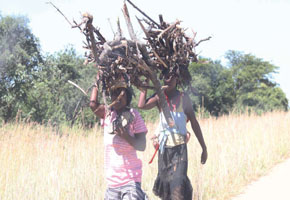
While it is conceded that poaching has been upon us for many years, it must be submitted that it rose significantly over the past 10 years or so. Thousands of new resettled farmers have made great strides towards the revitalisation of our agricultural production and the Government has continued to support them through the provision of farming inputs and other critical farming needs. However, it seems a decade of farming activities in most rural communities has also come with massive wood, animal and sand trafficking. Firewood is a huge source of income and energy especially in cities often hit by electricity load shedding.
Due to ongoing infrastructure development in urban areas, there is strong demand for sand. As a result poachers extract sand from the city’s surrounding communities and sell it to locations that are under construction. River bank brick moulding gradually burrows the earth as copious masses of sand are either dug away or washed into the rivers resulting in rapid siltation.
It is believed that while some veld fires are a result of genuine human error others that lead to the denudation of vegetation and killing of animals and humans and destruction of property are a result of sheer human negligence or an insolvent criminal disposition of some villagers.
Veld fires in most parts of the country are known to have marooned and killed schoolchildren, cattle or donkeys after getting caught up in the insatiable infernos. In light of the hazards and destruction inflicted on our lives, environmental conservation activists are lauded for collectively harnessing their efforts directed towards curbing this attack on natural resources such as trees, fish, sand animals and water.
Hunting is also rampant in rural communities where game poaching syndicates mercilessly descend on these hapless, God-given creatures. The animals are targeted for either their delicious meat or valuable parts of their bodies such as skins, horns and teeth that later sold on the black market.
Bubi district in Matabeleland North is endowed with many natural resources such as wildlife, minerals, grass, timber and wild fruits. In a bid to ensure protection and sustainable utilisation of these natural resources Bubi Rural District Council has a fully fledged department in charge of the Communal Areas Management Programme for Indigenous Resources (Campfire) headed by Mr Sydney Muyambi.
The Campfire projects for Bubi include Dromoland and Kennilworth which are into wildlife management and grazing. Ezemvelo, another project, is into timber logging.
Bubi offers protection to its natural resources that are its major revenue generator. Grazing permits are also negotiated by the Campfire department on behalf of the council and the community which has 23 wards covering more than 500 000 hectares of land inhabited by a population of at least 68 000 people.
As part of its programme for sustainable utilisation of resources, the Campfire department insists on Environmental Impact Assessments (EIA) on all miners, timber loggers and sand abstractors. It also spearheads massive education and mobilisation of omakorokoza on the hazards of careless extraction of minerals and the importance of paying levies to council.
Environmental Impact Assessment (EIA) is an environmentally friendly practice recommended by the Environmental Management Authority Act Chapter 20:27. Lauding the Bubi RDC for its successful environmental awareness and education programmes Mr Jabu Ndlovu-Mbaiwa, a small scale miner, said council education has improved their mining activities which used to threaten the environment.
“The council has taught us to register our activities. Now we no longer cut down trees and we ensure that all disused claims are rehabilitated to avoid environmental degradation,” said Mr Ndlovu-Mbaiwa.
Bubi RDC regards environmental degradation and depletion of natural resources as one of the greatest challenges.
Mr Muyambi said the council has a multifaceted strategy of discouraging wanton cutting down of trees, hunting animals, illegal mining and fishing or carrying out any activity that threatens both fauna and flora in the district.
“Natural resources poachers are a menace to our trees and animals. We conduct community education programmes on the importance of sustainable utilisation of grass, animals, fish, timber, bees and fruits,” said Mr Muyambi.
He added that the council’s collaboration with stakeholders such the district administrator, Agritex, Veterinary Services Department, Zinwa, Zimbabwe Parks and Wildlife Management Authority and police has meaningfully diminished poaching activities by keeping poachers on check.
The chairman of the sub-committee on natural resources, Councillor Ngwenya of Ward 14 which covers Esiphikeni, Majankila, Nkenyane and Ross Bank enumerated council’s achievements in curbing poaching. He however pointed out that this has not been without challenges.
“The Bubi RDC, through our Campfire department, has done very well in curbing wood and animal poachers in most wards. Ward-based resource monitors work with council to reduce poaching of natural resources,” said Clr Ngwenya.
He said financial constraints were however, stifling the noble work of ward-based resource monitors. He said council wished to completely decentralise the war against poachers to village level since poaching can be better dealt with at grassroots level.
Mr Joubert Ncube, a village head in Ward 12, blamed poaching on some villagers.
Mr Ncube, whose area covers Dromoland, Matikiti, Mambo and Nsango said farmers had lost scores of animals that get ensnared by poachers.
“Wire snares are a cause for concern. We lose animals when they get accidentally trapped into these snares,” he said.
Despite the challenges, he praised the council for the education and mobilisation programme aimed at raising community awareness on the importance of sustainable utilisation of trees, animals, fish, grass and minerals.
Local authorities are not alone in this battle to eradicate poaching and ensure a sustainable utilisation of natural resources for community development. Central government has numerous strategies to combat poaching after noting an escalating war against trees, animals and minerals.
Officiating at a Safari Operators Symposium recently, Minister of Environment and Natural Resources Management, Francis Nhema observed:
“Veld fires are overwhelming. This obviously poses a threat to the ecosystem hence the need to protect natural resources. Poaching is rampant and this is a threat to our wildlife production.”
He cited economic hardship and commercial gains as twin evils exacerbating poaching. He revealed that Government had a broad participatory programme that brings on board local communities, councils and other stakeholders in the exploitation and utilisation of natural resources for the development of local schools, roads and water infrastructure.
He cited Campfire as a living testimony of the Government’s commitment to ensure that communities which live alongside wildlife zones desist from the wanton depletion of the natural resources.



 Online Reporter