Peter Gambara
Weather experts have recently warned that we are likely to face a super El Niño-induced drought during the 2026/2027 summer season.
HOWEVER, some climate scientists caution that it is still too early to make definitive predictions, noting that greater certainty will only emerge later in the year, around late spring.
This caution is informed by past experiences in 2014 and 2017 when early forecasts pointed to El Niño conditions that ultimately failed to fully materialise.
Regardless of the uncertainty, experts agree that it is prudent to begin preparations now.
As the saying goes, being forewarned is being forearmed.
The Meteorological Services Department (MSD) is expected to release its national climate outlook in August, providing a more detailed seasonal forecast.
In this article, I discuss what farmers need to know about the potential El Niño event, how they can prepare and why the Government should accelerate investment in climate-resilient agricultural systems while there is still time.
The United States’ National Oceanic and Atmospheric Administration (NOAA) has forecast an 82 percent probability of El Niño conditions developing between May and July 2026, with a 62 percent to 96 percent chance of those conditions persisting throughout the 2026/2027 agricultural season.
Historically, El Niño has been associated with below-normal rainfall across Southern Africa, including Zimbabwe.
What causes the El Niño effect?
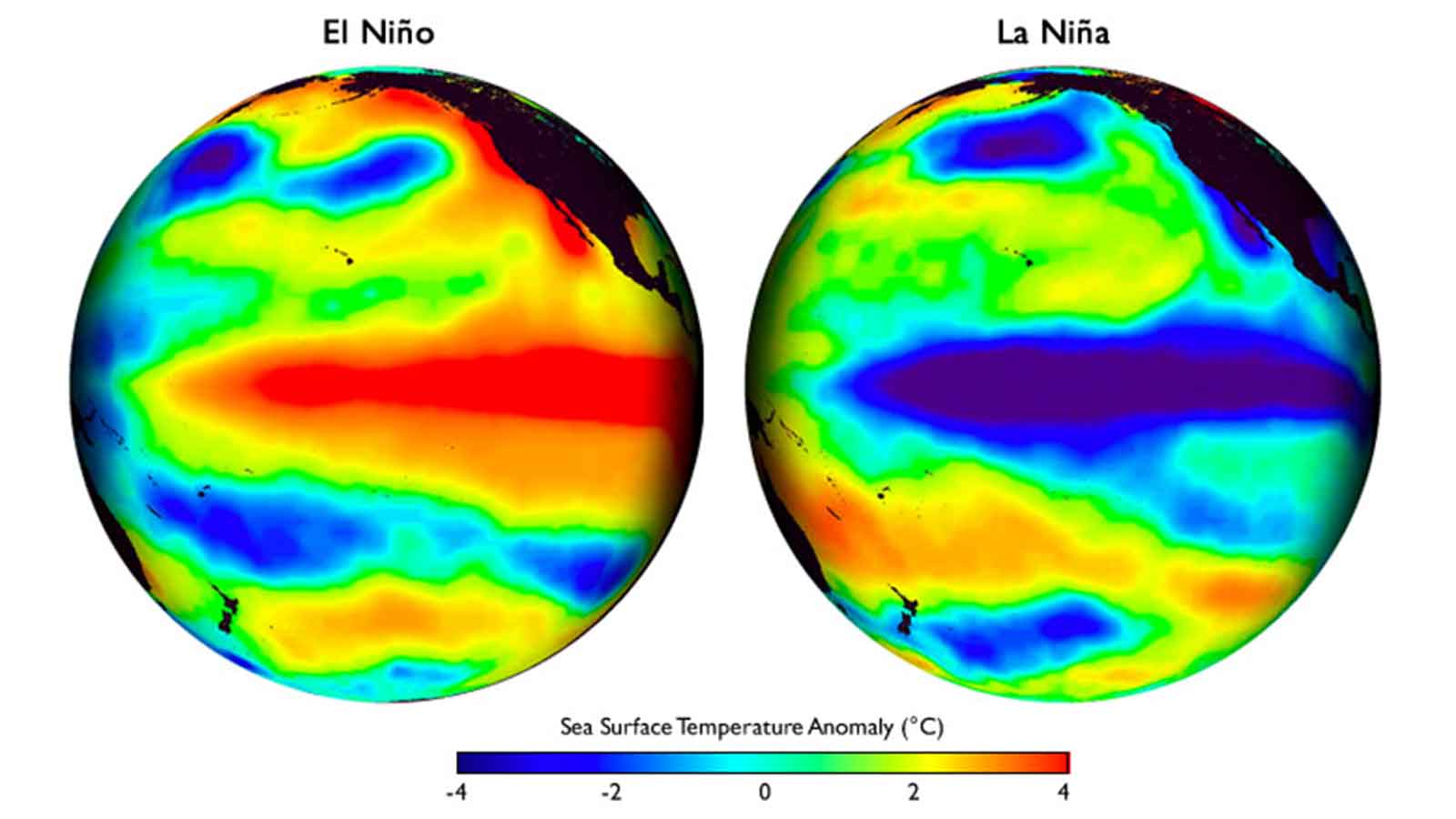
El Niño is a climatic phenomenon characterised by warmer-than-normal sea surface temperatures in the central and eastern Pacific Ocean.
It typically occurs every two to seven years.
The most recent El Niño event affected Zimbabwe during the 2023/2024 season.
The phenomenon was first observed by fishermen along the coast of Peru; they noticed unusually warm ocean waters.
They named it “El Niño”, Spanish for “the little boy” or “Christ Child”, because the warming often appeared around Christmas.
An El Niño event generally lasts between six and 12 months.
To date, there is no definitive scientific consensus linking El Niño directly to global warming. However, recent studies suggest that rising global temperatures may be intensifying sea surface temperature extremes associated with El Niño events.
Some research indicates that these extremes have increased by about 10 percent in recent decades, potentially reflecting the influence of climate change.
Why is this being called
a super El Niño?
The projected 2026/2027 event is being described as a “super El Niño” because ocean temperatures are expected to rise by more than 2°C above average levels.
A standard El Niño is declared when sea surface temperatures exceed the long-term average by at least 0.5°C.
In contrast, a super El Niño occurs when warming reaches or exceeds 2°C, making it a much stronger and potentially more disruptive event. Super El Niño events are relatively rare. Over the past 76 years, only three have been recorded — in 1982/1983, 1997/1998 and 2015/2016.
Most Zimbabweans still vividly remember the devastating effects of the 2023/2024 El Niño-induced drought.
If current projections prove accurate, the upcoming event could be even more severe, underscoring the need for early preparedness.
What are the likely
effects of El Niño?
In our case, El Niño is typically associated with a delayed start to the rainy season, prolonged mid-season dry spells, reduced total rainfall and, in some cases, an early end to the season.
Although the rainy season usually begins around November, El Niño conditions often delay meaningful rainfall until December.
This shortens the growing season and can reduce both the frequency and intensity of rainfall events. This presents a significant challenge for farmers, particularly maize producers.
Maize remains Zimbabwe’s staple crop, and even the shortest-maturing varieties require at least 110 days to reach physiological maturity. For example, a farmer who plants in mid-December would only expect the crop to mature by late March or early April.
Yet, under severe El Niño conditions, rains may stop as early as January or February. As a result, crops may fail to reach maturity, leading to poor yields or complete crop failure.
These risks come at a time when farmers are already facing rising input costs.
Fuel, fertiliser and transport expenses have increased due to geopolitical tensions and conflict in the Middle East.
Much of the world’s fuel supply passes through the region, and disruptions to shipping routes have contributed to higher fuel prices. In addition, several key fertiliser inputs originate from the Middle East, pushing up fertiliser costs. Higher fuel prices have also translated into increased transport costs, further squeezing farmers’ margins.
How can we mitigate
the effects of El Nino?
Mitigation simply means reducing the impact of a phenomenon, either in the present or in the future.
The first and perhaps most important mitigation measure is information dissemination.
Farmers need access to accurate, people-centred and user-friendly information about the possibility of a drought season caused by El Niño.
As far as possible, such information should be translated into local languages to ensure it reaches the widest possible audience.
Radio and television stations, as well as publications, especially those in local languages, should play a leading role in disseminating climate information to farming communities.
Government agricultural extension officers must also be adequately equipped with up-to-date forecasts and advisory information so that they can effectively guide farmers.
The second key mitigation measure is preparedness.
Once farmers are made aware of the likelihood of a severe drought season, they should take practical steps to reduce their exposure to risk.
Farmers should consider growing more drought-tolerant crops instead of relying heavily on maize and soyabean.
Traditional grains such as sorghum and millet generally withstand dry conditions better than maize and can provide a more reliable harvest during drought years.
For those who choose to grow maize, the focus should be on very short-season varieties such as the Seed Co 300, 400 and 500 series that require less moisture and mature more quickly.
Farmers should avoid long-season varieties unless they have access to supplementary irrigation. Where possible, maize should be replaced with drought-tolerant crops such as sorghum, pearl millet, finger millet, cowpeas, groundnuts and short-season sugar bean varieties.
Tobacco farmers are encouraged to establish their crops early using available irrigation water where possible.
Early planting allows the crop to develop a stronger root system during the hotter months, improving its ability to withstand periods of moisture stress later in the season. The most effective mitigation strategy remains irrigation.
Farmers with access to irrigation can supplement rainfall during dry spells, reducing the risk of crop failure.
Although many smallholder farmers have limited water resources, they should be encouraged to develop small irrigation schemes around gardens and available water sources.
A small irrigated garden can make a significant difference to household food security.
Even a modest plot can produce enough food to sustain a family until the next harvest.
The Minister of Agriculture, Mechanisation and Water Resources, Dr Anxious Masuka, recently indicated that the Government had developed strategies to counter the anticipated El Niño threat.
These include accelerating dam construction to build on Zimbabwe’s existing network of more than 10 600 dams and expanding irrigation infrastructure, particularly among smallholder farmers.
The long-term target is to increase irrigable land to 496 000 hectares by 2030.
The adoption of climate-smart agricultural practices such as Pfumvudza/Intwasa is also expected to strengthen resilience among smallholder farmers.
The Pfumvudza/Intwasa concept, adapted from Foundations for Farming (FFF), aims to achieve household food security by enabling families to produce sufficient maize on a relatively small piece of land.
The standard Pfumvudza/Intwasa plot measures 39 metres by 16 metres.
At recommended spacing, the plot contains approximately 52 planting rows.
The concept is based on the principle that each row should produce enough maize to fill a bucket (18-20kg), resulting in approximately 52 buckets from a single plot — enough to meet the annual maize requirements of an average family.
Beyond digging planting basins, households are encouraged to apply organic mulch, commonly known as mutsakwani in Shona, to improve moisture retention and enhance soil health.
By concentrating inputs and management on a small area, families can significantly increase their chances of producing enough grain to last throughout the year.
Large-scale commercial farmers generally have better access to dams, rivers and boreholes and, therefore, have greater potential to develop irrigation systems.
However, many still cite the high cost of irrigation infrastructure as a major constraint.
The installation of a modern irrigation system such as a centre pivot can cost approximately US$2 500 per hectare.
A 20-hectare scheme may, therefore, require an investment of around US$50 000, a figure beyond the reach of many farmers.
This is an area where the Government and financial institutions can play a critical role by providing affordable financing facilities to support irrigation development.
Modern irrigation technologies such as centre pivots offer several advantages.
They distribute water more evenly, improve crop performance, reduce labour requirements and save time.
Unlike traditional lateral systems, which require frequent manual repositioning, centre pivots can be programmed to move automatically according to irrigation schedules.
Farmers with limited water resources should also consider drip irrigation systems, which are highly efficient and use significantly less water than conventional irrigation methods. Increasing numbers of smallholder farmers are already adopting drip irrigation technology. Another important strategy is to encourage farmers to grow winter or spring crops under irrigation.
Winter maize, sugar beans and other suitable crops can help build household grain reserves ahead of a potentially poor summer season. Households should also be encouraged to preserve more grain from the current harvest in anticipation of possible shortages.
Farmers are advised to secure seed and fertiliser supplies early.
International food security monitoring organisations have already warned of the possibility of fertiliser shortages and higher prices during the coming season.
Those with the financial capacity should also consider taking out agricultural insurance policies to protect themselves against drought-related losses.
Early land preparation is another critical adaptation measure.
Winter ploughing helps conserve soil moisture and ensures fields are ready for planting as soon as effective rains arrive.
The traditional practice of waiting for the first rains before preparing land is increasingly risky in an era of climate uncertainty.
A farmer can only take advantage of early rainfall if the land has already been prepared.
With a potential super El Niño, meaningful rainfall may not come until late December, making advance preparation even more important.
Livestock farmers must also prepare for the possibility of reduced grazing.
Drought conditions often result in poor pasture growth, leaving livestock vulnerable to feed shortages.
Farmers should conserve crop residues, particularly maize stalks, which can provide valuable supplementary feed later in the season. In some cases, strategic destocking may be necessary to reduce pressure on available feed resources and preserve the condition of the remaining herd.
Regular dipping and disease control measures should also be maintained, as animals weakened by drought are more susceptible to disease outbreaks.
Ultimately, farmers who enter a drought season without adequate preparation are likely to suffer the greatest losses.
Those who plan ahead, adopt climate-smart practices and invest in appropriate mitigation measures will be far better positioned to withstand the challenges posed by a potential super El Niño-induced drought.
Peter Gambara is an agricultural economist and consultant based in Harare. He wrote this article for The Sunday Mail.