Online Reporter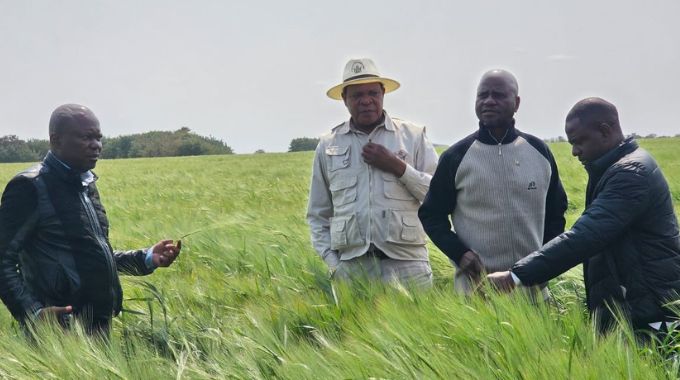
Patrick Chitumba, [email protected]
ESWATINI is looking to Zimbabwe for lessons in irrigation, mechanisation and modern grain storage as the two countries continue to deepen agricultural cooperation aimed at strengthening food security and building climate-resilient farming systems.
An Eswatini ministerial delegation led by Agriculture Minister Mandla Tshawuka toured the Midlands Province, visiting the First Family’s Pricabe Farm and the Grain Marketing Board’s AI-enabled silos in Kwekwe.
The benchmarking mission offered the delegation a close look at Zimbabwe’s integrated approach to agriculture, combining crop and livestock production, irrigation, mechanisation, agro-processing and modern grain storage.
At Pricabe Farm, the delegation toured a diversified farming operation producing winter wheat, barley, maize, soya beans, potatoes and horticultural crops, alongside cattle, goats, fish and chickens.
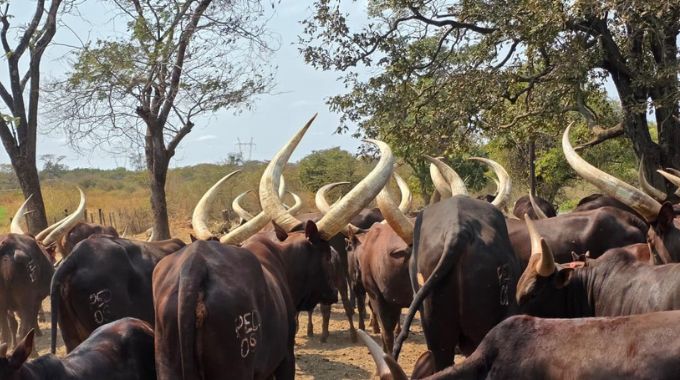
The farm also keeps Ankole cattle, a breed originating from the Ankole group of Sanga cattle of East and Central Africa and renowned for its distinctive large horns.
Pricabe Farm’s highly mechanised operations include combine harvesters, centre pivots and crop sprayers, showcasing the role of technology in improving productivity and reducing dependence on manual farming.
Farm agronomist Ms Vicky Zvenyika said the farm had adopted an integrated approach that extends beyond primary production.
“This is a farm owned by His Excellency and Amai Mnangagwa, with 500 hectares of wheat and barley. We also have potatoes on 200 hectares, as well as cattle of all breeds. What we do here is agro-processing and feeding the whole value chain,” she said.
Minister Tshawuka said Eswatini was keen to learn from Zimbabwe while identifying areas where the two countries could exchange expertise.
“We would like to thank His Excellency President Mnangagwa for this, as our two countries’ leaders have also shared experiences and visits. We are here to learn. We are more into sugar production, and I believe the two nations have more to share,” he said.
Minister Tshawuka said the delegation was particularly impressed by Zimbabwe’s use of water resources, irrigation and mechanisation, as well as its grain storage systems.
The delegation’s second stop was the GMB Kwekwe facility, where officials demonstrated smart grain-storage technologies designed to reduce post-harvest losses, improve traceability and strengthen national food reserves.
The facility has seven AI-enabled silos with a combined storage capacity of 56 000 tonnes.
The visit follows recent engagements between Zimbabwe and Eswatini, including a visit to Zimbabwe by Eswatini Royal Prince Lindani Dlamini, during which agriculture was identified as a priority area for strengthening bilateral cooperation.
Agriculture, Mechanisation and Water Resources Development Minister, Dr Anxious Masuka, said Zimbabwe was deliberately investing in modern agricultural infrastructure to raise productivity and strengthen the value chain. “As Government, we are deliberately investing in mechanisation, irrigation and modern agricultural infrastructure to increase productivity and ensure that our farmers produce competitively,” he said.
Dr Masuka said the thrust was not limited to production, but extended across the agricultural value chain from the farm to storage and marketing.
Minister of State for Midlands Provincial Affairs and Devolution Owen Ncube said the exchange demonstrated growing cooperation between the two countries. “We are sharing experiences in agriculture, particularly on mechanisation, irrigation, production and grain storage, as we work together to enhance food security and build resilient agricultural economies,” he said.
The benchmarking mission comes as both Zimbabwe and Eswatini seek to modernise agriculture, improve productivity and strengthen food security through greater investment in irrigation, technology, mechanisation and value addition.