admin
admin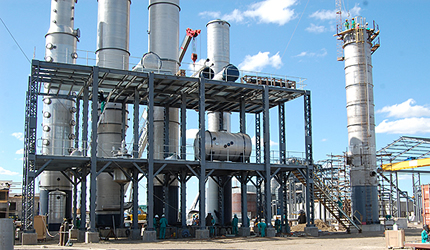
commitment to mandatory blending.
Government is pushing for five percent mandatory blending of petrol.
However, fuel companies are still to regularise processes to blend petrol with ethanol.
Petrol blending is expected to save Zimbabwe $200 000 worth of fuel imports a
day.
Zimbabwe could save at least $72 million annually.
The workers could lose personal belongings that could be attached by financial institutions for failing to settle personal loans secured before the February salary review.
The workers argued that the half salaries were not enough to sustain their families.
Most of them have resorted to river sand poaching from Save River.
A 15-truck load is sold for a mere $5.
Mr Andrew Dzaramba, one of the affected workers at Green Fuel, said the half salary is not enough to cover the loans.
“For most of us the half salaries are not even enough to look after our families, let alone service our bank loans.”
Mr Dzaramba said the affected could not live decent lives and have been forced to poach and sell river sand to supplement their meagre salaries.
Arda chairman Mr Basil Nyabadza has appealed to Government to expedite its resolution on mandatory blending.
“Our employees are facing a bleak Christmas as a result of failure to implement this resolution.
“Zimbabwe cannot afford to lose economic projects such as the Chisumbanje Ethanol Plant,” he said.
Mr Nyabadza said Arda and its partners — Macdom and Rating — have since lost confidence in the leadership of Deputy Prime Minister Arthur Mutambara and the
Cabinet committee set up to look at issues affect the ethanol project.
Mr Clayton Grottis, an employee, said continued closure of the ethanol plant was not good for the employees and the economy.
“We toiled day and night putting this structure up. We commissioned it and it worked well but now it is closed. Its closure has seriously affected not only us, but the country’s economy,” said Mr Grottis.
When The Herald visited the area, several pregnant women and children could be seen loading trucks with river sand from Save River for sale.
Mr Zebediah Chauke, who works in the milling section at Green Fuel, said they could not extend their payment plans.
“We have made agreements with banks and they have refused to extend the payment period for our loans.”
Mrs Susan Myambo of Konjana Village in Chisumbanje said villagers have resorted to selling river sand to make ends meet.
“As you can see this place is now a hive of activity as women and children carry bucket loads of sand for sell. We sell a 15-truck load of sand for US$5 and it is very painful.
“We do not have an option because our half salaries can’t sustain our families,” she said.
Government in September announced that it would introduce mandatory blending starting with E5 in two months.
Deputy Prime Minister Arthur Mutambara leads a Cabinet committee working on the resuscitation of the Chisumbanje ethanol plant.
He said he would present a progress report on the implementation of the Cabinet resolution this week.
“We are implementing the Cabinet resolution and we cannot do that through the Press.
“We are going to give a progress report on that this week,” he said.
The US$600 million investment by Green Fuel has been viewed by the community as a major development to Chisumbanje through the creation of jobs and small-scale irrigation.
Green Fuel, which is a joint venture between Macdom and Rating, and Arda, has since produced 10 millon litres of ethanol that have filled the company’s capacity.
Ethanol from Green Fuel has had a low uptake due to lack of a supporting legislation that allows compels petrol that comes in the country to be blended by ethanol.



 Online Reporter