

 admin
admina sovereign debt crisis, while Italy was effectively placed under IMF supervision.
Leaders of the world’s major economies, meeting on the French Riviera, told Europe to sort out its own problems and deferred until next year any move to provide more crisis-fighting resources to the International Monetary Fund.
“There are hardly any countries here which said they were ready to go along with the EFSF (euro zone rescue fund),” German Chancellor Angela Merkel told a news conference.
Potential sovereign investors such as China and Brazil wanted to see more detail before they made any firm commitment to put money into the bailout fund. Global stocks and the euro fell as doubts resurfaced about Europe’s financial rescue package.
US President Barack Obama joked he had learned a lot in two days about the complexity of the EU’s “laborious” decision-making process but said he was confident Europe had the capacity and the right plan to meet the challenge. The key was now rapid implementation.
“They’re going to have a strong partner in us, but European leaders understand that what is ultimately important is to have a strong signal from Europe that they are standing behind the euro,” he told a news conference.
But Australian Prime Minister Julia Gillard summed up the mood of many summit participants when she said: “Europe needs to get its own house in order.”
The two-day summit began under the shock of Greece’s since withdrawn plan to hold a referendum that could have catapulted it out of the 17-nation currency zone, and ended with Italy being pressed to restore its credibility on financial markets.
Prime Minister Silvio Berlusconi, his government hanging by a thread, said Italy would welcome quarterly IMF monitoring of long delayed pension and labour market reforms and privatisations he has promised to implement now.
French President Nicolas Sarkozy, who chaired a summit hijacked by the euro crisis, said Berlusconi had volunteered to accept the extra scrutiny because he was “aware of market doubts over the implementation of the plan”.
Given the size of its economy, Italy poses a far graver risk to the 17-nation currency zone than Greece, which almost brought the euro to its knees by mismanaging its public finances.
With its borrowing costs rising and debt levels stuck at 120 percent of GDP, Rome has the third largest economy in the euro area with the biggest government bond market, and is too big to fail.
Yet paralysis in Berlusconi’s faction-ridden government has sapped investor confidence.
The Italian leader said the IMF had offered to lend Italy money but he had refused. His concession on monitoring came after a European ultimatum forced Greece to step back from its referendum and agree instead to seek national consensus to drive through austerity measures.
No figures were agreed on the IMF but the boost to resources, mostly from large emerging countries such as China, could be in the range of US$300-US$350 billion, G20 officials said.
Sarkozy said G20 finance ministers were instructed to take forward several options for scaling up the Fund’s resources when they meet next February.
One idea discussed in Cannes would entail pooling euro zone countries’ rights to borrow from the IMF to build a fighting fund to support vulnerable sovereigns such as Italy and Spain.
This could make available another US$280-US$300 billion, a G20 source said. But no decision was taken. The Greek drama wiped out Sarkozy’s hopes of a breakthrough on big early goals such as rethinking the global monetary system. But the summit did call for a more rapid move to market determined exchange rates, explicitly mentioning China for the first time in that context.
“The crisis in Europe is causing a global systemic crisis including Asia. Rather than creating a new global framework, everyone is expecting the IMF to become more proactive,” Japanese Finance Minister Jun Azumi said.
“The focus of debate is how to set up a firewall but we consider that the IMF should become one big wall.” – Reuters.


Online Reporter
- Chronicle , Herald , Manicapost , SundayMail , SundayNews
- September 19, 2026
- 45 views
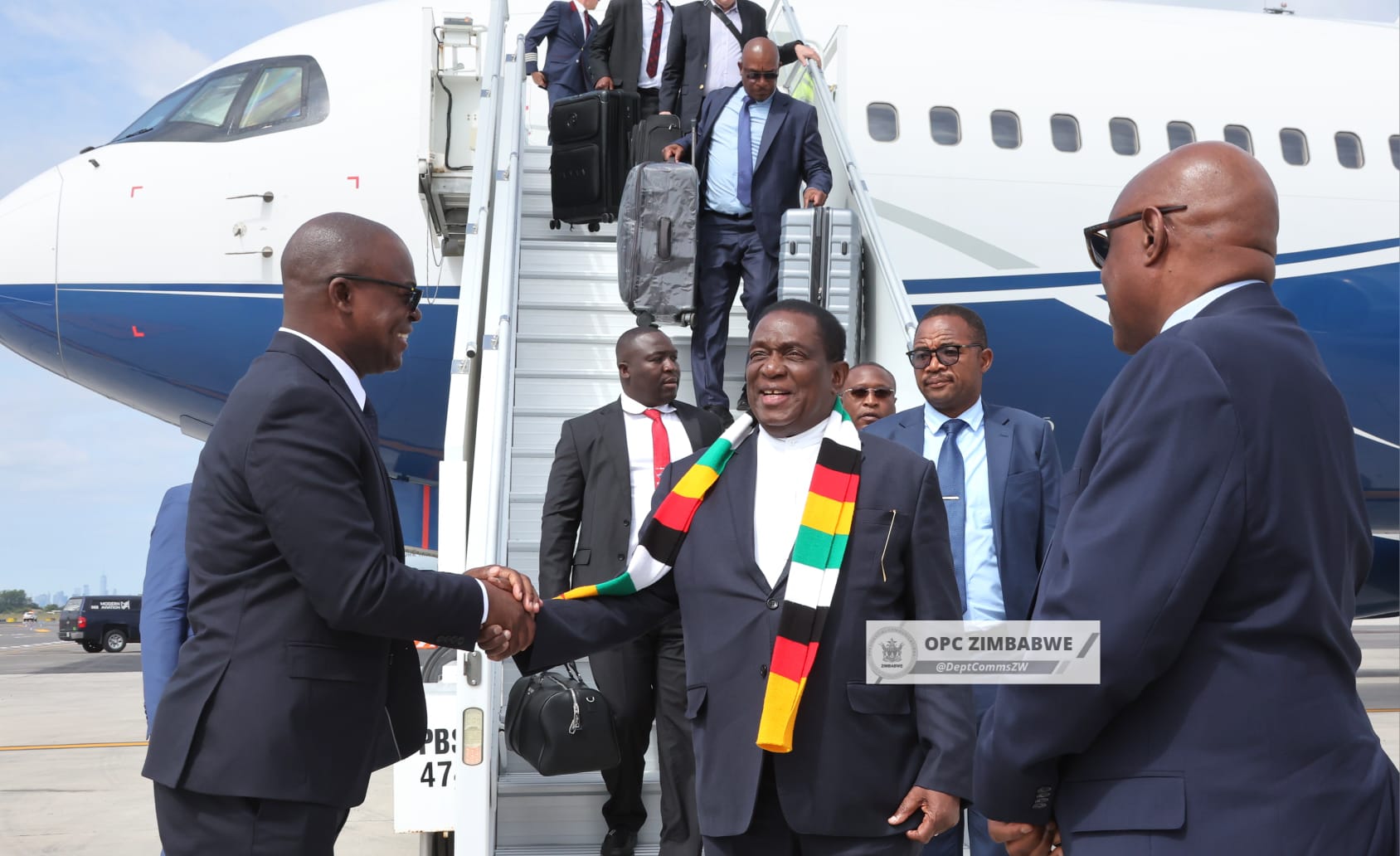
NEW: President Mnangagwa arrives in New York, to attend Zimbabwe Business Forum tomorrow
Wallace Ruzvidzo in NEW YORK, USA PRESIDENT MNANGAGWA has arrived in New York to join fellow Heads of State and Government at the 81st Session of the United Nations General…
