


 Sundaymail Editor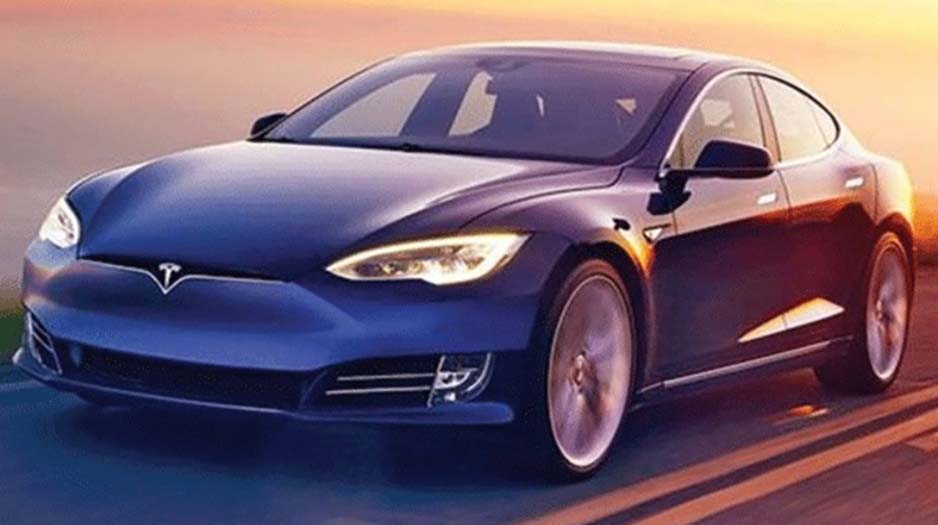
Surging prices for lithium are intensifying a race between carmakers to lock up supplies and raising concerns that a shortage of the battery metal could slow down the adoption of electric vehicles (EVs).
Lithium carbonate prices in China, the benchmark in the fast-growing market, stand at about US$71 000 a tonne, according to price-assessment firm Benchmark Mineral Intelligence. That is almost four times as high as a year ago and just below the record set this March in yuan terms.
Lithium is an outlier in commodity markets that have broadly retreated in recent months, reflecting gloom over an economic outlook dimmed by the Federal Reserve’s interest rate increases and stuttering growth in China and Europe.
Brent crude oil and copper — commodities used throughout industry and transportation — have fallen about 15 percent and 7 percent, respectively, last quarter. But lithium keeps rising, driven by a pick-up in electric vehicles sales in China, the world’s biggest market for EVs.
Car purchases jumped after Shanghai eased Covid-19 lockdowns in June, juicing demand for lithium-ion batteries.
The China Passenger Car Association forecasts six million new EVs will be sold in the country this year, double the 2021 level.
“Lithium is really following the Chinese EV market and that’s just taking off,” said Edward Meir, a metals consultant at brokerage ED&F Capital Markets.
“This is a preview of what could await us in the US.”
Draining supplies further, power outages caused by a heat wave in central China curbed output of refined lithium carbonate and hydroxide, which go into battery cathodes.
Suppliers in Sichuan province — which has a third of China’s lithium processing capacity — closed factories for several days and ran down inventories to meet their sales commitments, said Rystad Energy analyst Susan Zou.
Demand for lithium is expected to leap in the coming years as carmakers phase out internal-combustion engines and roll out electric vehicles. In the US and elsewhere, traders and analysts expect demand for lithium to leap in the coming years as the car industry phases out internal-combustion engines and rolls out electric vehicles. Companies including General Motors Co, Ford Motor Co and Volkswagen AG are racing to catch up with front-runner Tesla Inc, investing billions of dollars to bring EV factories online. All have struck deals with lithium producers to lock down scarce supplies.
More than 80 percent of lithium-ion batteries are used for EVs, said Daisy Jennings-Gray, senior analyst at Benchmark Mineral Intelligence.
That will rise to 90 percent in 2030, Benchmark forecasts, from 40 percent in 2015.
High prices have encouraged companies to embark on lithium projects in Latin America and Australia, the two biggest-producing regions.
But analysts say they will take years to hit full speed and ease the shortage, in part because left-leaning South American governments are angling for greater control over their countries’ natural resources.
Regulations such as California’s tax on lithium extraction are likely to delay mines in the US and Europe, say analysts at Citigroup.
Demand will outstrip production by 4 percent this year, they forecast.
Concerns about the effect of lithium mining on water supplies and other environmental worries also have held back efforts to crack open new deposits.
High lithium prices are a boon for the small group of companies that dominate global supply and have reported surging profits. – The Wall Street Journal



 Bongani Ndlovu
 Online Reporter