Chronicle Editor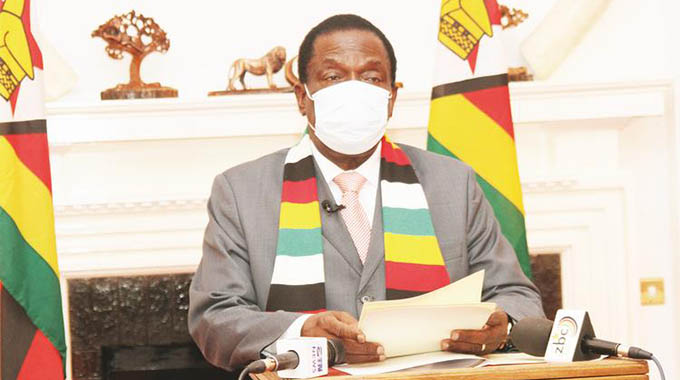
Mashudu Netsianda in Bulawayo and Fungi Kwaramba in Harare
THE Second Republic has the political will and boldness to confront the past so as to ensure national healing and closure, President Mnangagwa said yesterday.
In his speech to mark the signing of the historic Unity Accord by the revolutionary parties, Zanu (PF) and PF-Zapu on December 22, 1987—the President said the Accord brought about peace which must forever remain a key feature of national development.
“Peace-building, conflict-resolution and management must remain a binding feature of our national development agenda,” he said.
“Where there are differences, we must aim to settle and resolve them through dialogue and engagement. Further guided by our national Constitution, heritage and traditional value systems; toxic politics and divisive tendencies have no room in our society. By and large, we are a peaceful people and nation. My administration has the political will and boldness to confront the past and bring about healing and closure.
“I am encouraged by the success we are scoring towards building greater national cohesion and singleness of purpose informed by lessons from the disturbances which characterised the early years of independence.
To date, a concrete course of action has been drawn out following inclusive interventions and meetings held with traditional leadership and stakeholders of Matabeleland Provinces and parts of Midlands Province,” he said.
The President described unity as the bedrock of national stability which must be entrenched through the full participation of all Zimbabweans through policies such as devolution.
“Decades have passed since that historic event of our Unity Accord. However, its conceptualisation must now go beyond narrow interpretation. Therefore, today as we remember and celebrate Unity Day, let us re-commit ourselves to the important virtues that bind us as a people and equally incorporate the importance of our unity within the transformative national economic agenda”.
The President said the common goal for every Zimbabwean is to continue strengthening the unitary State that is Zimbabwe and which is home to multiple cultures, “all co-existing in harmony under one flag and one national anthem. Individually and collectively, we bear the responsibility to bequeath present and future generations, an economically developed, modern and prosperous country”.
Zimbabwe is one of the most peaceful nations in Africa and a destination of choice for tourists thanks to the Unity Accord, which remains key to driving the country’s development agenda towards Vision 2030, to become a middle class economy.
“As we focus on the future and inspired by the new national trajectory of economic development; I challenge us all to draw from the fundamental principles of the Accord to unify and collate our national capabilities, competencies and skills for the attainment of Vision 2030.
“On its part, my administration remains decisive in ensuring that all Zimbabweans have a sense of belonging and that they flourish and prosper leveraging on their potential and abundant natural resource endowments. This is indeed what our Founding Fathers envisaged when they committed to entrench unity as a critical pillar of our great nation”.
And towards equalisation and development that leaves no one behind, under the Second Republic budgeting, administration and the execution of development projects is being done in a way to give a voice to communities.
“We have shifted our development paradigm to be more people centred. In this regard, my Government continues to diligently implement the Devolution Policy. This transformative policy is informed by our desire and commitment to bring about balanced growth, modernisation, industrialisation and overall development which leave no one behind and no area of our country behind.
“The policy further underpins and reflects our pursuit to preserve unity and peace through the democratic participation of all nations in national development,” he said.
Demonstrating the Government’s commitment towards the Devolution Policy, $19,5 billion was allocated for implementation of devolution projects across the country so as to ensure that the “development course and destiny of our communities is in our hands”.
“The important role of national infrastructure in connecting and uniting communities cannot be overemphasised. To this end, Government has embarked on extensive modernisation and expansion of our national infrastructure for sustainable economic growth.
“The completed and ongoing road, energy, mining, agriculture and irrigation development projects, among others, are impacting communities, and engender inclusive national development and progress”.
The President said Zimbabwe should reap from the successes gained under the Transitional Stabilisation Programme as the country prepares to implement the National Development Strategy 1 from next year to 2025.
In the spirit of unity, not only within but also with other nations, the President saluted Botswana for bringing back Zimbabweans who had sought sanctuary there as well as Kenya for according to the Shona speaking community citizenship in that country as well as recognising the language as official.
“As we move into the future, we must broaden the significance of Unity Day by recognising that unity and peace must be firmly rooted in our day to day interactions, daily chores and activities. In the spirit of this Unity Day, I further urge families, communities, organisations, churches and other institutions to embrace national symbols such as our diverse languages, music, art and dance as well as our national fabric and dress to reinforce our oneness, national pride and identity.
“Such an attitude will rally us to unleash our full potential towards an economically prosperous and empowered society and the realisation of the Zimbabwe we want”.
President Mnangagwa has been leading from the front in planting the seeds for peace, unity and reconciliation and his administration has embraced all progressive political parties under the Political Actors Dialogue that was established after the 2018 elections to entrench national cohesion and progress.
Just last week, the MDC dominated Victoria Falls council honoured President Mnangagwa in a major highlight of what can be achieved when political parties act in the national interests.
Zanu-PF Politburo member Cde Angeline Masuku yesterday narrated how she, together with her colleagues in the national integration committee traversed the country preaching the gospel of peace and unity to Zimbabweans soon after the signing of the Unity Accord.
Cde Masuku was part of a 10-member committee which was tasked after the signing of the Unity Accord to preach the gospel of unity. The committee consisted of five Zanu (PF) members and five from PF-Zapu.
She is the only surviving member from the PF-Zapu side who participated in the unity talks.
From the PF-Zapu side, the committee also had Cdes Welshman Mabhena, Cyril Ndebele, Kotsho Lloyd Dube and George Marange. From the Zanu (PF) side, the team comprised Cdes Edison Zvobgo, Didymus Mutasa, Nelson Mawema, Herbert Ushewokunze and Tsitsi Mutambanengwe.
In an interview, Cde Masuku said the journey towards the signing of the Unity Accord was not easy given the animosity that existed between the two former liberation movements soon after independence.
“Our founding leaders, that is the late former President Mugabe and Dr Joshua Mqabuko Nkomo sat down together with church leaders and other elderly people and resolved to bring to an end the senseless killings. We came together as PF-Zapu and Zanu (PF) and there were talks after talks until December 1987 when the Unity Accord was signed,” she said.
“It was not easy because when you think of people who have been fighting each other coming together and shaking hands. However, because we are Zimbabweans, we decided to forgive each other.”
Cde Masuku said their task as the national integration committee was to make sure that people didn’t fight or incite violence in the communities.
She said their lives were at risk but they soldiered on as they wanted to see a peaceful Zimbabwe.
Cde Masuku said December 22 is an important day to all Zimbabweans across all generations.
“This day reminds us of how as a nation we came together to bring peace that is prevailing and which we are enjoying today in our country. As Zimbabweans we should join hands and work hard towards the development of the country,” she said.
“We are truly Zimbabweans because there was no mediator. We came together as Zimbabweans and said let bygones be bygones. What we are now fighting against is poverty, diseases and hunger. It is important for us to remain united as was envisaged when the Unity Accord was signed December 22.”
She said Zimbabweans should remember that the unity being experienced today was fought for.
“This is an important day that should be valued by every Zimbabwean. Where there’s no peace there’s is no development. It’s therefore important to promote peace and maintain it at all times,” said Cde Masuku.


 Online Reporter