Chronicle Editor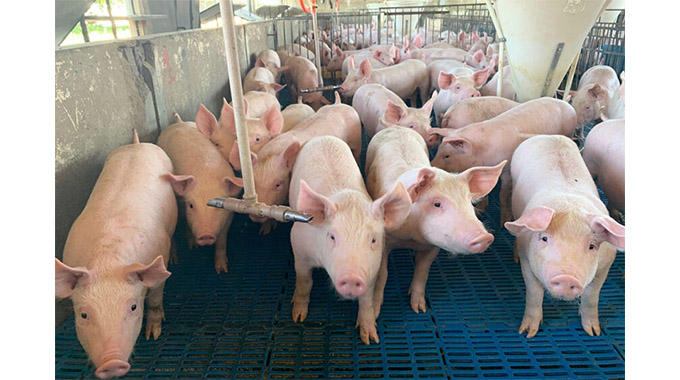
THIS week we continue to look at pig production but more importantly at the housing aspect of the enterprise.
Housing plays a very important part in pig production as it can contribute to mortalities due to diseases and heat stress. Most smallholder pig producers tend to have makeshift housing for penning the pigs mostly at night and then leaving them to free range during the day. However, free ranging pigs not only tend to be a nuisance to the neighbours as they forage on their crops and vegetables in gardens, but they also pick tape worms from human excreta especially in communities with a prevalent open defecation.
The tape worm then results in a disease called pork measles which leads to condemnation of carcasses at slaughter and marketing. Therefore, the need for an appropriate housing for a pig production enterprise cannot be overemphasised.
The first issue is the selection of the site itself where one intends to construct the pigsties. The site should be elevated enough to prevent water flowing into the pens especially during the rainy season. The site should also be protected from too much sunlight, therefore it should have some form of shade and trees are the primary source of this shade.
There should be trees to provide shade over the pens. It should also be a well aerated place with ample fresh air available for the pigs. Some farmers tend to construct poor ventilated pens which are not good for the pigs.
The pigsties can get stuffy with heavily polluted air. However, the pig housing should be protected from drafts of air as this can affect the pigs especially the piglets and mortalities may even occur. The pig housing should be away from homesteads, at least 15m away on the downwind side.

Otherwise, the homestead can easily become inhabitable because of huge stench from the pig houses. A pigsty can be constructed using locally available material, which is what is obtaining in most rural communities that are into pig production. Their pigsties are mostly made out of hardwood logs found locally and roof with old corrugated zinc sheets, grass thatching or in cases where they are not roofed, the pens are constructed under a big tree that will provide the required shade.
Thatching should however, be changed frequently so that it does not become a breeding ground for pests which can be a nuisance to your pigs or even cause diseases. In simple terms a pigsty should be comfortable for the pigs, with good ventilation and ample shade, no overheating, no smells, no drafts and no dampness.
Housing with a rough concrete floor is most appropriate as these are easier to clean, they are not slippery and cannot be easily burrowed by the pigs. Floors without concrete are not easy to clean and pigs will burrow tunnels in all direction thereby weakening even the walls, if there are brick and mortar ones or felling the poles used to make the enclosure.
The pig housing need to be divided into compartments that will serve different functions therefore housing different types and ages of pigs at any given time. You will need a pen for the boar, which is your herd sire and this has to be somewhere in between pens for the sows as the sound of the boar is known to stimulate sows to go on heat.
There should also be a farrowing pen, where the pregnant sow will give birth and nurse the piglets without disturbances from other members of the family. The decision as to the size of pens and the number of compartments will be influenced by the size of the enterprise and the budget available to the farmer. The pigsties should also be made of durable materials because pigs tend to easily vandalise the infrastructure and you may incur endless repair costs if you don’t use durable material as well as proper workmanship in constructing the pens.
Uyabonga umntaka MaKhumalo. Mhlupheki Dube is a livestock specialist and farmer. He writes in his own capacity. Feedback [email protected]/ cell 0772851275


 Online Reporter