

 Langa Mabena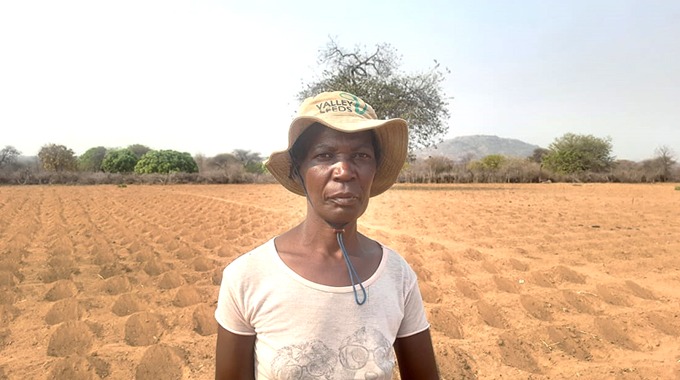
Gibson Mhaka
INTENSIFYING climate disasters, changing weather and rainfall patterns, droughts and floods are increasingly disrupting rural communities, devastating crops and damaging livelihoods dependent on the agricultural sector.
While women, particularly those from rural areas, play a significant role in agriculture, their contribution is often overlooked and undervalued. Women’s agricultural work lacks formal recognition and women are greatly under-represented within policy and decision-making related to agriculture and climate.
Although central to building more resilient global food systems, rural women farmers face disproportionate threats from climate stresses and shocks due to unequal reach and access to information necessary for creating more climate-resilient and sustainable food systems.

These inequalities affect the ways in which men and women experience and are impacted by climate change.
However, the story is different for Proper Nkomo (52), of Sigodini Village under Chief Fuyane in Ward 10 of Matobo District, Matabeleland South Province, who is a member and lead farmer of the Divine Hope Farmer Field School.
Through her capacity-building efforts, Nkomo has been instrumental in helping fellow farmers in her area, particularly women, improve their farming practices and adapt to the challenges of climate change.
She shares valuable information on climate-resilient agriculture, including seed selection based on ecological characteristics, drought-tolerant crop varieties and sustainable farming techniques. Nkomo’s knowledge and guidance have empowered her community to build more resilient and sustainable livelihoods in the face of changing environmental conditions.
A lead farmer is an individual who has been elected by a village to voluntarily assist in the delivery of a maximum of three good agricultural practices or technologies that are enterprise-specific. They are trained in these technologies.
Their role is primarily to disseminate farming-related information to farmers, educate fellow farmers, follow up on the progress that farmers have made and encourage those lagging behind.
The lead farmer approach has been implemented and heavily promoted nationwide to support government extension workers and accelerate technology dissemination.
Nkomo said capacity-building efforts have helped improve their farming practices, including seed selection based on ecological characteristics.
The government, through the Ministry of Lands, Agriculture, Fisheries, Water and Rural Development, in partnership with the Green Climate Fund (GCF) and the United Nations Development Programme (UNDP), under the Building Climate Resilience of Vulnerable Agricultural Livelihoods in Southern Africa programme, rolled out the Farmer Field Schools (FFS) concept to promote peer-to-peer learning. Over 230 FFS have been established under the programme.
“We are growing crops in a way that improves soil health in line with climate change. We are practicing a number of climate-resilient agricultural methods to address the limited rainfall in our area. As farmers, we continue to grow crops using various methods.
“We have implemented several techniques to improve our agricultural activities, such as creating basins, infiltration pits, reaping and potholing to conserve water. We also use dead mulch and live mulch to maintain soil fertility.
“Through these methods, we are slowing the movement of water and reducing runoff in our fields. We are now growing traditional grains, which are better adapted to our local conditions and can help us build resilience to climate change,” said Nkomo.
She said under the GCF programme there were 35 lead farmers, each with 10 follower farmers, making a total of 350 in her ward.
“As a lead farmer, I am responsible for training and guiding my fellow farmers on sustainable agricultural practices that are resilient to climate change. I share my knowledge and experience in areas such as crop selection, water conservation, soil management and climate-smart technologies. By working together, we are building a more resilient and sustainable agricultural community,” she said.
Moreblessing Ncube, a member of the Divine Hope Farmer Field School, praised the lead farmer approach, stating that as farmers in a drought-prone area, it has helped them to make decisions that are tailored to their diverse lived realities and utilise their existing capacities.
“Thanks to the GCF-funded Divine Hope Farmers Field School, we now have the knowledge and tools to adapt our farming practices to the changing climate.
“We’ve learned about drought-resistant crops, water conservation techniques and sustainable farming methods that are helping us cope with the challenges of climate change. This programme has been a lifeline for our community,” she said.
Samkeliso Ncube, an extension officer working with the Divine Hope Farmers Field School, said their work involves facilitating collaboration with farmers on climate change issues and promoting climate-smart agriculture, including crop and livestock production.

“Here in Matobo, we have a farmer field school under the GCF programme, which includes 35 lead farmers and 350 followers. As extension officers, our work involves facilitating collaboration with farmers on climate change issues and promoting climate-smart agriculture, encompassing crop and livestock production.
“In terms of crop production, we implement infiltration pits to conserve water, which benefits both crop and soil health. We also practice potholing, reportines and basins. Additionally, we encourage farmers to adopt traditional grains, and many in the ward have now embraced these crops and realised their benefits,”said Ncube.
She said under the GCF programme, they also implement the Participatory Integrated Climate Services for Agriculture (Picsa). Picsa is a collaborative approach that empowers farmers to make informed decisions about their agricultural practices by providing them with access to climate information and tools.”
“As agricultural extension staff, we work with farmers before the agricultural season to analyse historical climate information and use participatory tools to develop and select crop, livestock and livelihood options that are best suited to individual farmers’ circumstances.
“Then, shortly before and during the season, extension staff and farmers consider the practical implications of seasonal and short-term forecasts on the plans farmers have made.
“This approach combines historical climate data and forecasts with farmers’ knowledge of what works in their own context and then employs participatory planning methods to assist them in making informed decisions about their agricultural practices,” she said.
Another extension officer, Sithandekile Dube, emphasised the significant role that the application of Picsa can play in mitigating climate change and its impacts on the rural economy, environment and society.
“Picsa empowers farmers to make informed decisions about their agricultural practices, leading to more sustainable and resilient livelihoods. By incorporating climate information and tools into their decision-making processes, farmers can adopt climate-smart strategies that reduce greenhouse gas emissions, protect biodiversity and enhance food security,” she said.
Senior Agriculture Economist in the Strategic Planning, Monitoring and Evaluation Department of the Ministry of Lands, Agriculture, Fisheries, Water and Rural Development, Brendon Mvura, said FFS were crucial for boosting agricultural production and productivity in Zimbabwe, especially in the face of the current climate change phenomena.
“Government is targeting 35000 FFS across all rural provinces in each village, which will help to disseminate agriculture information and modern technologies related to climate change and variability, among rural farmers.
“The concept of FFS involves a participatory approach to agriculture extension services, where farmers take centre stage, share challenges related to climate change and exchange experiences. In this case, farmers can share experiences, learn from one another and experiment with new technologies to build resilience against current and future climate-related shocks.
“In view of this, FFS have adopted a bottom-up approach to extension service delivery, where extension workers act as facilitators, providing guidance and supervision on various topics and discussions related to agriculture and agribusiness management. Additionally, each FFS is characterised by demonstration plots where farmers have hands-on experiences on diverse agriculture-related subjects,” Mvura said.
Climate Smart Agriculture Expert for the GCF Project, Dr Nelson Chanza, also emphasised the significance of FFS in promoting climate-smart agriculture.
He explained that they provide a platform for farmers to express their challenges and for researchers to offer tailored technological solutions.
“This approach fosters peer-to-peer learning and empowers farmers to adopt climate-resilient agricultural practices,” said Dr Chanza.



 Bongani Ndlovu
 Online Reporter