Online Reporter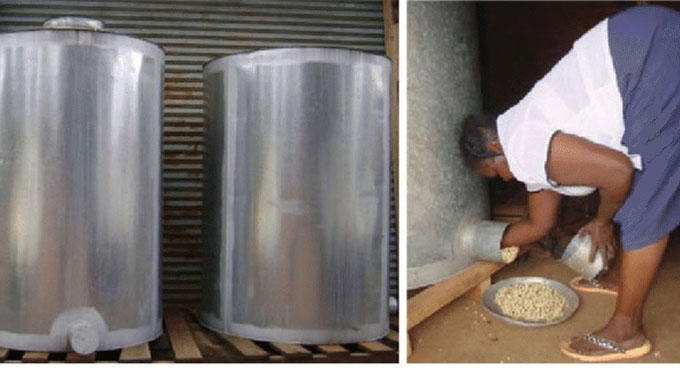
Theseus Mauruki Shambare-Features Writer
AT Hunnington Farm in Ward 9, Makonde, Mashonaland West Province, the afternoon sun settles over a gathering that feels ordinary on the surface, but carries the weight of seasons that never last.
In the dusted yard, Ms Auxillia Karima holds a newly issued metal silo. It is cylindrical, cold to the touch, and heavier than its appearance suggests. For a moment, she does not move. Not because she is struggling. But because she is remembering.
Around her, farmers cluster in small groups as Government officials and partners from the Food and Agriculture Organisation of the United Nations (FAO) move through the distribution point.
Names are checked, equipment is explained, signatures are collected. But Karima is not following the process. She is following a pattern she knows too well—one where harvests arrive in abundance, only to quietly disappear before they can change anything.
“We used to harvest well,” she says softly on the sidelines of a recent tour of the province, “but you would see the grain reduce before it helped you. It was like losing food twice—once in the field and again at home.”
That loss is not unique to her.
Across Zimbabwe, agricultural experts estimate that more than 30 percent of cereals and up to 45 percent of vegetables are lost after harvest due to poor storage, pest infestation, and limited access to mechanisation and processing equipment.
It is a loss that does not show in yield statistics, but in empty granaries, unstable incomes and households forced back into food insecurity despite good seasons.
At Hunnington Farm, that invisible loss is now being confronted in physical form.
The intervention is part of the Zimbabwe Emergency Food Production Project , financed by the African Development Bank (AfDB) through the African Development Fund, and implemented in partnership with FAO and the Government.
The programme is reaching about 35 000 farmers nationwide through the distribution of post-harvest and mechanisation equipment.
The package includes 2 100 metal silos, 70 multi-crop threshers and five combine harvesters, all designed to extend the life of harvests beyond the field and into storage, markets and consumption.
AfDB country manager for Zimbabwe, Ms Eyerusalem Fasika, noted that the intervention reflects a deliberate shift in focus from producing more food to preserving what is already produced.
She said the facility, established in 2022, was designed in response to global food system shocks driven by climate variability, supply chain disruptions and rising production risks.