Chronicle Editor
Ashley Phiri and Amos Mpofu, [email protected]
PREPARATIONS for the 2024-25 summer cropping season are underway, with smallholder farmers across the country gearing up for another round of the Pfumvudza/Intwasa farming programme.
This conservation agriculture approach is being supported by the Government through the delivery of inputs to Grain Marketing Board (GMB) depots, ensuring that farmers can make the most of the predicted La Niña rains for an optimal harvest.
The Government has set a target of reaching 3,5 million rural and peri-urban households under this year’s Pfumvudza/Intwasa programme. To ease the workload on farmers, especially the elderly, the Government is encouraging the adoption of mechanised Pfumvudza/Intwasa, which requires less manual labour than traditional methods.
Only farmers who have prepared the required three plots will receive inputs, starting this month.
Since its introduction under the Second Republic, Pfumvudza/Intwasa has been lauded as a transformative tool for smallholder farmers, moving subsistence farming toward commercial viability.
The programme targets households in communal, A1, small-scale commercial farming, and old resettlement areas. Farmers receive training and guidance on preparing plots for producing cereals, oilseeds, and legumes.
Mr Clayton Sibanda, a farmer from Umguza, said he was initially sceptical about the Pfumvudza/Intwasa method but eventually embraced it after witnessing its success among his neighbours.
“At first when I was told about this Intwasa/Pfumvudza method, I was sceptical because I viewed it as the primitive way of doing things. That year my neighbours who did it had better harvests than me so I decided to try it as well,” he said.
“The results were incredible, and I adopted the farming model the following year. This year, I am putting 18 plots under Pfumvudza.”
Similarly, Mrs Nobesethu Ndlovu expressed optimism about the upcoming season.
“We are expecting better rains, and we will join others in doing the Intwasa method, especially now that we know machines can be used. In the past, the labour was too much for us, but mechanisation has made it easier,” she said.
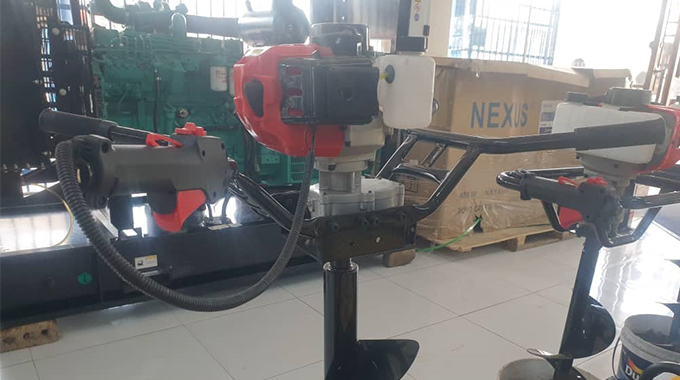
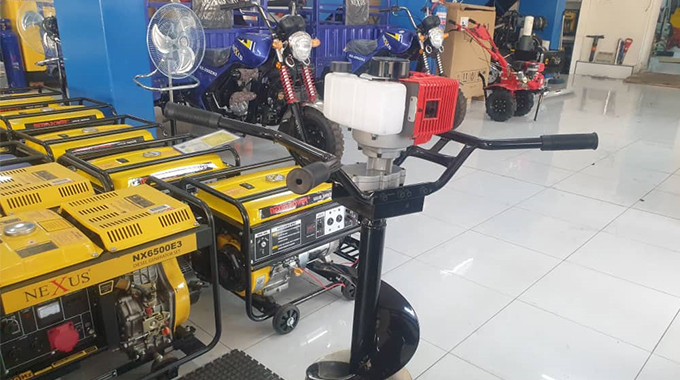
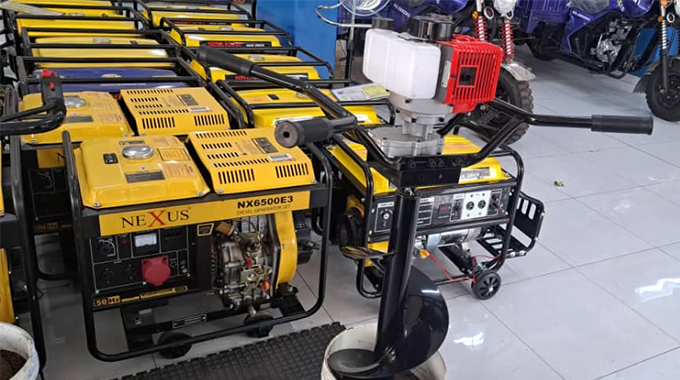
Mechanised Pfumvudza, introduced in 2021, has continued to gain popularity. Farmers now use fuel-powered earth augers, which make it easier to dig the required planting basins. These machines are particularly useful in dry regions, as they improve moisture retention and ensure uniform hole sizes.
A snap survey conducted in Bulawayo yesterday revealed that most farm implements suppliers and hardware traders did not have earth augers in stock. Those who spoke to Chronicle said they were yet to fully stock the product as they need to be sure of the demand from farmers to make business sense.
One of the local shops, which had the equipment was selling it from between US$135 to US$250 depending on the bit size.
Pilot demonstrations have shown that a farmer can prepare a plot in under an hour using the auger, compared to the two or three days it would take with a traditional hand hoe.
Speaking during a field day on Friday at Merryland farm in Umguza District, Agriculture and Rural Development Advisory Service (ARDAS) chief director, Mr Leonard Munamati, explained that the mechanised method was introduced to assist elderly farmers and those growing traditional grains.
“We have heard the concerns about the labour intensity of Pfumvudza/Intwasa, and we have responded with mechanisation. Farmers should not lose heart; machines like earth augers and tractors are now available,” he said.
“For those who do traditional grains, we recommend that they use tractors if they can and our Agritex extension officers have demonstrated how to do this properly.”
He also encouraged farmers in Matabeleland to adopt mechanised Pfumvudza as they grow more traditional grains, which are better suited to the region’s climate.
“There’s no reason not to prepare your plots for Intwasa. The drought taught us the importance of water, and the Meteorological Department has assured us that we will receive it,” he said.
“Of course, for regions four and five we still encourage farmers to plant more traditional grains so they can have better harvests and those who were crying about the labour intensity can now use machines for this type of farming.”
Mr Munamati also highlighted that inputs under the Presidential Input Scheme are already being delivered to GMB depots across the country.
“President Mnangagwa promised that no one will die of hunger, and so far, there have been no reports to the contrary. To secure food for the future, anyone receiving drought relief food from October must first prove that they have prepared their three plots for Intwasa/Pfumvudza,” he said.
According to ARDAS statistics, 11,37 million plots have been prepared so far, with Mashonaland West leading the way with 1,93 million plots, followed by Mashonaland East with 1,77 million and Mashonaland Central with 1,65 million. Matabeleland North has established 808 700 plots, while Bulawayo has the fewest, with just 7 600 plots.
The mechanisation of Pfumvudza/Intwasa, combined with favourable rain forecasts, is expected to drive strong agricultural performance this season, ensuring that Zimbabwe’s smallholder farmers can achieve food security and contribute to the nation’s agricultural output.
Regional weather experts predicted that Zimbabwe and other Southern African countries are set to receive normal to above-normal rainfall in the 2024/25 farming season.
Despite normal to below-normal rains from October to December, the season is expected to change to normal to above normal between January and March next year.
This positive projection was revealed by meteorologists during the recent 29th Southern Africa Regional Climate Outlook Forum (SARCOF-29).
Zimbabwe has been classified under ‘Zone 2’ for increased chances of normal to below-normal rainfall from October to December and normal to above-normal rainfall from November to March just like Central DRC, northern Zambia, eastern Malawi, Tanzania, and parts of Mozambique.



 Online Reporter