Sundaymail Editor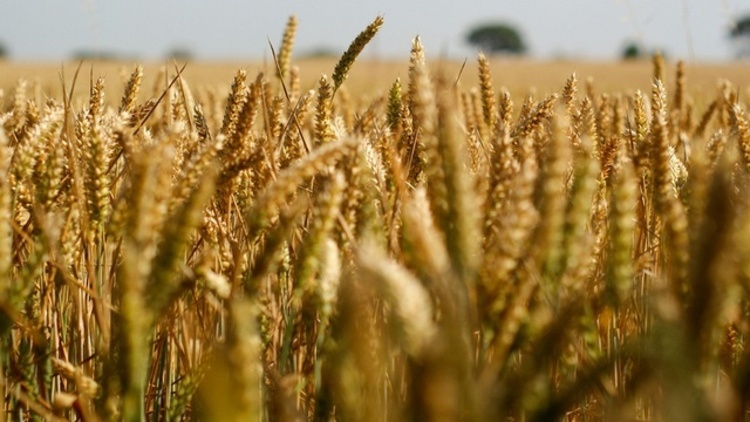
Richard Muponde
MORE than 27 000 hectares had been put under winter wheat as of Wednesday last week, as farmers race to meet Government’s 75 000-hectare target.
The hectarage represents an increase from 23 662 hectares that had been planted by the same time last season.
Overall, 66 000 hectares were put under the cereal last year, which is the third-largest hectarage after Independence.
Government plans to produce between 350 000 to 400 000 tonnes to achieve wheat self-sufficiency and offset shortages caused by the Russia-Ukraine conflict that has spawned global shortages.
The winter wheat programme is being supported by CBZ, AFC bank, the Presidential Inputs Support Scheme as well as private sector initiatives and self-funded farmers.
Lands, Agriculture, Fisheries, Water and Rural Development Minister Dr Anxious Masuka said the planting window was fast running out but “the outlook is promising”.
“Best yields are obtained if farmers plant up to 31 May. The outlook is promising as farmers are busy in the field and programmes are pushing inputs to farmers to meet the deadline. The planted wheat and barley is already agronomically well established.
“The area planted to date (as at May 25, 2022) is 27 072 hectares compared to 23 662 hectares planted at the same time last year. Last year, we went on to reach over 66 000 hectares.”
He said Government was in the process of acquiring drones to control quelea birds to minimise losses from the targeted output.
“The Government has formed a new department called Migratory Pests and Biosecurity to deal with quelea birds. Furthermore, it is in the process of acquiring drones for every province to use in the control of these birds. We have adequate chemicals for quelea control, and we are in the process of procuring more to be on the safe side.
“We have embarked on a quelea bird control programme which started in February with spraying breeding grounds such as Kadoma, Norton, Muzarabani and Checheche, and we are now moving to spraying roosting sites such as Pandamatenga, Arda Jotsholo and Binga all in an effort to suppress their population.”
Dr Masuka said the projected winter wheat output will be over 383 000 metric tonnes, which will be within range to meet national requirements of between 350 000 and 400 000 tonnes.
“The farmers are encouraged to continue planting the crop as we are still within the planting window and follow good agronomic practices. All farmers with reliable water supply have an obligation to grow wheat.”
Power utility Zesa and water authority Zinwa have made assurances that they will provide adequate supplies this season, while AFC and CBZ have pledged to expedite processing loan applications and inputs distribution.
AFC group chief executive officer Mr Francis Macheka said: “Assessments and disbursement of loans and inputs for over 9 000 ha is currently underway to eligible farmers. The AFC Land Bank works closely with farmer groups, irrigation schemes as well as individual farmers with viable projects.”



 Online Reporter