admin
admin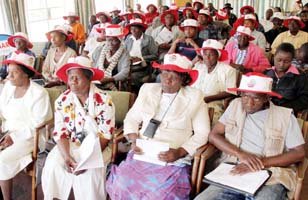
Speaking during the Matabeleland North Zimbabwe Commercial Farmers’ Union (ZCFU) second annual congress at the Zimbabwe International Trade Fair (Zitf) grounds on Friday, the province’s chief livestock development officer in the department of livestock production, Mr Adolf Dube, said the erratic rainfall received during the 2011/2012 season resulted in poor pastures and inadequate water for livestock.
He said out of the seven districts in the province, Tsholotsho was the worst hit by the drought.
“Most farmers, especially from Tsholotsho, have moved their cattle to Nyamandlovu where the grazing and water situation is relatively stable.
“We have since spoken to the Parks and Wildlife Management Authority for the cattle to graze beyond their range and they have agreed,” said Mr Dube.
“During the 2011/2012 season, open water sources did not collect adequate water, most rivers did not even flow and the underground water table remained low. Therefore livestock production in the province is threatened by lack of pastures and water shortage.”
He said communal farmers in Tsholotsho were now watering their cattle three times a week.
“The cattle are in dire need of water. It is unfortunate that some of the boreholes in the area are pumping out air instead of water due to the low rainfall received last season.
“Most of the commercial farmers in the province are now watering their animals three times a week. The livestock population in the province is dwindling as pastures continue to deteriorate and farmers are selling their livestock out of fear of losing them to the drought,” said Mr Dube.
He said cattle from Botswana and Bulilima District had also moved to Matabeleland North Province due to the drought.
“There has been a lot of movement of livestock across the provinces. Gariya Dam is one of the few water sources in the province and the cattle have to share the water with villagers, elephants and other domestic animals in the area,” he said.
Mr Dube expressed concern over the movement of cattle, saying it could result in the outbreak of diseases.
“The majority of the people in the rural areas depend on cattle production to maintain their livelihoods. It is unfortunate the mixing of cattle from different regions might cause disease outbreaks, which will give us more problems.
“We are also afraid that the cattle might be killed by lions in the forests since the area is also infested with the wild animals,” said Mr Dube.
The province’s ZCFU chairperson, Mrs Irene Maphenduka, said there was a need for swift intervention to save the animals.
She also bemoaned the low cattle prices and called upon farmers to work together to improve the situation.
“Matabeleland South and North provinces are in danger of losing cattle unless swift intervention is done to save the animals. In Matabeleland North the situation has also been worsened by the influx of cattle from other neighbouring districts and Matabeleland South Province.
“Farmers are also being shortchanged by abattoir operators who offer low cattle prices ranging from $100 to $200 for a beast. We have tried to negotiate with them but they are saying farmers should take what is being offered.
“This arrogance calls for Government intervention to save the farmers from being cheated. I would like to encourage the farmers to unite, speak with one voice and come up with a strategy to overcome this problem,” said Mrs Maphenduka.
She said farmers in the province had started growing cotton, but also called upon the Government to review the low cotton prices, which did not match production costs.
Farmers in Matabeleland South Province started moving their cattle last month due to the deteriorating pastures, with more than 2 000 cattle likely to be lost within the next three months.
The drought has affected the province over the years, forcing farmers to sell their livestock at low prices.
In his solidarity message, the chairman of the Zimbabwe Sugarcane Development Association, Senior Assistant Commissioner Edmore Veterai, urged farmers to take farming seriously and diversify their activities.
“It is important for farmers in the country to diversify and never stop producing the products despite the challenges.
“Our supermarkets are awash with foreign products, which can be produced locally. Foreigners sell products at low prices, forcing locals to stop producing. But after a few years, the prices shoot up and it would be difficult for us to revive production.
“It is therefore vital for us to support local products and create big business opportunities in farming,” said Snr Asst Comm Veterai.
He also urged farmers’ unions to embark on training programmes and move in one direction.
The congress was attended by farmers from Matabeleland North, officials from the Government’s agricultural departments, Cold Storage Company, Veterinary Distributors, SeedCo and Pioneer Seed companies.


 Online Reporter