

 admin
admin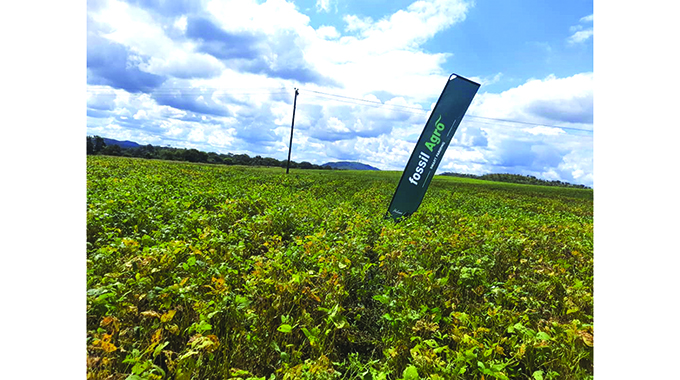
Oliver Kazunga
Senior Business Reporter
FARMERS across the country should embrace Government initiatives aimed at boosting farming output despite the adverse effects of climate change, which are threatening productivity, a senior Government official said.
Secretary for Lands, Agriculture, Fisheries, Water and Rural Development Dr John Bhasera said this in a speech read on his behalf by the director for agricultural education Dr Jotamu Dondofema on the sidelines of a field day in Mazowe District on Tuesday.
The field day was hosted by businessman Luxon Zembe, who is one of the contracted farmers under the Soya Bean Outgrower Alliance (SOBOA) initiative being spearheaded by Bulawayo-based edible oil manufacturing firm, United Refineries Limited (URL) together with its strategic partners.
In 2018, the Government launched the Agriculture and Food Systems Transformation Strategy whose national thrust for production should see Zimbabwe attain a US$8,2 billion agriculture economy by 2025.
This dovetails with the Government’s aim to boost production in different sectors of the economy through the National Development Strategy 1 (NDS 1), which seeks to transform the economy to an upper middle income economy by 2030.
It is in this context that the Second Republic has come up with initiatives such as the remodelled Climate-Proofed Presidential Inputs Support programme, widely known as Pfumvudza/Intwasa to drive farm productivity amid growing impact of climate change on agriculture.
The Government has rolled out various agricultural programmes that seek to drive output in the farming sector to ensure sustainable national food security through the production of crops such as soya bean, small grains and wheat.
“We also have a programme which is now called the National Enhanced Agriculture Productivity Scheme (NEAPS), which was formerly known as Command Agriculture. Farmers should embrace such initiatives.
“It is also the Government’s desire that this upcoming season, farmers should brace for winter wheat farming so that going forward we also have field days for the wheat crop such as the one here today,” he said.
Dr Bhasera noted that in the 2021-2022 cropping season, the country experienced erratic rains and such weather patterns are helping the Government to adapt to the effects of climate change while embracing appropriate measures to ensure sustainable national food security.
He said the Government would continue bankrolling programmes aimed at promoting agricultural activities through institutions like the Agricultural Finance Corporation (AFC).
“We also look forward to farmers embracing joint venture initiatives that the Government has rolled out in order to ensure efficient use of agricultural land.”
Last year, the Government transformed Agribank now AFC Zimbabwe into a land bank, which will provide comprehensive financial and technical services to farmers and support projects aimed at promoting value chains in both private and community-based agriculture.
Dr Bhasera said development and rehabilitation of irrigation was critical towards the success of the Agriculture and Food Systems Transformation Strategy.
In an interview after the field day, Mr Zembe said he had put 70 hectares of land under soya bean through support under the SOBOA initiative from which he expects at least 210 tonnes of soya bean.
The crop is expected to be harvested in the second week of May.
“All things being equal, if we are able to get sufficient sun for the next four weeks, so the second week of May we expect this crop to be harvested. We have been getting the rains of late, they have been good in terms of pod filling and strengthening of the crop and we pray and hope now that it’s beginning to recede so that we can get more sun shine to mature and dry the crop,” he said.
“We are expecting a minimum of three tonnes per hectare, so we have got 70ha multiplied by three that gives us 210 tonnes that we are expecting out of this crop.
“The challenges that we had obviously, we could have much better but because of that drought period that we had and secondly, that this is a dry land crop, we are just relying on God’s generosity.”
Under the SOBOA arrangement, URL and its partners in the previous cropping season set aside US$3,5 million from which 2 400ha were planted by about 30 farmers dotted across the country in Mashonaland Central, Mashonaland East, Mashonaland West, Midlands as well as Matabeleland.



 Online Reporter