


 peter
peter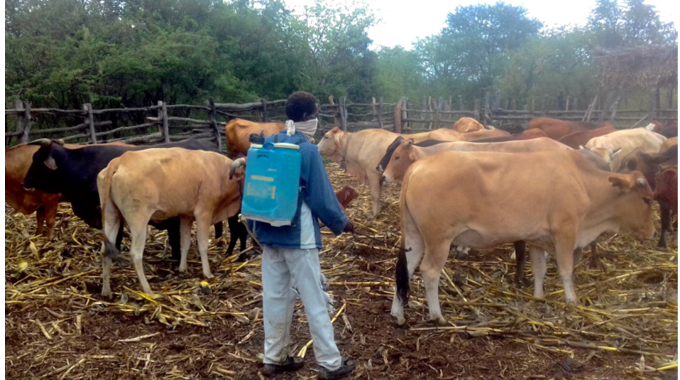
THERE is an old adage in health management which states that prevention is better than cure.
The gist of the matter being that preventing the occurrence of a disease or avoiding contracting a disease is better than trying to cure a sickness.
In livestock disease management we say prevention is cheaper than cure or treatment. This means that every livestock farmer’s effort in disease management should be aimed at making sure that occurrence of diseases is prevented because trying to cure a disease that has gone into your herd or flock is expensive.
It is expensive both in terms of the drugs that you will need to procure, at times very far from your farm, and also in terms of the loss of your livestock.

Some diseases are highly contagious which means they can easily be transmitted between your animals and in no time, you have a whole herd of sick animals.
Also, some diseases have very high mortality rates which means you will get more animals dying than recovering from the disease.
Again, some diseases cannot be cured but can be vaccinated against, which is a prevention method.
A lot of virus diseases cannot be cured but can be prevented against. Some of these viral diseases have very high mortality rates and an example is Newcastle disease in chickens.
It is a highly contagious disease which can wipe your fowl run clean in just a few days, but it can be vaccinated against. It is my submission, therefore this week, that livestock farmers need to configure their animal health management settings towards disease prevention rather than waiting to try and treat a disease when it happens.
There are a number of livestock diseases that give farmers a torrid time depending on years and seasons but some of these diseases can simply be prevented against through vaccination. I have already alluded to Newcastle disease in poultry above.
This disease decimates poultry flocks every time, but farmers are reluctant to vaccinate their chickens despite the fact that the vaccine is provided for free by the Government.
Newcastle can kill as many as 40 birds per day from your flock and that’s not a small number!
In cattle there are a number of diseases that also give livestock farmers a torrid time, like Blackleg, Lumpyskin disease, Brucellosis and Botulism, but vaccines for these diseases are available in the market.

Some of the vaccines are actually available in combos, which means you can get a vaccine that with one jab to your animal, you can actually protect against two or three diseases.
There is therefore no reason why as a livestock farmer you should struggle with Blackleg or Lumpyskin disease in your herd when you can just vaccinate your animals. There also simple cold chain facilities in the market such as ice cubes and cooler boxes that can preserve your vaccine from veterinary shops in town to your home.
If people can transport fresh fish from as far as Binga to Bulawayo, so can we the vaccine! Let the farmers have a vaccination calendar which they can abide to every year and help protect their animals.
Some diseases have a very fast progression which does not give you time to react to look for drugs if you did not have them in your cabin.
Also, depending on the season, in some cases you may be notified when your animal is already dead especially during the dry season when animals are generally left to roam around the rangelands in search of food.
Animals are neither herded nor penned during this period and hence disease surveillance on your animals could be less timely. I am aware than vaccines come in specific doses such as 20, 50 or 100 doses, which means 20, 50 or 100 animals respectively can be vaccinated.
A vaccine once it is opened it needs to be used all of it because of storage challenges, hence you need to have enough animals to exhaust the quantity of the vaccine you bought.
It is thus prudent to combine with your like-minded neighbour so that you can have the right number of animals to match the quantity of the vaccine.
As livestock farmers let us vaccinate, dipping and dose our animals and all other actions which help prevent occurrence of diseases in our animals.
Let us not just do one thing and then think we have protected our animals.
Let us go the complete nine yards of disease prevention in our animals so that we minimise losses and costs associated with disease treatment. Uyabonga umntaka MaKhumalo.



 Bongani Ndlovu
 Online Reporter