

 admin
admin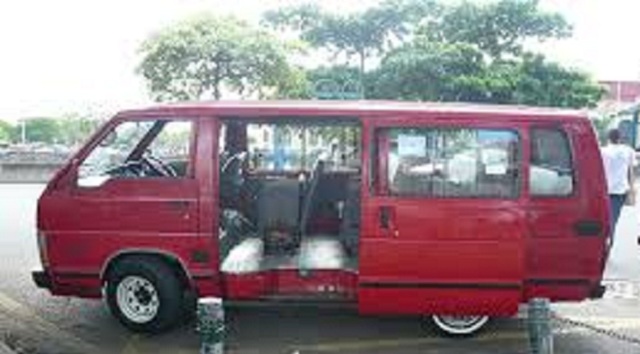
B-Metro Reporter
“Eyes blinded by a blend of cracked windscreens and iffy bodywork. Eardrums drenched in the whirring neighs of mechanical horses.
Nostrils stained with the stench of burning brake ducts. Spine rattling to-and-fro against the rhythms of potholed roads. Limbs and neck wrestling relentlessly with a steering wheel that no longer has any power steering capabilities.”
Just in a similar fashion to scenario described above by BBC.com in the Formula 1 setup, being a passenger in a kombi to or from the townships at breakneck speed is one of the most intense sensory experiences a human can undergo.
During such trips, young kids can suffer motion sickness, light-headedness and vision glitches while drivers can lose up to more than a few grams while at the wheel.
With the success and failure of their split-second decisions laid bare for the world to witness, a kombi driver’s existence can be isolating as well as physically draining. But a kombi driver is never racing entirely alone.
They are accompanied, always, by the guidance of a very loud ally at the door, aiming to maximise the driver’s result at the trip’s end. That voice belongs to the kombi conductor or whindi.
Weather changes, route advice and details about rivals’ weaknesses are among the technical information passed from the whindi to the driver.
But the whindi must also harness their more human-centred skills, suppressing the driver’s concerns and emotions so they are free to operate entirely in the present.
Key highlights make it to passenger broadcasts, but most of this dialogue goes un-understood by passengers. Given the amount of time the driver and whindi spend in each other’s company, and the faith they must collectively construct, their relationship is one of the most intimate in public transport.
“What you are trying to do is to take a lot of thinking away from the driver so that he can just be in the moment, focusing on the next corner and maximising on picking up passengers and increasing the number of trips during the course of the day,” says Veli Nkiwane, a whindi who first joined the industry in 2008 and works with a Bulawayo United Passenger Transport Association affiliated driver.
“We are the translator that bridges that gap between the passenger and the driver — we find the best way to get the information between those two parties.”
In turn, the driver must have total confidence in the competence and character of his door connection. There is almost sometimes at least one generation between a driver and his whindi.
They often come from completely different parts of the time and do not share a common language. A big effort to understand each other’s backgrounds, personalities and motivations is key to building a successful relationship.
“I always tried to meet a new driver in a non-professional environment — at a bar or wherever else we are disconnected from kombi business, to understand his personal side,” says John Ncube, who spent eight years as a whindi until a recent change of roles saw him assume the driver’s seat.
“We spend a couple of hours together, just talking about normal things in life — hobbies, his family, his education — to understand his culture. At the same time, smart whindis are observing his reactions on a human level. You maybe even have to adapt your own personality to deal with the driver you get. Probably the most important part of (being) a whindi is the human aspect. You need a good level of emotional intelligence and empathy.”
Nkiwane, who has worked with scores of drivers over the years, agrees the formative days with a new driver are crucial.
“I am a big believer in the importance of building that social connection. You don’t necessarily have to go out — just hang out together, ask questions and tell stories. With my drivers, we develop that relationship by spending time together — a couple of times out for meals and stuff, but a lot of it just at the factory having drinks — and talking through kombi industrial developments over the years.
We had a lot of conversations around things we messed up in the past in order to share some of those painful kombi life lessons. That is a way of adding a real-life, humorous element to preparation — because when you look back years on, you can laugh at your mistakes.”
Not every driver-whindi pairing has a full winter of preparation to develop an understanding, though. When with 15-years driving kombi, Themba Moyo was first handed cars to a kombi in 2009 and whindi Nhlanhla Ncube became part of the trips.
“I had experience working with multiple drivers before Themba and that was one of the biggest bits of help in terms of hitting the ground running with him.
I think if I would have been a newbie to my role — I won’t quite say he would have eaten me alive, but I’m not sure he would have had that respect for a whindi his own age.
We were concentrating on building his consistency, needing to be finishing every trip with a full load, maybe not putting himself in a situation where he can end up in an accident with another driver.”
That spectre of an accident is a fundamental part of the relationship between the two.
The whindi is responsible for the care of the passengers, alerts the driver to possible pick-ups and drop-offs and monitors their temperament.
To an extent, the driver puts their life in the hands of their whindi whenever they take to the road at 5am. In the kombi world as in all our lives, the magic of the most special relationships will always remain utterly unique. (BBC.Com/B-Metro Reporter)


 Online Reporter