Chronicle Editor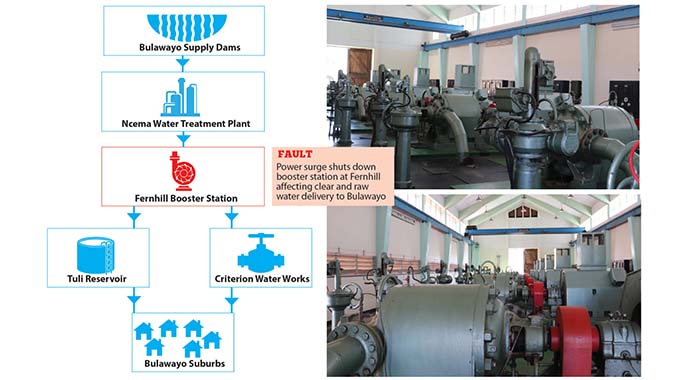
Nqobile Tshili, Chronicle Reporter
ALL Bulawayo suburbs, including usually exempted places like the city centre, will go for an indefinite period without water following a power surge at the Fernhill Booster Station, critical in the distribution of water to the entire city.
Water from all the city’s supply dams is first pumped to Ncema Water Treatment plant. At Ncema, treated water is pumped to Fernhill Booster Station then to the Tuli reservoirs for distribution to various residential areas in the city.
Raw water is also pumped from Ncema to Fernhill then to the Criterion Water Works for treatment before distribution to the city’s reservoirs.
The crisis will also affect mines and industry.
This is the second time that the city experiences total water cuts after BCC on Saturday, announced that it was going to suspend the provision of tap water until further notice in all suburbs except the city centre, mines and industry.
The water cuts affecting all suburbs were also triggered by power outages along the Nyamandlovu-Cowdray Park line feeding Magwegwe Reservoir and the Ncema-Fernhill line feeding Tuli and Criterion reservoirs.
Water was temporarily restored on Monday evening in some of the city’s suburbs but supplies were again cut yesterday morning.
In a statement yesterday, Bulawayo Town Clerk Mr Christopher Dube said the surge resulted in the shutdown of the pumping system.
“The City of Bulawayo would like to advise the public of water supply interruptions to all the areas across the city with effect from Tuesday the 1st of September 2020 due to a power surge at Fernhill Booster Station that has affected clear water and raw water delivery to Tuli Reservoir and Criterion Water Works respectively,” said Mr Dube.
“This affects the whole city’s water supply system until the problem in resolved. Consumers are further advised that water supply to both Eastern and Western areas will be closed and shall be available when reservoir levels per each reservoir zone allow after the rectification of the above-mentioned development.”
He apologised for the inconvenience the development will bring to residents.
The city is facing a dire water crisis that has seen some residents going for more than six months without tap water reaching their homes.
Council is also struggling to deliver potable water using bowsers.
Council has imposed a 144-hour weekly water shedding exercise to manage the dwindling water supplies as dam levels have dropped to 24 percent.
The local authority last week revealed that it was delivering only 50 percent of bowser demand water to residents and was planning on engaging private players to make it convenient for residents.
Residents are now forced to use borehole water while council has stated that the water is not safe for drinking if is not boiled.
The water crisis has exposed some residents to waterborne diseases such as dysentery and typhoid, leading to the death of 13 people in Luveve and the surrounding areas.
Due to the disease outbreak council has placed a waiver on clinic fees for those affected by diarrhoea across the city during the water shedding period to contain diseases after observing that some residents delayed to seek medical treatment due to lack of funds.-@nqotshili



 Online Reporter