Online Reporter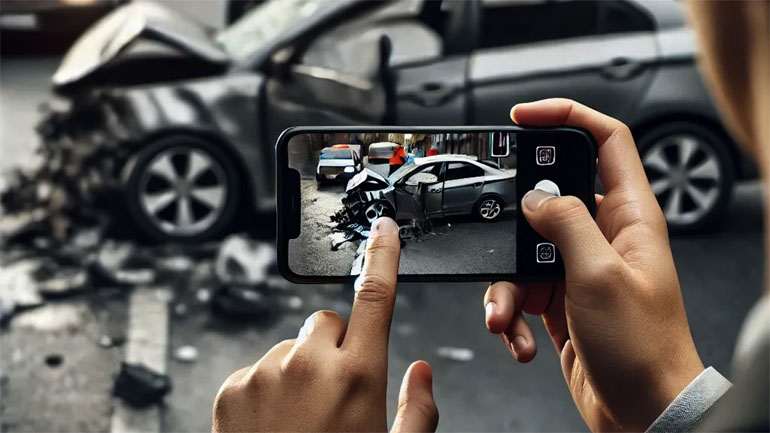
Ray Bande
Senior Reporter
NOWADAYS, one can learn of the sudden death of their loved ones through social media sites such as a WhatsApp or Facebook.
A case of citizen journalism going beyond limits!
Citizen journalism is the act of ordinary, non-professional individuals collecting, reporting, analysing, and disseminating news and information, often using social media or personal blogs.
Driven by community participation, it offers an alternative to mainstream media, focusing on immediate, and first-hand accounts of events.
However, in recent times, it is now a common phenomenon across the country that tragedy is now being compounded by a disconcerting trend of witnesses or bystanders filming accident victims instead of offering help.
In the aftermath of road crashes, seconds can mean life or death.
Yet, in shocking cases, phones are raised, not to call for emergency services, but to record.
The recent accident involving the Mujuru family in Masvingo, which claimed the lives of a mother and her five children, has brought this disturbing practice into sharp focus.
Surely, these are times when social media ceases to be social!
Social, as a word, relates to human society, the interaction of the individual, group, or the welfare of human beings as members of the society to social institutions, tending to form cooperative and interdependent relationships with others. Put differently, if you are social, you like to be around people. In fact, a social butterfly is someone who is social or friendly with everyone, flitting from person to person, the way a butterfly might, they say.
After all, the word social comes from the Latin socius meaning “friend.”
When you are being social, you are everyone’s friend.
But social media use in Zimbabwe no longer meets the social expectations of the term.
Social media basically refers to the websites and different applications that enable users to create and share content or to participate in social networking online.
Mutare social media influencer and civic organisation leader, Mr Itai Kariparire, widely known by the moniker Mabhobho, said: “It is common cause that rice tastes nice when the funeral is not in your compound. People find it easy to take pictures and videos of accident victims simply because persons involved in the accidents are not their relatives or friends. It is unAfrican. It is evil. Imagine learning of the death of your loved one through social media. Many people are going through this daily in Zimbabwe and it is bad. As a nation we need to be mature in our use of the social media.”
Social scientist, Mr Calvin Mapangisana said: “We have often heard or read about accidents in mainstream media with police confirming the accident, but proceeding to say names of the victims are yet to be announced until next of kin is informed. This is, not only professional, but humane. But we now have some social misfits who take it upon themselves, not only to announce accidents, but publish images of victims. It is sad, to be polite.”
This week, Government has expressed deep concern over a spate of fatal road traffic accidents recorded during the Easter holidays, while warning the public against the circulation of graphic images from crash scenes on the social media.
Addressing a post-Cabinet briefing in Harare on Tuesday, Information, Publicity and Broadcasting Services Minister, Dr Zhemu Soda, said Cabinet had conveyed its condolences to families affected by the recent tragedies.
“Cabinet expressed its deepest condolences following the report by the Transport and Infrastructural Development Minister, Honourable Felix Mhona, on the tragic loss of six Mujuru family members in a road traffic accident on Thursday, April 2, 2026,” he said.
Minister Soda said Cabinet also mourned seven Highlanders FC supporters, who died in a crash along the Bulawayo–Beitbridge Road on April 3, as well as four members of a family who perished in another accident along the Shangani–Bulawayo Road on the same day.
The Highlanders supporters died at Mawabeni in Umzingwane after a truck rammed into bystanders who had gathered at an earlier accident scene.
Minister Soda said a comprehensive report on all road traffic accidents recorded during the Easter period will be presented to Cabinet in due course.
Government raised alarm over the growing trend of members of the public capturing and sharing images of accident scenes instead of rendering assistance.
“Cabinet further expressed concern over the circulation of road accident scenes on social media platforms, and strongly discourages the public from engaging in such untoward acts. In that regard, Cabinet warns the public that appropriate measures will be taken against anyone found responsible for such conduct,” said Minister Soda.
Social media in Zimbabwe is primarily governed by the Cyber and Data Protection Act (Chapter 12:07) (enacted 2021, fully operationalised 2022-2023), which criminalises cyberbullying, harassment, transmission of false data, and, as noted by MISA Zimbabwe, inciting violence or generating toxic content.
The law carries penalties including heavy fines and up to 15 years in prison.
A cursory research on key legal aspects of the social media in Zimbabwe revealed that Cyber and Data Protection Act is the primary legislation covering online activities.
It includes provisions for protecting personal data, handling of data by controllers, and criminalising offences like sending threatening messages, distributing private images without consent, and creating fake news.
Key offences (under Section 164C/Data Protection Act) include false news and that relates to transmitting data messages with the intent to incite violence or harm property is criminalised.
It also encompasses harassment/cyberbullying that usually emanates from sending messages intended to threaten, provoke, or coerce, is illegal.
It also covers personal data misuse whereby unauthorised disclosure of private information can lead to severe penalties and provides a regulatory oversight through the Postal and Telecommunications Regulatory Authority of Zimbabwe (POTRAZ), which acts as the data protection authority.
Worth noting is the fact that while Section 61 of the Constitution guarantees freedom of expression, and does not protect hate speech, malicious injury to reputation, or incitement to violence, which are key limitations applied to social media.
It is against this background that move by the Government to consider even tighter regulations to curb “social media abuse,” including a proposed national social media policy and potential bans for under-aged users on specific platforms, makes professional and humane sense.