


 Online Reporter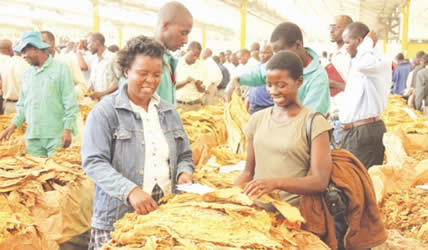
Oliver Kazunga-Senior Business Reporter
FARMERS are still confident of achieving the 300 million kilogramme tobacco yield in the 2024/2025 season, driven by several factors, including good agronomic practices and continued support from the Government.
Under the Tobacco Value Chain Transformation Plan, approved by the Cabinet in 2021, the Government is targeting to increase output to 300 million kg by this year, with the crop’s value improving to US$5 billion, and the sub-sector eventually becoming a US$60 billion industry by 2028.
The plan also seeks to raise local funding of tobacco production to 70 percent, improve value addition and boost cigarette production to 30 percent from 2 percent.
This year’s tobacco marketing season is scheduled to begin on March 5.
The golden leaf is one of the country’s top foreign currency earners and Zimbabwe is known for its high-quality leaf production, which earns the country between US$800 million and US$1 billion annually.
Despite the negative impact of the El Niño-induced drought in the 2023/2024 summer cropping season, Zimbabwe produced 236 million kg of the cash crop.
In 2023, smallholder farmers, who make up 60 percent of the Land Reform Programme beneficiaries, harvested an estimated 80 percent of the record 296 million kg tobacco crop.
In an interview, Zimbabwe Commercial Farmers Union (ZCFU) president Dr Shadreck Makombe said: “The farmers are prepared for the 2025 marketing season, particularly those whose tobacco was irrigated.
“Farmers are at different stages preparing for the selling season, with some busy in the bans curing as well as reaping the crop.
“From the look of things, we are still hopeful of achieving or surpassing the 300 million kilogramme target and this is determined by factors such as absence of natural disasters like hailstorm during the 2024/2025 rainy season, as well as the good agronomic practices the farmers implemented.”
Official data from the Tobacco Industry and Marketing Board (TIMB) show that 127 112 growers have so far registered for the 2024/2025 season, compared to 115 053 growers in the same period last year.
“What has also been driving the farmers into tobacco farming is the issue of prices that have been firming each season and also the support from the Government,” said Dr Makombe.
Of the 127 112 registered growers, a total of 120 106 hectares have been planted so far, compared to 108 949 hectares in the same period last year.
Zimbabwe Farmers Union (ZFU) chief economist Dr Prince Kuipa, in a recent interview, said farmers were being attracted into tobacco production largely by the favourable prices the sub-sector offers.
“The main factors that would attract farmers to grow tobacco are the prices at the auction floors get better season after season; that attracts farmers to grow tobacco.
“And also the availability of financing through contract farming and even financing for smallholder farmers. Tobacco marketing is more organised and there is no farmer who grows tobacco and fails to get their produce to the market.
“The tobacco market has also responded very well in terms of ensuring the farmers are paid on time. In other sub-sectors like cotton, you see farmers having challenges in terms of payment, which is not the case with the tobacco sub-sector,” he said, adding that tobacco production has been boosted by the continued support from the Government through various incentives.
For example, Lands, Agriculture, Fisheries, Water and Rural Development Minister Dr Anxious Masuka has successfully negotiated with coal suppliers like Hwange Colliery Company Limited for relatively lower coal supply rates.
In the 2023/2024 season, the programme’s first year, 5 319 tonnes of coal were procured, resulting in an estimated US$100 000 in savings, according to TIMB.
Towards the end of last year, TIMB, which regulates tobacco production and marketing, announced several initiatives to improve farmers’ viability and ensure the targeted annual yield of 300 million kg is attained.
To promote grower viability, reduce production costs and improve yields, TIMB has partnered with Zesa this season to ensure reliable power supply.



