admin
admin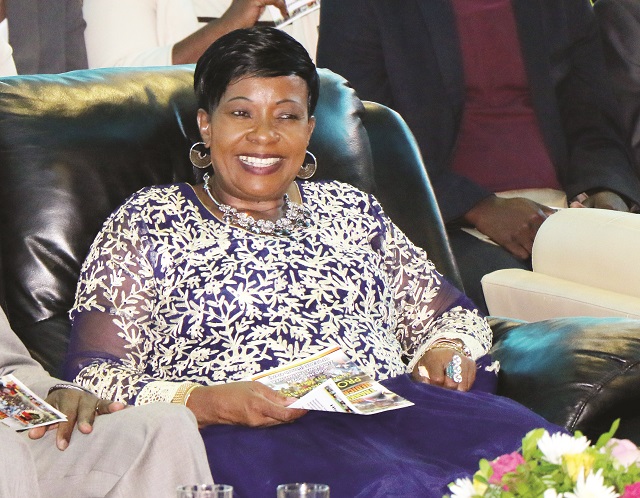

Auxilia Katongomara, Chronicle Reporter
First Lady Cde Auxilia Mnangagwa yesterday signed the Barcelona Declaration on Tuberculosis (TB) and the Bulawayo Declaration on HIV and TB, emphasising the importance of health education in the fight against the epidemics.
The First Lady who is the Ministry of Health and Child Care’s official cervical cancer ambassador and Bulawayo Minister of State for Bulawayo Cde Angeline Masuku both signed the declarations, joining scores of other politicians who have signed it.
The Barcelona Declaration is the founding document of the Global TB Caucus, created in October 2014, when The Union and the UK All Party Parliamentary Group on TB co-organised the first Global TB Summit in over 100 years.
The declaration is open to any political representative in the world to sign and is a demonstration of support and solidarity for efforts to end the TB pandemic.
It is designed to raise the profile of the disease among politicians and is a tool for advocates wishing to engage local decision-makers. In Zimbabwe, 140 political leaders have signed the declaration to date.
Speaking during a handover of 11 television sets from the National Aids Council to the Bulawayo City Council for the promotion of information on various diseases at the Zimbabwe International Trade Fair yesterday, Cde Mnangagwa said: “Health education has played a key part in this scale up as it has empowered our people with the correct and appropriate information for behaviour change and utilisation of prevention services. We have to sustain the approach and enhance it with the use of technology through which various topics such as HIV prevention, TB awareness, prevention and treatment can be tackled continuously and be re-enforced through strategies such as drama, music and poetry.”
“The TV sets that are being handed over today to Bulawayo City will go a long way in information dissemination particularly now as Zimbabwe tackles epidemics of HIV, TB and non-communicable diseases in particular cervical cancer.”
The First Lady encouraged content producers to target men in their campaigns as most of them are reluctant to undergo tests. “I would like to encourage the clinics and committees that would be responsible for the production of the programmes that would be shown on TV to also deliberately engage men with relevant and appealing messages to take up health services and also support their partners,” she said.
The cancer ambassador said it was sad that the nation continues to lose women due to lack of knowledge about cervical cancer which constitutes over 35 percent of the new cancer cases recorded each year in Zimbabwe.
“What is particularly sad is that most women die due to lack of information and stigma associated with cervical cancer,” she said.
The First Lady said she was honoured to officiate at such a function.
She said the signing of the declaration on TB is critical in light of the planned United Nations high level meeting on TB to be held in September which seeks to raise political priority for TB and secure commitment from heads of states and government for a coordinated global response to TB.
“The meeting follows a very successful ministerial conference on ending TB held in Moscow in November 2017 which resulted in high level commitment to accelerate the end TB strategy as expressed in the Moscow Declaration to end TB. I am therefore very glad to have been asked to add my own contribution in this process and pledge to end both diseases. Let me recognise the progress Zimbabwe has made in response to both HIV and Aids and TB over the years including the reduction of new cases and rapid scale up of access to treatment,” she said.
Health and Child Care Minister, Dr David Parirenyatwa commended the First Lady for her vision and support for the Ministry of Health.
“We want to close that tap where new infections are coming from and these new infections are coming from commercial sex workers, long distance truck drivers, prison settings. In the general population the percentage of HIV infection is 14 percent, and in prisons it’s 28 percent so it’s an area that we must close and young people particularly young women in institutions of higher learning, colleges and polytechnics. So please Amai may you talk to the young people because that’s where STIs and HIV infections are most prevalent,” he said.



 Online Reporter