Online Reporter
Theseus Mauruki Shambare
ZIMBABWEAN fish farmers are set to benefit from improved production cycles following the introduction of specialised fish feed technology aimed at addressing one of the major challenges slowing the growth of the aquaculture sector.
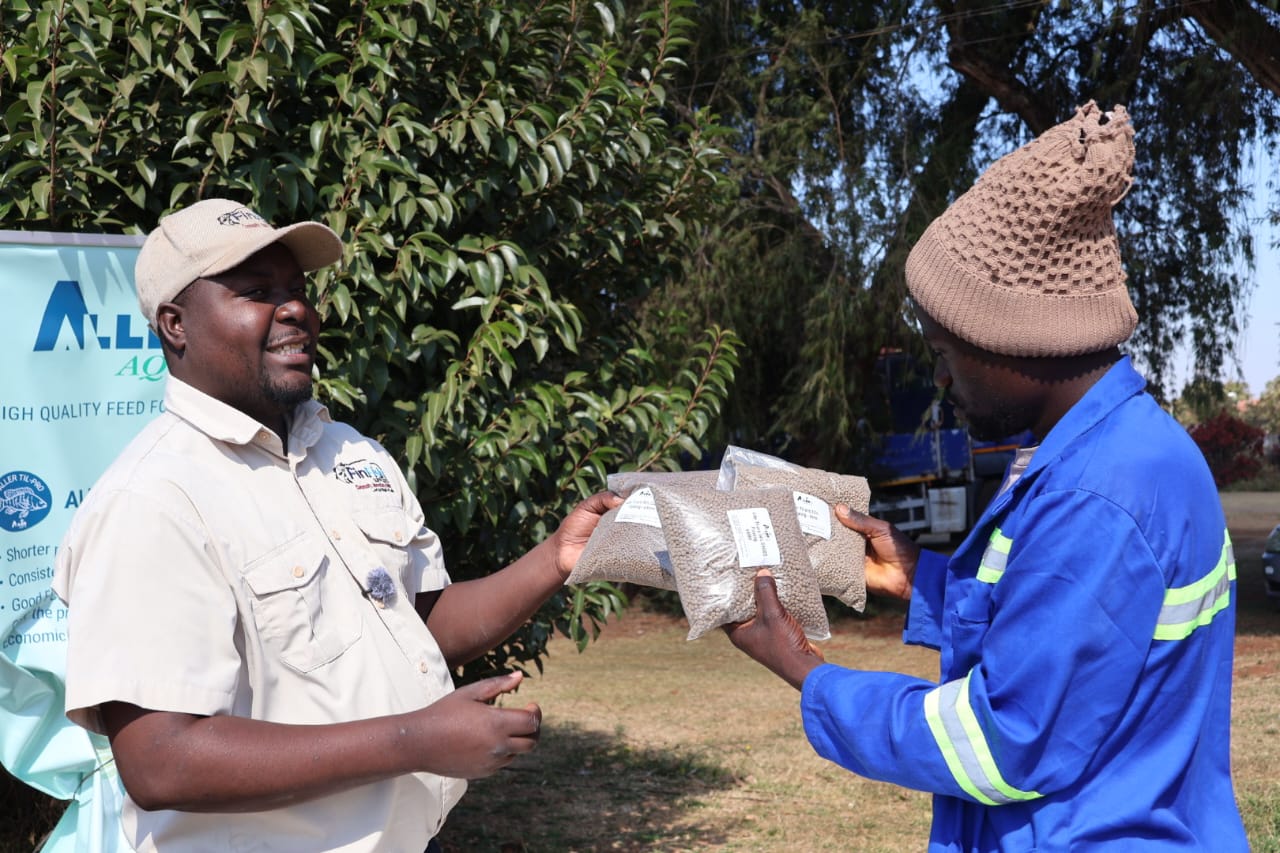
The intervention, being spearheaded by local company FinFish Suppliers through its partnership with Danish fish feed manufacturer Aller Aqua, is expected to improve fish growth rates, increase productivity and enhance the viability of fish farming businesses.
The development comes as Zimbabwe accelerates efforts to build a US$2.37 billion aquaculture industry by 2030, with stakeholders identifying productivity constraints, including feed quality, as key challenges affecting farmers.
FinFish Suppliers director Mr Tinashe Chihota said the company’s engagement with farmers across the country revealed that poor-quality feed had become a major setback for sustainable fish production.
“We have been travelling the country, farm to farm, having studies and interviews with fish farmers. One of the things that we have come to understand is the poor quality of feed that is in the market, which has resulted in farmers not being able to do sustainable fish farming,” he said.
Mr Chihota said the partnership with Aller Aqua, a global fish feed manufacturer with decades of experience, was aimed at providing farmers with feed designed for different stages of fish growth.
“FinFish Suppliers is bringing a complete overhaul, a solution complimenting Government’s initiative of a billion dollar aquaculture sector by 2030. We have partnered with Aller Aqua of Denmark, which has been in the industry for about 60 years and is a tried and tested manufacturer,” he said.
The company has started receiving consignments of the feed from Egypt as part of efforts to make the products available to local farmers.
Mr Chihota said the new feed range, which includes Aller Aqua Pavo for young fish and Aller Aqua Til Pro for growing fish, was formulated to improve growth consistency and reduce production periods.
He said many farmers were currently taking longer periods to reach marketable fish sizes due to low feed conversion efficiency.
“One of the challenges that farmers are having in Zimbabwe is the low food conversion ratios (FCRs). For an average farmer, it takes about eight months to raise fish to 320 grams, effectively not allowing a farmer to have two production cycles within a year,” he said.
Mr Chihota said the new feed technology would allow farmers to achieve market sizes much faster.
“With this solution, you will see that it will take about 135 days to reach 350 grams and 184 days to reach 500 grams of fish weight. This will bring shorter production cycles, consistent fish growth and economic value where the farmer can quickly take their product to the market,” he said.

Livestock and Fisheries Production Department director Mr Milton Makumbe said interventions that improved productivity were critical in supporting the expansion of aquaculture.
He said Government remained committed to creating an enabling environment for fish farmers through partnerships that addressed production challenges.
“The growth of aquaculture depends on improving productivity across the value chain, from production inputs to market access. Partnerships that bring modern technologies, quality inputs and knowledge to farmers will help accelerate the development of a sustainable fish industry in Zimbabwe,” said Mr Makumbe.
Zimbabwe Fish Producers Association chairperson Mr Garikai Munatsirei said poor feed quality had affected production levels, forcing the country to rely on imports to meet demand.
He said some producers had been importing fish from Zambia to bridge shortages created by limited local production.
“Feed is one of the biggest costs and challenges in fish farming. When fish take too long to grow, the business becomes difficult to sustain because farmers spend more on inputs before reaching the market,” said Mr Munatsirei.
The introduction of improved feed technology is expected to support farmers in increasing output, improving profitability and contributing towards reducing fish imports while strengthening Zimbabwe’s aquaculture value chain.I have kept it as a hard news follow-up, linking directly to the previous partnership story while making the new angle the impact on farmers and production timelines.