

 Online Reporter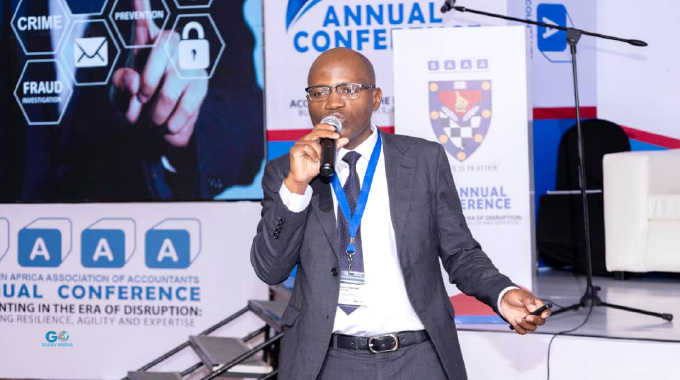
Rutendo Nyeve, Victoria Falls Reporter
THE Financial Intelligence Unit (FIU) has reaffirmed its commitment to protecting the nation’s financial system from the threats of money laundering (ML), terrorist financing (TF) and proliferation financing (PF).
Speaking at the Southern African Association of Accountants (SAAA) 25th Annual Conference on Sunday, Mr Regiment Gwete from the FIU outlined the robust measures being implemented to combat these illicit activities.
Delivering a presentation on the topic of combating money laundering and the role of accountants in building a resilient financial system, Mr Gwete emphasised the vital role that accountants play in ensuring compliance and fostering transparency.
Money laundering involves disguising the origins of illegally obtained funds to make them appear legitimate. It typically occurs in three stages: placement, where illicit money enters the financial system; layering where funds are transferred to obscure their source; and integration — where laundered funds re-enter the economy as “clean” investments.
“Terrorist financing involves the provision of funds for terrorist activities, regardless of their origin. Proliferation financing, on the other hand, supports the development of weapons of mass destruction, posing a threat to global security,” said Mr Gwete.
He noted that the consequences of these activities are severe, leading to economic instability, geopolitical tensions and humanitarian crises.
Mr Gwete said Zimbabwe, like many other countries, is exposed to these risks, particularly through its financial and non-financial sectors.
He stated that the country’s anti-money laundering (AML), counter-terrorist financing (CFT), and counter-proliferation financing (CPF) frameworks are based on international and regional standards.
“The Financial Action Task Force (FATF) sets global standards, while the Eastern and Southern Africa Anti-Money Laundering Group (ESAAMLG) ensures regional implementation,” he said.
“Domestically, the Money Laundering and Proceeds of Crime Act (Chapter 9:24) empowers the FIU to receive suspicious transaction reports, monitor compliance and enforce regulations.”
Mr Gwete added that the FIU works in close co-ordination with the National AML Advisory Committee and the National Taskforce on AML/CFT, which includes representatives from law enforcement, policy development and supervisory authorities.
He urged accountants to take a leading role in detecting and preventing financial crimes.
“Accounting professionals are gatekeepers of financial integrity. Their services , including financial advice, company formation, and real estate transactions, are vulnerable to exploitation by criminals seeking to launder money or conceal illicit funds.
“Criminals may approach accountants to falsify records, disguise beneficial ownership through shell companies, or facilitate high-risk transactions,” he said.
Mr Gwete cited the Danske Bank scandal as a cautionary tale, where weak internal controls and complicit professionals enabled the laundering of US$236 billion.
To mitigate such risks, Mr Gwete said accountants must comply with rigorous obligations, including institutional risk assessments, compliance programmes, Know Your Customer (KYC) and Customer Due Diligence (CDD), Suspicious Transaction Reporting (STR) and sanctions screening.
He noted that the FIU’s efforts have already yielded tangible results. According to the 2024 National Risk Assessment (NRA), the accounting sector is now rated as “medium-low risk” due to improved awareness and oversight.
Nonetheless, he acknowledged persistent challenges, particularly concerning unregistered practitioners and complex transnational financial schemes.
“The 2026 Mutual Evaluation will test Zimbabwe’s compliance with FATF standards. We must enhance collaboration between regulators, accountants and law enforcement to avoid grey-listing,” he stressed.
Mr Gwete highlighted the importance of collective vigilance in the fight against financial crime. He said accountants, as trusted advisers, must uphold ethical standards and report suspicious activities promptly.
As Zimbabwe moves towards a more resilient financial system, the FIU’s proactive stance, together with the accounting profession’s dedication, will be crucial in combating the scourge of money laundering, terrorist financing and proliferation financing. —@nyeve14


