Chronicle Editor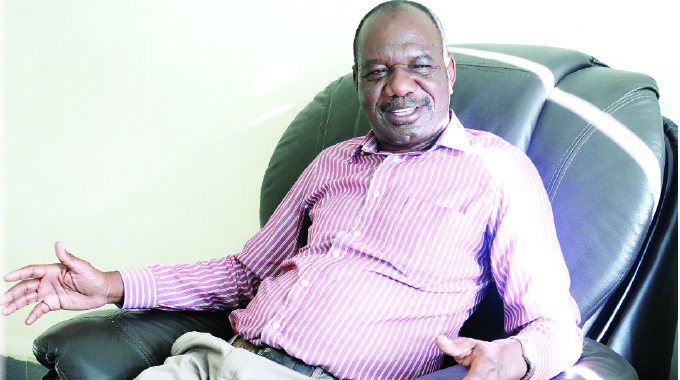
WE continue our interview with Dr Peeps Gonde pseudonym Cde Philip Nkomane. Dr Gonde now an academic based at the National University of Science and Technology (Nust) in our previous edition talked about how he survived the Rhodesian onslaught on Freedom Camp (FC) on 19 October 1978. He told our Assistant Editor Mkhululi Sibanda (MS) that it was a miracle that he came out unscathed as his colleague with whom he shared the tent had his stomach ripped open by a bomb and died on the spot. Today he continues the conversation by talking about how the Rhodesians took over the Zambian airspace during the bombing. Dr Gonde also speaks about the effects of war and says the war is not a picnic as it is fraught with many dangers.
MS: You were still talking about the attack on Freedom Camp (FC).
Dr Gonde: That was a real surprise attack because Green Leader, the callsign for Rhodesian Airforce squadron leader, Christopher Dixon circulated a message at the Lusaka International Airport, communicating directly to the Control Tower ordering the Zambians to abide by his instructions. Any plane that was either landing or taking off, Green Leader was authorising that. I think it was the Kenyan Airways that was due to land and they had to seek a special request from Green Leader. He even directed his message to the Zambian Airforce Base where he said he had no quarrels with the Zambians but was fighting the Rhodesian terrorists, referring to us. In his words he said; “You are instructed to obey my orders, no plane should take off, I repeat I have no quarrels with Zambians, I am fighting the Rhodesian terrorists”. He said if any plane took off they would face the consequences. They all agreed that they would comply. That shows that war is a traumatic experience, I usually hear boys saying they want to go to war but they don’t know what they would be subjecting themselves to. Five minutes of bombardment is like a lifetime. Thirty minutes of being subjected to a bombardment is a lot.

MS: After the bombing of FC what was the situation like?
Dr Gonde: After that the victims of the bombardment were buried. Hundreds through mass burying. I was 17 years old and seeing bits and pieces of human body parts scattered on the ground was indeed a traumatic experience. I was then moved to Maheba, which was a transit camp and later on to Solwezi Camp where l became an instructor. The Camp Commander at Solwezi was Bitwell with Kumbirai Mari being Chief of Staff. Other instructors there were Ben popularly known as “Sikwamula”, Nhlanhla, now National Hero and the late Cabinet Minister, General Sibusiso Busi Moyo, Mpabanga and Gwanzura who was known as Chrispen Chaminorwa. We trained recruits in conventional warfare. We trained the first group of regular forces that came to Maheba. Before that the Zambian Defence Forces had trained another ZPRA contingent of regular forces at Mlungushi. At Maheba the first group that we trained had three regular battalions. I remember one time there was a bombardment there and we had already dug defensive positions. The night before we were listening to the news on the radio when we heard that the Rhodesians had bombed ZANLA camps in Mozambique. I remember remarking to the comrades that we should be careful as the Rhodesians might come for us the next day. Indeed the next morning they were upon us but they were held back by our anti-air unit armed with Zegues. Those comrades were extremely brave. They fought and were positioned in triangles. When the Rhodesian aircrafts came to bomb we would go to our shelters leaving the anti-air guys to face the enemy and exposed. At some point, one of the Umkhonto WeSizwe comrades who was deployed to Maheba with us, Cde Tau became so excited by the sound of the Zegue that he wanted to get out of the trench and see for himself what was happening outside. We had to refrain him from doing that. In that morning raid, we, however, lost seven comrades. It was then decided that we bury them that late afternoon. I told my friend Mpabanga that I would not go to the burial service because the enemy would raid us again. My point was that we should wait and carry out the burial at midnight because if we do that during the day we might be attacked again. I had the gut feeling that something bad was going to happen and for sure during the burial, the Rhodesians bombed again. It was around 5pm and we lost 10 comrades. The burial was then carried out deep into the night. Then after training the first group, we received some comrades who had trained in Angola in semi-conventional warfare while others came from Libya. Among those were Butholezwe and Mahlangu. Then conventional battalions were formed. Later on, I teamed up with Malikongwa, Warren Dube and Dubhu (Brigadier-General Tjile Nleya) who was already one of the top commanders in ZPRA. We were part of the team that went to receive our troops that had completed their training in Angola. The place was at the border of Zambia and Angola. That is when we saw the Rhodesian intelligence system at play.
MS: What was happening?
Dr Gonde: The Rhodesians might have picked intelligence that there were trained people from Angola who were going back to Zambia ready for deployment. So they wanted to track and eventually attack them. The Rhodesians were sophisticated in their intelligence gathering and while we were on our way to receive the group we noticed that some white people were keeping tabs on us, they were following us. There was one who was using a motorbike and we ended up cornering him.
MS: So what did you do to him?
Dr Gonde: We interrogated him and the guy maintained his story that he was a Zambian farmer. Although we left him on his own we had strong suspicions that he was a Rhodesian spy. The nature of our war was fraught with a lot of secrecy. Information handling was very delicate. Eventually, the troops that we were waiting for arrived and we had to escort them to the camps. I led one of the convoys. The troops were not armed and we travelled mainly at night to avoid being detected by the enemy. We arrived at Kabwe Range just before sunrise and we could sense that there was the presence of the enemy. It had been raining throughout the night and the troops wanted to hang their belongings so that they could dry. I advised the troops not to hang their blankets on trees as that was going to attract the attention of the enemy. However, they did not take the instruction seriously. At around 4pm we noticed a spotter plane circling around our position and those newly trained troops didn’t even care. There was something about the Angolan-trained guerillas. We then drove to where the troops were going to be deployed and passed through Lusaka at about 8pm. On the way the spotter plane was upon us again, that time spotlighting the convoy. We arrived at emagojini (CGT) at around 4am.
λ Dr Gonde will now conclude his narration in our next issue and will talk about the ceasefire period and his integration into the Zimbabwe National Army (ZNA).


 Online Reporter