admin
admin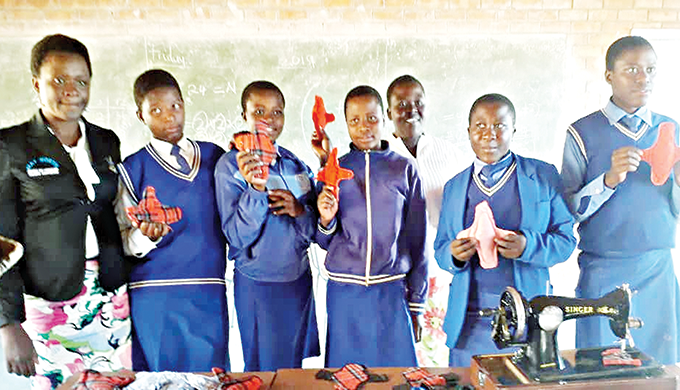
Andile Tshuma, Chronicle Reporter
A GROUP of five disadvantaged pupils from Umguza are bringing smiles and relief to hundreds of girls in the area who are struggling to cope with menstruation related costs by manufacturing low-cost re-usable sanitary pads.
The girls use fleece and brushed cotton to make the sanitary pads, a button to keep them in place and thread to sew the materials together.
Most of the under-privileged girls were reportedly missing school while squatting for hours on end above small pits in their homes to avoid staining themselves during their periods.
Alternatively they use unsafe materials like old newspapers, leaves, old clothes or elephant dung.
A packet of the cheapest pads costs about RTGS $5 up from about RTGS $1 which has always been out of reach for thousands of girls in Zimbabwe.
Since February, the five member group from Mahlothova Secondary School has been sewing reusable pads for themselves and peers which has minimised the number of girls who miss school due to menstruation.
They were trained to make sanitary towels for themselves and others during Sister to Sister sessions.
Sister to sister is a National Aids Council mentoring programme for girls which focuses on skills training and sharing information on sexual reproductive health. T
he girls will be travelling with Matabeleland North Provincial guidance and counselling teachers’ chairperson Mrs Gabriella Chikara across Umguza district where there are 23 secondary schools and the whole of Matabeleland North province empowering other girls and sharing the skills they have learnt.
“This is empowerment. In as much as times are hard and the girls are facing a lot of challenges, they are taking it upon themselves and using taught skills to provide for themselves and for others,” said Mrs Chikara.
Teachers at the school said it was touching that a number of girls are forced to miss school on their menstrual days as they cannot afford to buy sanitary ware.
According to reports, some girls still do not come to school as the pads provided at school would have been taken away by their mothers, who also need them and cannot afford to buy.
The girls said shortage of material is a challenge as they cannot make enough pads for everyone.
“We use the sewing machine from the fashion and fabrics department, however, we were also trained to make the sanitary napkins with a needle and thread if there is no machine,” said Melody Nkomo, a Form Three pupil who leads the group.
“We would love to make more of these pads; however getting the materials required is a challenge. We sometimes get some materials from teachers but they run out very fast.
“Sometimes girls approach us at school asking for pads and when we do not have material to make some, we feel like we have failed our sisters as they would be looking up to us to provide the pads,” she said.
Umguza Rural District Council gender officer, Ms Ruth Chamunorwa said during a Gender Links Sexual reproductive health and rights reporting workshop the pupils at Mahlothova Secondary School had shown that it was possible to empower the girl child and ensure that she empowers others.
‘Children, particularly the girl child, living in rural areas tend to face more challenges compared to children in urban areas.
“Access to sanitary wear is more challenging and we are happy to be involved in such trainings that help the girls learn to help themselves with resources available. We hope that this initiative reaches out to more girls in the district and in the province,” said Ms Chamunorwa. — @andile_tshuma.



 Online Reporter