admin
admin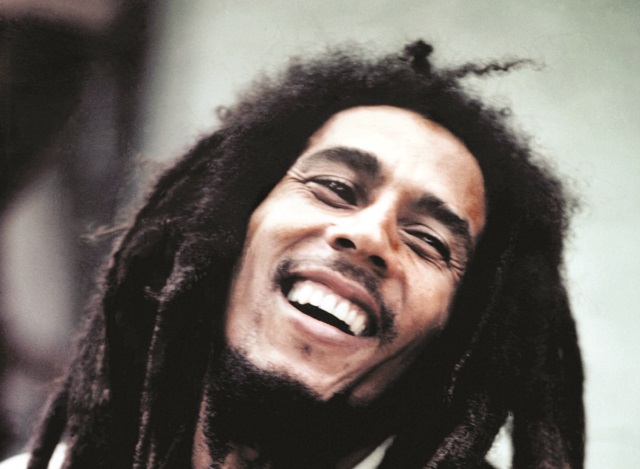
Fred Zindi
This week, the nation celebrates 35 years of independence. In the past 35 years, these celebrations have been marked by musical galas and this trend continues today, but it no longer has the same impact as when we were all gripped by the independence euphoria of 1980. Most of the musicians who were involved at these celebrations, including Bob Marley, have died. The only one who seems to have stood his ground is none other than Comrade Chinx who has consistently appeared at every gala since 1980.
He is celebrated today as Zimbabwe’s musician who survived the war of liberation and continues unscathed. Every year during independence celebrations, Comrade Chinx is featured on radio and television .
During the 1980s, local bands which were in existence included Marxist Brothers made up of Simon and Naison Chimbetu, Safirio ‘Mukadota’ Madzikatire, Comrade Chinx, Kassongo Band, Maungwe Brothers, Paul Mpofu, Lovemore Majaivana, Tineyi Chikupo, Rusike Brothers, Marshall Munhumumwe and The Four Brothers, The Harare Mambo Band, The O.K. Success, Devera Ngwena Jazz Band, James Chimombe and The Ocean City Band, Ngwenya Brothers, Paul Matavire and the Jairos Jiri Band, Solomon Skuza, Leonard Dembo, Zimbabwe Cha Cha Cha Kings, New Black Montana,Tineyi Chikupo, Zexie Manatsa and the Green Arrows, The Harmony Sounds, Nyami Nyami Sounds, Thomas Mapfumo and The Blacks Unlimited and Oliver Mtukudzi and The Black Spirits, to mention only a few.
Apart from Oliver Mtukudzi, Comrade Chinx , The Rusikes, The Harare Mambos and Lovemore Majaivana, all the musicians mentioned above have departed.
As the nation celebrates 35 years of independence, my mind flashes back to where it all began, on the April 18, 1980.
On the eve of independence 1980, the late Jamaican superstar, Bob Nester Marley graced the occasion. He churned out songs from his “Survival” album. The show only lasted for 30 minutes in which he sang: “War”, “No More Trouble”, “Chant Down Babylon”, “Blackman Redemption”, “Get Up, Stand Up (for your rights)”, and of course,”‘Zimbabwe” and the whole nation went ecstatic.
It was almost inevitable that a man so identified with the struggles against class and racial oppression should be invited to perform at the celebrations of the birth of a new nation, Zimbabwe
The first contact between the new Zimbabwe Government and Bob Marley was in March 1980. It was simply, an invitation for Bob Marley to attend the country’s Independence Celebrations.
The intention was not for him to perform, so the invitation was just for him and wife, Rita. However, Bob Marley, being the revolutionary he had become, wrote a song entitled “Zimbabwe” just before Zimbabwe celebrated its Independence. He insisted that his whole band should be invited too and would give a performance at the celebrations.
Chris Blackwell, his manager at the time and chief executive officer of Island Records, was against this tour, but Marley who had been following events in Zimbabwe decided he would go. He hired a PA system in London and paid for its freight to Zimbabwe at his own expense.
During the years of Chimurenga days, when the freedom fighters were in the bush, Bob Marley’s music had been adopted by the guerrilla forces of the Patriotic Front.
In the weeks following the initial invitation the idea grew that, maybe, Bob Marley and the Wailers could actually perform at the celebrations. The Zimbabwe Government put negotiations in the hands of Job Kadengu and Gordon Muchanyuka, two African businessmen with heavy ZANU-PF credentials.
By the time the band had arrived in Zimbabwe, a chartered Boeing 707 was on its way from London to Salisbury (Harare) with 21 tons of equipment; a full 35-thousand watt PA system plus backline equipment. It was one of the most extraordinary logistics operations. Mick Cater, from Alec Leslie Entertainments who was the sound technician and team leader, flew down the night before with the stage crew and the equipment and then set himself the problem of building a stage in time for the Independence Celebrations.
By Wednesday, when the 12-strong road crew had arrived in Zimbabwe, he had six hours in which to construct the stage and find sufficient power for the PA. By the time the Independence Ceremony had started, the stage was ready.
At Rufaro Stadium, 10 minutes drive from the centre of town, Zimbabwe Television (ZTV) found its best camera positions while the seating arrangements for the world’s dignitaries including Prince Charles and Lord Carrington of Britain, were being decided. To one side of the stadium a construction crew completed work on a massive stage. This was for Bob Marley and the Wailers. Now, “massive”, of course, is a relative word. It’s the kind of stage accepted as par for the course at most European rock festivals. In Zimbabwe, it became one of the greatest construction jobs ever seen. And it was built in something like six hours. The country had never seen such massive musical equipment before. Heaps and heaps of speakers similar to those displayed during Woodstock festival were at Rufaro Stadium on April 18, 1980.
Bob Marley and the Wailers, plus cooks and children including Ziggy Marley, who had departed from Jamaica for London on the Sunday evening were now in Zimbabwe.
At the invitation of Thomson Kachingwe who was running the joint, Bob Marley and the Wailers found themselves at Job’s Night Club, in down town Salisbury.
They had spent the previous night with the guerrillas at Skyline Motel some 20 kilometres outside of town since all hotel space in Salisbury had long been taken by the Government official guests and, of course, by the media.
The next day, Bob Marley even had time to visit Mtoko where he witnessed first-hand the ganja planters.
True to his Rastafarian beliefs, he sampled some.
At 8:30pm, the Wailers found their way into Rufaro Stadium, working their way backstage. The ceremony had already started, with eager young black and white school kids going through gymnastics routines.
Flash back! At 10pm Bob Marley and the Wailers are introduced.
It’s a poignant moment; Bob Marley takes a celebratory stance at the front of the stage, calling out “Viva Zimbabwe!” and each time eliciting a greater response from the audience. It is a moment pregnant with possibilities. Rastafari in our father’s land. A realisation of the inherent unity in black culture, as emotional for the audience as it is for the band. Homecoming!
The band’s mixing desk is located halfway down the side of the stadium. The concert starts at 10pm, and Zimbabwe responds to Bob Marley and the Wailers.
The people, who have all along been listening to speeches from the dignitaries and watching the inauguration of a new prime minister, have now left their seats in the grandstands, finding room to dance and, well, simply express themselves.
It is, indeed, an extraordinary night. Even though the majority of the audience speak Shona — (Salisbury is situated in Mashonaland) — and the cries of ‘Jah Rastafari’ find no response as this language is still new to the people. Indeed, the Haile Selassie backdrop behind the band mystifies at least one person. This is a night of some great significance and enjoyment, undiminished by the police action some ten minutes into the set when the acid stench of teargas wafts across the stage. The police, worried by a unit of ZANLA troops demanding to be allowed into the stadium, set off a teargas canister. The audience run hysterically, while the band stops playing. A moment of chaos resolved when the ZANLA guerillas are allowed in.
They run to the side of the stage, acknowledging Bob Marley and the Wailers. The show continues with “War/No More Trouble”, “Chant Down Babylon”, “Blackman Redemption”, “Get Up, Stand Up (for your rights)”, and of course, “Zimbabwe”.
Bob Marley and the Wailers are on stage for half an hour. It’s one of the shortest sets the band has ever played but, of course, they are not in Zimbabwe as part of some commercial enterprise. Tonight Bob Marley and the Wailers have expressed a potent solidarity with the Zimbabwe struggle. All this for free, of course!
How I wish Zimbabwe could re-live that moment once again.
Maybe if Luciano had stayed another eight days, that 1980 feeling could have come back. Just a thought!
Feedback: [email protected]


 Online Reporter