

 Online Reporter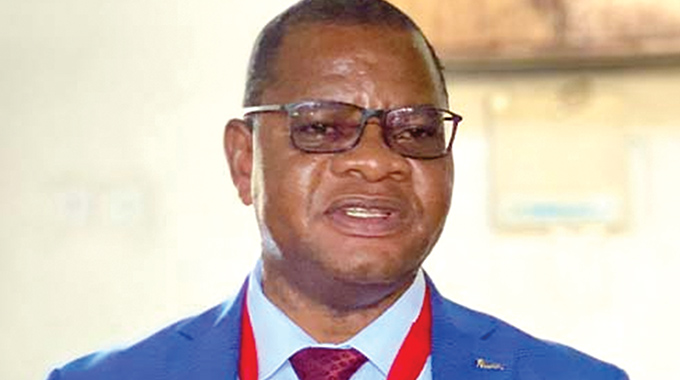
Theseus Shambare
GOVERNMENT has reaffirmed its commitment to achieving food security and improved nutrition for all citizens, despite facing challenges such as drought and funding shortfalls.
Speaking at a Food Security and Nutrition Thematic Working Group (TWG) meeting on Tuesday, Lands, Agriculture, Fisheries, Water and Rural Development permanent secretary Professor Obert Jiri outlined the Government’s strategies and progress in attaining these goals.
Prof Jiri emphasised the importance of the TWG.
“This is the foundation of all our work as we strive to ensure ‘Food Security and Nutrition, Everywhere, Everyday.”
The TWG serves as a platform for collaboration among government agencies, the private sector, development partners and academia, operating under the government’s “Whole of Government Approach”.
The Permanent Secretary highlighted the TWG’s role in strategy development, policy advocacy, programme implementation and emergency response planning.
He acknowledged the impact of the 2024 El-Nino induced drought.
“During the ravaging effects of El-Nino induced drought experienced in 2024, which threatened food security among the people of Zimbabwe, the TWG was supposed to come up with strategies and contingency plans to curb food insecurity challenges.”
Prof Jiri commended stakeholders for their positive response to the Government’s drought response plan.
Despite the challenges, Zimbabwe has recorded significant progress in cereal production.
“We have recorded a 162,7 percent achievement on percentage of cereal production over the national requirement and this translates to a 320 percent increase in cereal production compared to the previous season,” said Prof Jiri.
He also noted improvements in self-sufficiency, with increased beef and milk production.
“Also a 0,4 percent growth in national herd was recorded despite cattle deaths during the El-Nino induced drought experienced in 2024,” he said.
However, Prof Jiri said, the funding disbursements have been a challenge, affecting progress in certain areas, particularly the drilling and equipping of boreholes.
“In this regard, in the spirit of a whole of Government approach, I am encouraging the private sector and development partners here present to complement Government efforts on various programmes and projects so that we realise the envisaged Vision 2030.”
Looking ahead, Prof Jiri announced that the TWG will be reviewing progress from 2021 to date in preparation for the National Development Strategy 2 (NDS2).
“As you may be aware that the NDS1 is coming to an end in December 2025, I would like to remind you that as a TWG, we need to review progress from 2021 to date to ascertain our performance vis-à-vis set targets,” he said.
The NDS2, set to launch in November 2025, will have a slightly expanded focus, becoming the Food Security, Climate Resilience and Environmental Protection TWG, with greater involvement from the Ministry of Environment, Climate and Wildlife.
Prof Jiri outlined the key priority areas for NDS2, including food security and sovereignty, nutrition security, improved livelihoods and agriculture-based and led economic development.



