


 Chronicle Editor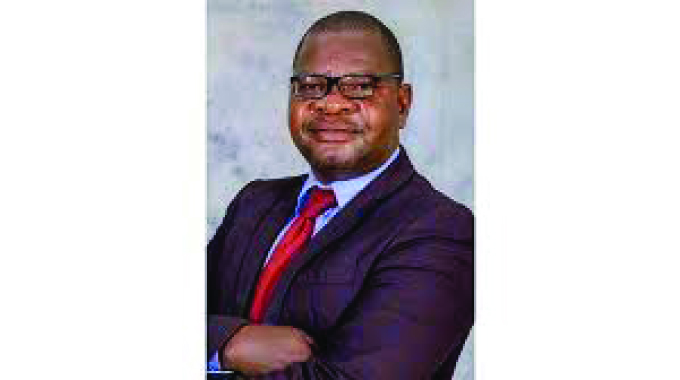
Rutendo Nyeve, Sunday News Reporter
THE Government has reaffirmed its commitment towards achieving food security with strides having been made in the area of climate-proofing agriculture complemented by mechanisation, research, veterinary services as well as use of technology, among other initiatives.
Rolling out the ministry vision, newly-appointed Permanent Secretary in the Ministry of Lands, Agriculture, Fisheries, Water and Rural Resettlement Professor Obert Jiri said the main focus area of the ministry was to ensure food security which he said was at the heart of the Second Republic and was supposed to start at household level.
“As we go into 2024, we are focused on one thing which is food security for everyone. The cropping sector is targeting that driven by climate-proofing our agriculture at the household level as well as at a large scale. At the household level we have our eyes on Pfumvudza/Intwasa which we are encouraging everyone to do. We expect everyone to have started the potholing and mulching processes and ensure that they plant in the next few weeks as the rains come. At the large scale level, we are focusing on rehabilitating irrigation schemes across the country and making sure that everyone who has access to irrigation embarks on producing food for the country. We are anticipating that with these two approaches we should be able to achieve food security,” said Prof Jiri.
He said other deliberate initiatives such as mechanisation and use of research would come in handy to support the climate-proofing of agriculture, adding that they were alert to the predicted El Nino effect.
“The other areas should support this focus and these include our mechanisation, research and our veterinary services. These should be the pillars from where the food security objective should be built on and achieved.
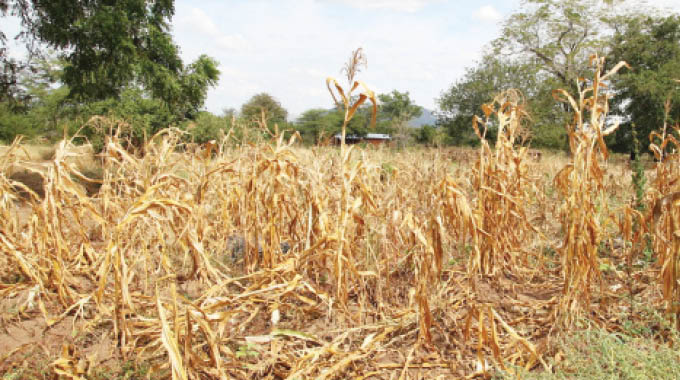
“We are also aware of the El Nino effect. We know that we are going to receive normal to below-normal rainfall and our call for climate- proofing agriculture makes more sense, it’s a strategy to minimise the effects of such climate patterns. We are focused to the extent that with or without El Nino, we should be able to produce enough food for the country. We are focused on making sure that every household is able to produce enough food so that we avert the effects of drought,” said Prof Jiri.
Prof Jiri said the ministry was seized with increasing the national herd to surpass six million through tackling various aspects affecting it such as the quality of the herd, feed, as well as diseases.

“We have realised that the quality and weight of our national herds has lowered immensely. At some instance, if you take a Matabele goat and our rural cattle, they are almost of the same size. You may at times probably think that the goat is bigger. What causes this is that our cattle continue to do inbreeding. We have to come up with measures to improve the quality of our head through bringing in improved breeds. We are doing this through encouraging artificial insemination which is spearheaded by our universities like Chinhoyi University of Technology and our veterinary college in Mazowe. They are facilitating this process and distributing to all parts of the country. “So these are part of the programmes that we are doing to improve the quantity and quality of our herd,” said Prof Jiri.
He said the second aspect was to ensure that the country’s livestock had adequate food even when the pastures were dry.
“Our cattle need food, as you can see, during September to November our pastures would have been severely affected by the dry spell. We therefore encourage farmers to prepare hay bales to mitigate the effects of this dry season. We also encourage farmers to use molasses or other treatments and work with the extension officers to ensure the quality of our cattle is not compromised.
“Thirdly, we are looking at diseases that affect our cattle countrywide. We have various diseases that affect our livestock but of concern are two which are foot and mouth as well as January disease. Foot and mouth is more prevalent along the borders as well as near national parks where cattle meet with buffaloes, that’s where the diseases come from. At the moment, it is problematic near parks but we have managed to contain it there,” said Prof Jiri.
He said the problematic one was January disease that caused the loss of more than half-a -million cattle since 2019.
“This is a huge number. If they had not succumbed to the disease, we could have surpassed six million already. This disease is caused by ticks and is prevented by dipping. As such we encourage the five-five-four dipping regime so that the ticks are reduced. For A1 and A2 farmers, they can use sprays to get rid of ticks,” said Prof Jiri.
However, Prof Jiri is not new in the ministry, having served as the Ministry’s Chief Director before taking over from Dr John Bhasera who was reassigned to the Ministry of Local Government. The Ministry of Lands, Agriculture, Fisheries, Water and Rural Resettlement conducted a week-long strategic planning workshop in Bulawayo last week. — @nyeve14


 Online Reporter