

 Online Reporter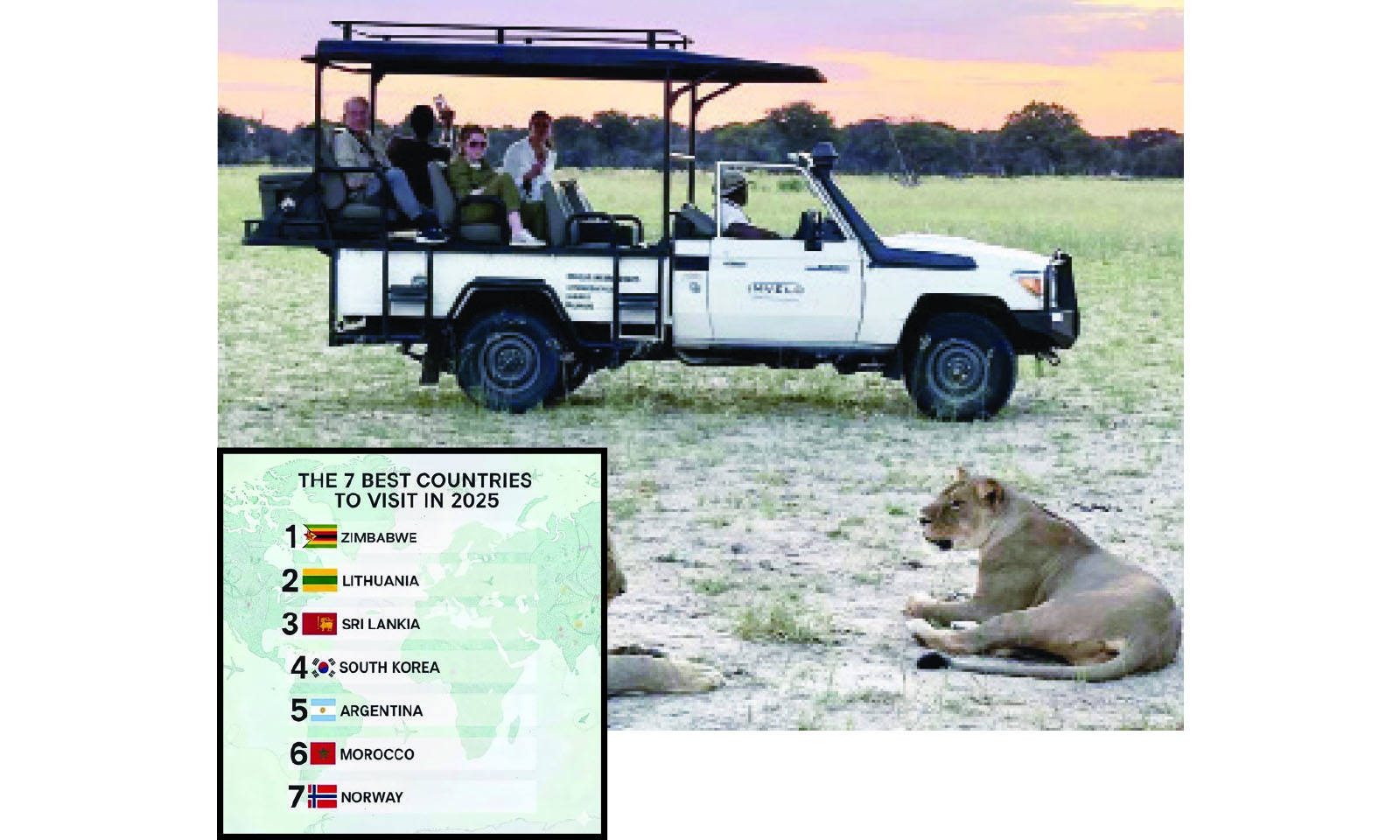
Victoria Ruzvidzo
Editor’s Brief
Zimbabwe’s growth trajectory was solidly reaffirmed recently when it topped the global list of the best destinations for 2025.
This brings forth stirrings of national pride, patriotism and a new high of achievement whose equal is difficult to discern. This silences prophets of doom we have always had to contend with. It was awarded by no less a publication than Forbes, which is highly esteemed in business circles with a sustained record of professionalism, integrity and incisiveness. Just going through the net after this transcendent milestone revealed in crystal clear terms that we are firmly on the world map.
Some history on Forbes may well put things into context. Forbes was founded in 1917 by Bertie Charles (BC) Forbes in New York City, with the main goal of promoting entrepreneurship and capitalism.
The main features of Forbes, as any cursory study on the net will reveal, revolve around its presentation of rich lists of companies and individuals globally. It uniquely advances thought leadership by featuring articles from influential business leaders, politicians and experts. Business news and analysis are quintessential elements of this publication providing insights on finance, investing and entrepreneurship.
Today Forbes Magazine remains prominent in business and finance, offering a mix of news, analysis and thought leadership. Forbes publishes 49 global editions in 83 countries and in 28 languages. It boasts 132 million unique page views for its online editions and a print readership of 6 million. It is considered one of the top business magazines globally alongside Bloomberg, Businessweek and Fortune. Factors contributing to Forbes authority include:
- Innovative approach
- Thought leadership
- Data- driven journalism
- Strong branding
- Networking opportunities at its events
- Stimulating debate on substantive issues.
It is such a publication that wrote: “Zimbabwe is a mosaic of rugged wild terrain and deep ancestral heritage where jagged granite outcrops rise above sun scorched golden plains and skies stretch wide over rustling acacia goves.”
It went on to describe Victoria Falls, Eastern Highlands and Great Zimbabwe and a must-visit country for those “chasing opportunities for wellness, travel, city jumping and low-density travel”.
I further sought opinion on the net to ascertain reactions and thoughts from outside our borders. There was a surfeit of compliments as I probably expected. One example will suffice. Dianne Kokonidis wrote a most eloquent piece on Zimbabwe.
She is a frequent visitor here. She is a content creator, author and story teller from South Africa, who works as the content manager at Wild Wings Safaris. She has a background in marketing, hospitality and has also worked as a freelance content strategist, English language coach and website wrangler.
She narrates how majestic Victoria Falls is and wrote: “It is more than a spectacular sight, it’s also the adventure capital of Africa . . . and yet beyond the adrenalin and bucket-list photos, it’s the people — their warmth, humour and hospitality that make every visit unforgettable.”
From there she moved on to Hwange National Park and commented: “Our last visit reminded us that Hwange isn’t just about wildlife, it’s in the atmosphere. The stillness before dawn. The laughter around the fire-pot. The genuine warmth of its guides and lodge staff who treat every guest like family.”
She was not done yet, not by a long shot!
She goes on to categorically state that Zimbabwe is more than deserving of the Forbes recognition also because it presents a sense of real Africa — untamed and authentic.
She said: “In an age where many destinations feel over-curated, Zimbabwe still feels raw and real, the kind where nature still sets the pace, safaris here are intimate, unhurried and profoundly immersive . . . you will find space for reflection, for connection, for wonder”.
She has huge compliments for our safari personnel too, indicating they also set Zimbabwe apart by “combining sharp bush knowledge, sharp tracking skills and a genuine passion for conservation and storytelling.”
I would probably reproduce the entire article, but space constraints preclude me from doing so. She notes that Zimbabwe is a country on the rise. Perhaps I sum up her submission in this instalment with words she wrote towards the end;
“After years of global challenges and under-the-radar beauty, the country is stepping into the light again and it’s about time. With improved infrastructure, growing investment and renewed confidence from the international travel community, Zimbabwe’s future is brighter than ever. But it’s not just the landscapes and wild life that make Zimbabwe special. It’s the people. Zimbabweans are resilient, resourceful and warm-hearted, with an enduring optimism that carries them through challenges.”
Need I say more here?
President Mnangagwa has repeatedly highlighted the importance of tourism. He has emphasised that it is a low-hanging fruit and a more stable source of revenue in the face of the volatility and unpredictability of commodity prices. The very gratifying results we witness today are at his instigation.
He exemplified the gift of intuition that leaders have. We will not get carried away by this supreme international recognition. It is often said that getting to the top is easier than staying there. It’s a challenge on its own.
It is in that vein that the Tourism and Hospitality industry policy document the President launched on August 4 2025, to be precise, comes at a most opportune time. Now all eyes will be on our country.
Tourism is truly on a rebound. It surpassed its US$5 billion revenue target which was meant for 2025 year-end. The blueprint ensures that we are focused on the issues at hand. Six policy pillars have been adopted which are:
- Utilising innovative frameworks to accelerate tourism and hospitality industry development
- Developing a robust physical and digital infrastructure for the tourism and hospitality industry
- Developing and utilising innovative and stable financing infrastructure to facilitate the tourism and hospitality industry
- Strengthening human capacity development the tourism and hospitality industry
- Strengthening a facilitatory legal and regulatory infrastructure for the tourism and hospitality industry
- Fostering regional and international cooperation to grow the tourism and hospitality industry
During the launch of the Tourism and Hospitality industry blueprint, the President said “Thus in the Second Republic, Zimbabwe is focused on growing the tourism and hospitality industry to make it one of the top contributors to the Gross Domestic Product, alongside mining, agriculture and manufacturing.” This was even prior to the Forbes ringing endorsement of Zimbabwe!
Our path is clear and it’s time to put all hands on deck. The potential to do even more is no longer just desirable, it is now mandatory.
The potential inherent in this sector is almost unfathomable.
In early August, Zimbabwe was chosen to lead in African wildlife conservation after the establishment of the African Group of Negotiators on Wildlife(AGN). Zimbabwe Parks and Wildlife Management Authority (ZimParks) director of international conservation affairs, Professor Patience Gandiwa, was appointed chairperson of the group.
As our Victoria Falls reporter Rutendo Nyeve noted in the Chronicle of August 5, Prof Gandiwa’s appointment “marks a major step towards ending decades of fragmented African positions on critical conservation issues such as elephant protection and ivory trade”.
Zimbabwe is also the first ever country recognised by UNTWO for Gastronomy Tourism. This was championed by the patron of tourism, First Lady Dr Auxillia Mnangagwa, whose energy and exuberance seems inexhaustible.
She emphatically put forward that food reflects culture, tradition and that Zimbabwe’s culinary landscape is a melting pot of traditions from various ethnic groups. Gastronomy Tourism benefits include cultural preservation by promoting culinary heritage, communities are also uplifted through the creation of jobs and the support it lends to small businesses, particularly in the rural areas, and it also aids economic growth as food tourism attracts high-spending tourists, thus contributing to forex earnings.
The Zimbabwe Tourism Authority has done splendid work. Tourism exemplifies the outcomes attainable once we collaborate and work towards common goals. We are set for higher, better and bigger outcomes. We need not look further than the mirror.
In God, I trust.
X handle: @VictoriaRuzvid2; Email: [email protected]; [email protected]; WhatsApp number: 0772 129 972.



Thank you, Victoria, for quoting my piece and for such a thoughtful and uplifting brief. It’s wonderful to see Zimbabwe’s achievements celebrated with such optimism and pride.
The people of Zimbabwe have everything they need to keep reaching new heights — resilience, resourcefulness, and a warmth that inspires everyone who visits. The future truly looks bright. 🇿🇼✨
— Dianne Kokkonidis