admin
admin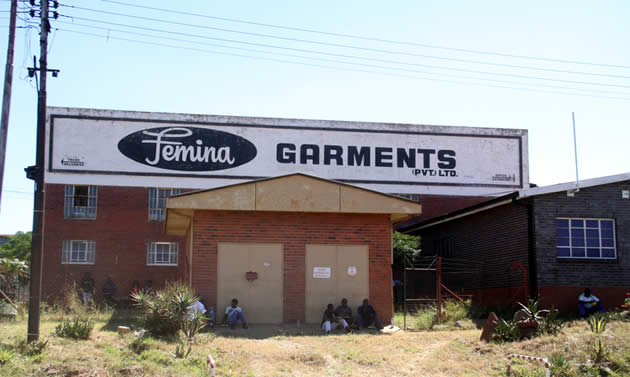
Oliver Kazunga, Senior Business Reporter
ONE of Bulawayo’s clothing factories, Femina Garments, is operating at 30 percent capacity utilisation due to persistent foreign currency challenges, blamed for frustrating operations.
The company’s managing director, Mrs Julie Bonett, said her company also requires $500 000 for retooling.
“We face the same challenge as every other company, the importation of our raw materials has become very difficult because of the lack of foreign currency and we are nowhere near full utilisation of the factory’s space.
“At our factory right now we have a lot of space where we could put another two whole lines of sewing machines,” she told Business Chronicle.
“And if I am to calculate on space capacity utilisation, we are operating at 30 percent capacity.”
The clothing manufacturing company is operating with obsolete equipment.
“And if we talk about machinery replacement to bring us where we want to be we need half a million dollars,” said Mrs Bonett.
Due to subdued output, she said, the clothing firm was not exporting although there were potential orders for the export market.
“The orders are possible. People want our orders and slowly we are running out of raw materials and we are not exporting at this time.
“The minimum wage structure in our NEC (National Employment Council for the clothing industry) is the highest in the region, which even without considering the cheap Chinese imports makes it very difficult to price for export,” she said.
The minimum wage for Zimbabwe’s clothing industry is presently pegged at $166 compared to other regional countries like Malawi where the minimum wage was $35.
“We are not expecting our workforce to consider $35 because they have their own problems (housing and transport), which are expensive. So, ideally there is a need to bring down every price in Zimbabwe,” Mrs Bonett said, adding that Femina Garments was employing 56 workers down from a peak level of 220 in recent years.
The Zimbabwe Clothing Manufacturers’ Association has said the local clothing industry has potential to increase employment by 186 percent to 20 000 if all economic sectors in the country could procure locally. At present, the clothing sector employs 7 000 people.
@okazunga



 Online Reporter