Chronicle Editor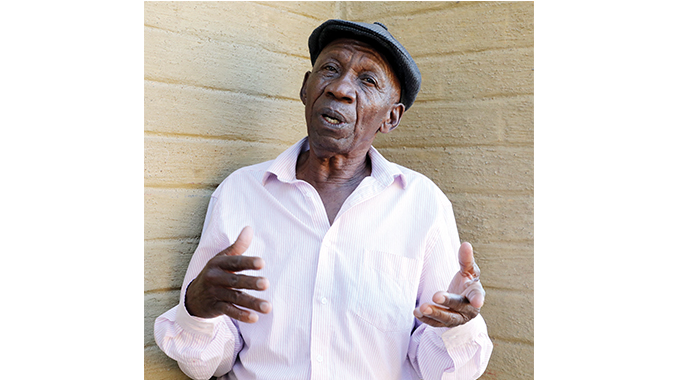
Nduduzo Tshuma, Political Editor
The capture of former Zipra fighter Cde George Moyo pseudonym “Mjomba” in Hwange in 1968 landed him in the notorious Khami Prison outside Bulawayo where he encountered a young Emmerson Mnangagwa whose prison number was 841/ 66 and was to be President of the country 52 years later.
Cde Moyo, born in Tsholotsho on January 1, 1942 was captured after heavy gun exchange between his platoon led by Cde Cleopas Mhlabi and the Rhodesian forces.
He, along with his colleagues were taken to court in Hwange where he was jailed for 20 years and sent to Khami Prison.
President Mnangagwa, had been brought to Khami Prison in August 1966 following his arrest the previous year.

He had been arrested for embarking, with his Crocodile Gang, on a number of sabotage activities including the bombing of a goods train in present day Masvingo.
While his comrades James Dhlamini and Victor Mlambo were executed for bombing the train, President Mnangagwa survived the gallows because he was 18 then and the death penalty was not handed to “offenders” under 21.
Cde Moyo said at Khami, he also interacted with Vice President Kembo Mohadi (who was brought in 1975 serving a 15-year jail sentence), Moffat Ndlovu (a former Bulawayo Town Clerk), Moffat Hadebe, the late Richard Ncube, Kenny Ndlovu and Rhodes Moyo, all from the Zipra side.
He said from the Zanla side were also Cdes Lloyd Gundu, Shadreck Chipanga, the former Director-General of the Central Intelligence Organisation and Horrace Nyazika among others.
Cde Moyo, born of a Ndebele father and Sotho mother grew up in Rhodesia before they moved to Zambia where he attended school. He got his first employment in Zambia and later joined the liberation struggle.
“I went to school in Zambia and reached Standard Five in 1966 when I dropped out. I started working in Lusaka for a company called Bufallo Paints,” said Cde Moyo.
“In 1967 I joined the armed struggle and we were taken to Tanzania in Morogoro (where the late Cde Albert Nxele was camp commander) for training. My training was 1 year and four months, we were about 200 of us.”

Cde Moyos said after the training, they were taken back to Lusaka and stayed at Luthuli Camp which also housed the Umkhonto Wesizwe (armed wing of the ANC of South Africa).
“In 1968 we entered Rhodesia as a group of 25, a platoon commanded by Cleopas Mhlabi, to fight the Rhodesians. We engaged in heavy fire and the Rhodesians bombed us using jet fighters and some of my colleagues died in the attacks and others were captured,” recalls Cde Moyo.
“I was the last to be captured, the whites were calling out my name from their plane saying ‘surrender, we have captured your colleagues’.
“I did not heed their calls but instead hid in the bushes and at night I walked towards the Zambezi Valley so that I could find a crossing point to enter into Zambia but I was not successful. Towards morning, I realised that the Rhodesian forces were closing in on me and I hid in a cave.”
Cde Moyo said he hid in the cave until late in the afternoon when he was smoked out of the cave and captured.
“I was then taken to Kamativi where my colleagues were being kept and we were then transported as a group to Hwange to face trial. It was there that I was sentenced to 20 years in jail.
“We were taken to Khami Prison where I met Emmerson Mnangagwa who is now our President. We got to know each other as liberation fighters, he was studying law along the likes of Richard Ncube and Moffat Ndlovu from Zipra.
“I also studied a bit until Form One when we were stopped by the Rhodesians who argued that they can’t educate terrorists who wanted to kill them. Those who were studying towards degrees were allowed to continue following pleas by a cleric called Father Mapondera who said since they were doing degrees, they should be allowed to continue with their studies.”
Cde Moyo was released from Khami Prison in 1979 during the ceasefire.
President Mnangagwa had been released in 1972 and deported to Zambia.
From the time they spent at Khami, Cde Moyo said President Mnangagwa struck him as a quiet but sharp person with so much emotional intelligence.
“Mnangagwa was always a quiet person, he didn’t talk much; he was very decent unlike us who were too chatty. He was always reading his books. As for us, we used to play chess and interact but he used to read books. He was a mild character exactly the character that he has today although back then we were all young boys. He had a small body just like me,” said Cde Moyo.
“On the times we interacted, we would discuss politics and the importance of unity after we attained Independence. Prison united us, there we were Zipra and Zanla fighters detained by a common enemy and the feeling we had was that the war had to go on until the Rhodesians were defeated.”
After his release in 1979, Cde Moyo said he was sent to the Juliet Assembly Point in Beitbridge that was popularly known as the Zezani Assembly Point.
He was to meet President Mnangagwa in Independent Zimbabwe when they met by chance in Kwekwe where Cde Moyo was employed at Stewards and Lloyds.
“He was a minister at the time. He asked me what I was doing there and I told him that I was working at Stewards and Lloyds as a temporary employee and my contract had ended. He then called the general manager and said ‘do you know this man’ to which he said ‘yes’.
“He then told him that ‘this is my comrade, we once stayed together for many years during the struggle.’ The general manager called me to the office and told me to bring my national identification card the next day. Amazingly, Mnangagwa said he would wait and hear the outcome of my discussion with the general manager.
“I went back and reported to Mnangagwa he gave me $5 000. He said ‘here is some money, just in case they don’t honour their promise, come to the corner building in Harare’.”
Cde Moyo said the next morning, he went to the company with his ID and was given back his job where worked until it shut down in the early 2000s.
Afterwards, he worked at the city council in Kwekwe and later came back to Bulawayo.
“I last saw him at White City Stadium, in the run up to the 2013 elections and he said ‘ah you are alive’ and I said ‘yes’.
“He said ‘you must visit my office because when I don’t see you, how am I supposed to know that you have problems, come to my offices because if you walk in the streets I won’t know that you have some challenges’.
“My wish is to meet the President as I have a number of personal challenges that I want to tell him about,” said Cde Moyo.
In a recent interview, Zimbabwe Museums and Monuments director Dr Godfrey Mahachi said multi stakeholder discussions were in progress on liberation heritage sites like prison cells where liberation fighters were detained.
“We have heritage sites like the cell that the President was detained in at Khami Prison but the challenge now is that facility is still in use and we are engaging with a number of relevant ministries on what should be done,” he said.


 Online Reporter