Online Reporter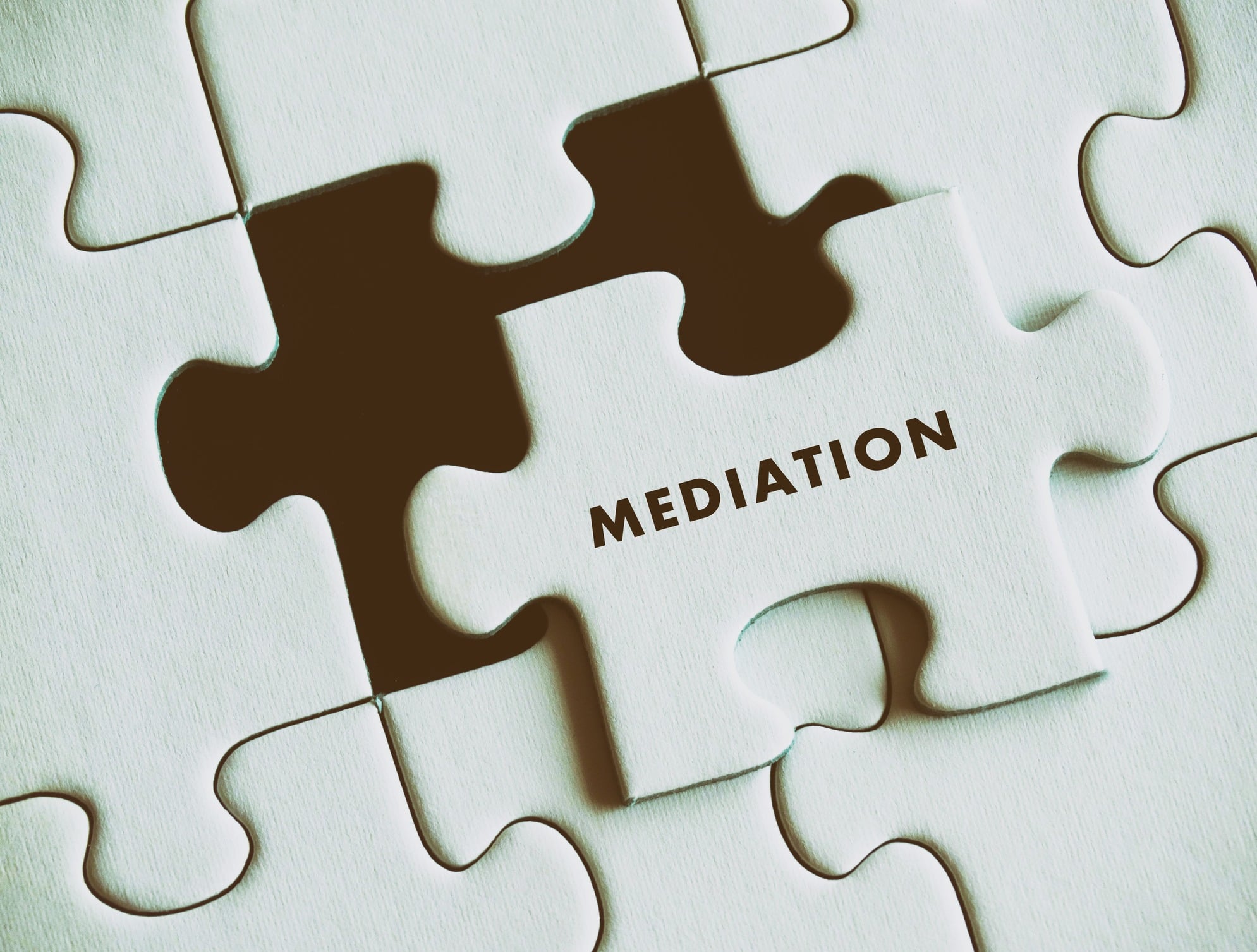
James Devittie
WITHIN the 16-member SADC bloc, Zimbabwe remains one of the few countries yet to integrate mediation into its legal system.
In Zimbabwe’s — and indeed Africa’s — pre-colonial legal systems, conflict was resolved through mediation.
The mediators were elders who facilitated resolution through moral persuasion, the preservation of relationships and community harmony.
This mediation-centred legal system, which had served Zimbabwe and its people so ably since time immemorial, was virtually swept away following the British settler invasion of 1890.
In its place came an adversarial, winner-takes-all process, in which parties confront each other in a virtual courtroom battle, culminating in a judge declaring the winner.
The Conflict Mediation Centre, recently established as a trust, seeks to contribute to the restoration of this lost tradition by promoting mediation as a credible alternative to the adversarial court process.
The adversarial legacy
The origins of Zimbabwe’s adversarial dispute resolution system can be traced to trial by combat — widely practised in medieval Europe.
Trial by combat was introduced in England after its invasion and conquest by a foreign army of Norman settlers in the Battle of Hastings in 1066. It was later institutionalised during the reign of Henry II.
As conquerors have been wont to do throughout history, the Norman settlers helped themselves to all prime land and introduced wide-ranging legal reforms to confer legitimacy on the new order.
A key feature of these reforms was a modern court system supported by an adversarial, winner-takes-all dispute resolution process.
This included, as an option, trial by combat, which became a recognised legal procedure in English common law and, significantly, was used primarily in land disputes until its abolition by statute in 1819.
In a trial by combat, judges in England did not decide the case on its merits.
Their role was to ensure that the fight occurred within a formal legal framework, as a recognised method of proof under the law.
Those with financial means could hire professional champions to engage in physical combat on their behalf.
A thriving market for champions developed. Some became so renowned through past victories that their reputations alone often compelled opposing parties to settle.
Keeping faith with a historical precedent, the British settlers who invaded Zimbabwe in 1890, found it necessary to establish a legal system that would confer a cloak of legitimacy on the new administration and its expropriation of all fertile land, and, of course, to consolidate state power.
By 1890, trial by combat in England had long faded into the fog of history.
But the legal order imposed on Zimbabwe was modelled on William the Conqueror’s reforms, a system that had, centuries earlier, been imposed on Britain following the Norman conquest of 1066.
Hence, that adversarial justice still holds sway in Zimbabwe today, echoing the spirit of trial by combat.
Unlike Zimbabwe’s pre-colonial dispute resolution system, which placed morality at the centre of the process, the adversarial system imposed under colonial rule was grounded in British positivist legal philosophy, which separates law from morality.
It drew a sharp distinction between the two: the duty of the courts was to interpret the law as it is, not as it ought to be.
Where the law was clear, the court’s role was to declare a winner and enforce its judgment, not to consider moral issues.
In courtrooms across Zimbabwe today, a thriving market for champions exists. Zimbabwe’s courtroom lawyers, among the finest in the common law world, are hired by contestants to engage in legal battle on their behalf.
What mediation offers today
The attraction of mediation to those seeking alternatives to the adversarial process is undeniable. In the late 20th century, legal scholars began to recognise mediation as a viable and mainstream alternative to adversarial dispute resolution.
Through dedicated scholarship, mediation theory and practice evolved into an autonomous, science-based discipline — no less refined or principled than the methods employed in court litigation and arbitration.
How mediation differs from litigation and arbitration
Mediation differs significantly from both litigation and arbitration in its process, philosophy and outcomes.
In litigation, a judge hears evidence and arguments from each party and delivers a binding judgment, typically with a clear winner and loser. The process is formal, adversarial, governed by strict procedural rules and conducted in an open court.
In arbitration, a neutral arbitrator or panel hears the parties’ cases and issues a decision.
While generally less formal than litigation, arbitration still resembles a court process and results in an outcome imposed on the parties.
Mediation, by contrast, is voluntary, confidential and non-adversarial. A neutral mediator facilitates communication between the parties, helping them understand each other’s perspectives and work towards a resolution they create themselves.
The mediator does not decide the outcome or determine who is right or wrong. Instead, the process encourages dialogue, collaboration and solutions based on the parties’ own needs and interests.
A key advantage of mediation is its ability to preserve relationships. Because it avoids the combative nature of litigation, it fosters mutual respect — vital in family, workplace and commercial disputes where ongoing interaction is likely.
Mediation typically takes place in a calmer, more private and less stressful setting than a court.
The atmosphere is non-confrontational, helping reduce anxiety and emotional strain. Mediators often hold separate sessions with each party to understand their fears, concerns and expectations, creating space for empathy, trust and more meaningful dialogue.
Mediation is cost-effective and also fast; most mediations conclude within a single day, offering early relief compared to the delays of the court system.
In facilitative mediation, the dominant model internationally, the mediator does not express opinions or suggest outcomes.
Instead, they guide the discussion, helping parties identify issues, explore interests and generate their solutions.
This differs from evaluative mediation, where the mediator may comment on the merits.
The facilitative model reflects the traditional role of elders in African communities, guiding disputants towards mutual understanding and restoring harmony, rather than imposing a decision.
Facilitative mediation is not a forum for advancing legal arguments or technical points. The focus is on communication, interests and practical resolution.
While lawyers play a valuable role in preparing for mediation, advising their clients and assisting in the negotiation process, they do not argue the case to the mediator as they would in court.
Instead, the affected parties engage directly with the mediator, with lawyers supporting the process by helping clients articulate their concerns, explore settlement options, and, where agreement is reached, by drafting or reviewing the settlement terms to ensure legal clarity and enforceability.
The case for rebuilding culture of mediation in Zimbabwe’s legal system
The case for rebuilding a culture of mediation in Zimbabwe is no less compelling than in other jurisdictions across Africa and beyond, where it has been successfully integrated into their legal systems.
Today, mediation is a recognised and steadily growing profession across the globe, including in Europe, the United Kingdom, Asia and Oceania.
In Africa, its original cradle, where it sustained great civilisations in pre-colonial times, mediation is being restored to its rightful status and gaining traction as a viable alternative to litigation.
Credible evidence from around the world attests to mediation’s effectiveness:
United Kingdom: According to the Centre for Effective Dispute Resolution, mediation achieves a settlement rate of 89 percent, with 74 percent of cases being settled on the day of mediation and another 15 percent shortly thereafter.
New South Wales, Australia: Community Justice Centres report success rates of around 80 percent.
New Zealand: A national study on commercial mediation found 56 percent of mediators reported settlement rates of 90-100 percent, with none below 70 percent.
Kenya: The Court-Annexed Mediation Programme reports settlement rates of over 50 percent and has helped reduce court congestion.
South Africa: Since 2015, court-annexed mediation has helped ease backlogs and yielded better outcomes in family and community disputes.
Other African jurisdictions: Ghana, Uganda, Tanzania, Malawi, Zambia, Mauritius, Nigeria, Rwanda and Mozambique have adopted or expanded mediation through legislation, court rules and public-private partnerships, improving access to justice and social cohesion.
The Conflict Mediation Centre
In late 2024, four former judges of the High Court of Zimbabwe — Maphios Cheda, James Devittie, David Mangota and Nicholas Ndou — conceived the idea of establishing the Conflict Mediation Centre.
On January 25, 2025, they formally constituted the Conflict Mediation Centre Trust.
The centre’s vision is to promote mediation throughout Zimbabwe and to become a regional hub for training and accreditation.
Its trust deed and governance instruments reflect a commitment to world-class standards and inclusivity.
Mediation services will be delivered by panel members accredited with internationally respected training institutions.
Acknowledging that legal training is not essential in facilitative mediation, the centre’s mediation panel will include professionals from diverse disciplines — law, business, engineering, construction, counselling, social work and accountancy. This is meant to reflect mediation’s multidisciplinary, people-centred nature.
In appointing additional trustees and advisory board members, and recruiting mediators, the centre will strive to reflect the diversity of Zimbabwean society in race, gender, ethnicity, age and professional background.
Whither Zimbabwe?
In a welcome signal that the process of integrating mediation into Zimbabwe’s legal system is underway, Chief Justice Luke Malaba, at a ceremony marking the opening of the 2025 legal year, announced plans to introduce a court-administered alternative dispute resolution programme.
Media reports soon followed, noting that a team from a United States university had arrived in Zimbabwe to assist in setting up the programme.
The court-annexed mediation programme is expected to ease pressure on the courts by helping to reduce case backlogs and shorten waiting times for trial.
The Conflict Mediation Centre is set to be launched later this year with pilot phases in Harare and Bulawayo.
Operating as an independent, non-profit organisation, it hopes to complement the court-annexed programme by inviting parties in dispute to try mediation first, before resorting to court proceedings.
Pending further developments, its focus will be on providing services in cases that fall outside the court-annexed mediation scheme.
In addition, the centre will offer a med-arb service, a well-established practice internationally, in which parties to a commercial agreement containing an arbitration clause first attempt mediation, and proceed to arbitration only if the mediation fails, or fails to resolve all the issues in dispute
Mediation in Zimbabwe once stood at the apex of the dispute resolution system. In revisiting its mediation traditions, Zimbabwe will not be merely paying homage to the past; it will be reclaiming justice as a moral enterprise.
Amid the divisions and tensions that continue to plague our society, restoring mediation in our legal system and allowing it to coexist with the adversarial model offers an opportunity to build a culture of dialogue and mutual tolerance, and to recover a sense of unity anchored in the shared values of our common past.
James Devittie is a former judge of the High Court of Zimbabwe and co-founder of the Conflict Mediation Centre. He is accredited as a mediator by the Centre for Effective Dispute Resolution (CEDR, UK) and Conflict Dynamics (South Africa). Contact details: [email protected] or [email protected]


 Online Reporter