Moffat Mungazi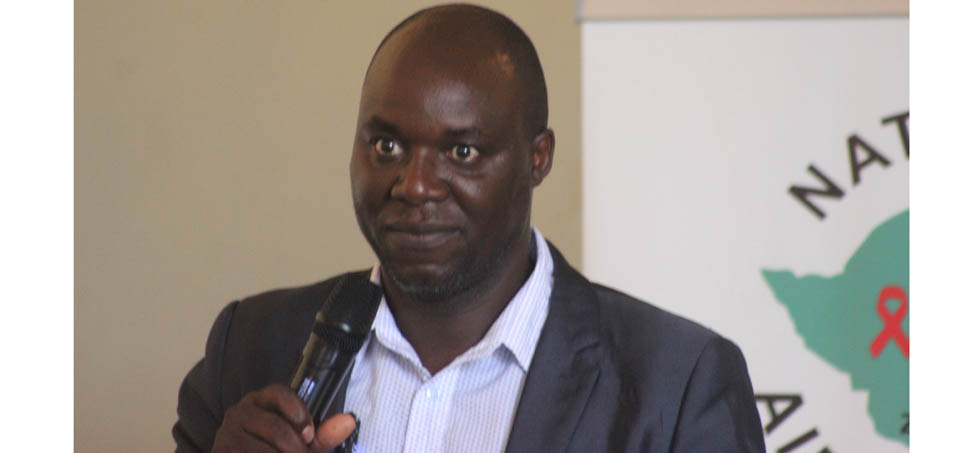
Tendai Gukutikwa
Health Reporter
FOUR districts in Manicaland are reportedly lagging behind in their paediatric antiretroviral therapy (ART) coverage, with figures below the set 95 percent targets.
Ministry of Health and Child Care national PMTCT effectiveness study coordinator, Mr Justice Nyakura, said Chipinge, Mutare, Mutasa and Buhera have not met the paediatric ART coverage target of 95 percent.
He said in 2024, Chipinge had an ART coverage of 89 percent, Mutare and Mutasa (82 percent), while Buhera was at 91 percent.
“These figures show that infant ART coverage is lagging, with almost half of the districts in Zimbabwe also falling far below the target. Paediatric HIV treatment remains one of the biggest challenges, and unfortunately Manicaland is not exempt,” he said.
Mr Nyakura attributed the inferior performance in the four districts to several factors, including low antenatal care registration, weak follow-up of HIV-exposed infants, and communication gaps between health institutions and communities.
“ANC registration is still a worry in Manicaland. In 2024, all districts except Chimanimani, Chipinge, Nyanga and Mutasa were below 90 percent. Without ANC registration, women miss vital services like HIV and syphilis testing, treatment initiation, and infant HIV prevention interventions,” he said, adding that there is urgent need to improve community engagement and strengthen health education efforts to encourage early bookings and consistent postnatal visits, especially in under-performing districts.
“For example, only 81 percent of HIV-exposed infants in 2024 were tested for HIV within two months of birth. That means 19 percent were missed during that critical period. We need to ensure that mothers understand the importance of early infant diagnosis and return to health facilities for those follow-up tests,” he said.
Despite the setbacks, some districts in the province fared well, with Nyanga exceeding expectations at 120 percent ART coverage rate, while both Makoni and Chimanimani had achieved 100 percent.
“This is proof that the 95 percent target is achievable. We just need to intensify our community mobilisation in the lagging districts,” he said.
Infant HIV prophylaxis coverage across Manicaland was also encouraging, with all districts recorded in the green in 2024, except Buhera which had 94 percent.
Infant HIV prophylaxis coverage refers to the proportion of HIV-exposed infants who receive antiretroviral (ARV) prophylaxis to prevent HIV infection, typically initiated shortly after birth. It is administered immediately after birth to infants born to HIV-positive mothers.
“Meanwhile, 93 percent of women who registered their pregnancies in Manicaland and tested positive for syphilis received treatment. A total of 738 pregnant women were initiated on pre-exposure prophylaxis (PrEP) during pregnancy, while 227 others were initiated post-delivery,” said Mr Nyakura.
He said addressing gaps in ANC registration remains central to their strategy, as it is the entry point for most maternal health services.
He called for more awareness campaigns and collaboration with local health institutions to ensure women are not left out of the health system during pregnancy.
“As a country, we are targeting the triple elimination of mother-to-child transmission of HIV, syphilis, and congenital syphilis. We want to eliminate mother-to-child transmission of HIV, syphilis and hepatitis B by 2026, so we are working to make sure that pregnant mothers receive treatment if found to be positive of any of the three,” he said.
Mr Nyakura also highlighted the six-week and post-breastfeeding HIV transmission rates among HIV-exposed infants.
“At six weeks, the national transmission rate is 5,49 percent. But when we test again after breastfeeding, the rate jumps to 7,35 percent. This shows that we still have gaps in prevention throughout the breastfeeding period,” he said.
Mr Nyakura said efforts are being made to provide status-neutral testing, where both HIV-positive and HIV-negative clients are linked to appropriate care.
“For those who test negative, we do not just send them away. We want to keep them negative.
‘‘That is why PrEP is so important. Pregnant and breastfeeding mothers at high risk of HIV acquisition should be assessed and initiated on PrEP to protect themselves and their babies,” he added.
He also urged the media, local leaders, and health partners to spread the word about the importance of early ANC registration, HIV testing, PrEP uptake, and infant testing.


 Online Reporter