admin
admin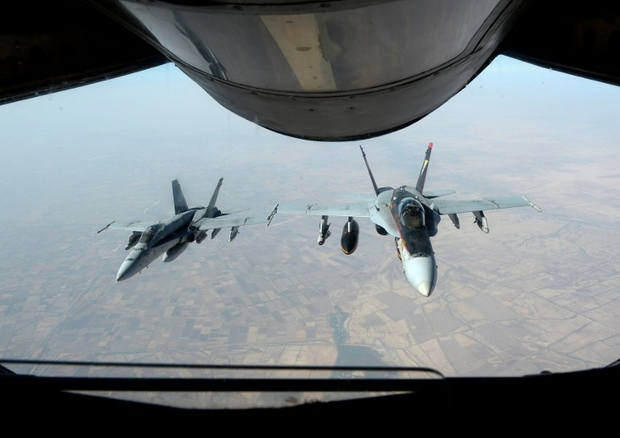
France launched airstrikes against Islamic State in Syria, responding to terror attacks on its capital, as investigators pieced together a chilling picture of Europe’s security: a continent at a loss to foil, let alone detect, such a coordinated plot.
As a stunned France mourned 129 dead, authorities were racing Sunday to find one suspect believed to have been involved. Officials began retracing the paths of the assailants, who they believe carried out the massacre on behalf of the extremist group.
“The attacks were planned abroad, and mobilized a team operating from Belgium, which may have received help from France,” French Interior Minister Bernard Cazeneuve said.
More than 2,000 miles away on Sunday, French war planes went into action, conducting airstrikes on Islamic State’s stronghold in Syria a day after French President François Hollande vowed a “merciless” response to Islamic State.
The airstrikes, which France said were coordinated with the U.S. and the rest of coalition fighting against the Sunni insurgency, marked an escalation in the French air campaign. Twelve planes took part in the airstrikes, delivering 20 bombs to two targets in Raqqa, in northern Syria, a French defense official said. The bombs targeted a command center, including an arms depot and a recruiting post, and a training camp, the official said.
At least three of the Paris attackers were French nationals, authorities in France and Belgium said. Belgian prosecutors said that two of them had resided in Belgium and that two of the cars used in the attacks had been rented in the country.
Islamic State has claimed responsibility for the attacks, saying they were in retaliation for French airstrikes against the group in Syria and Iraq, but it hasn’t provided specific information that would allow the claim to be verified.
European officials voiced concerns that at least one of the attackers may have brought terror by mixing with the thousands of Iraqi and Syrian migrants who are fleeing war and coming to Europe each week.
Greek authorities said a Syrian passport under the name of Ahmad al-Mohammad was found on one of the attackers at the stadium near Paris and was registered Oct. 3 on the Greek island of Leros. Days later, on Oct. 7, the same passport was registered at the border crossing in Presevo, Serbia, where the person holding it formally applied for asylum, according to Serbia’s Interior Ministry.-Marketwatch


 Online Reporter