Online Reporter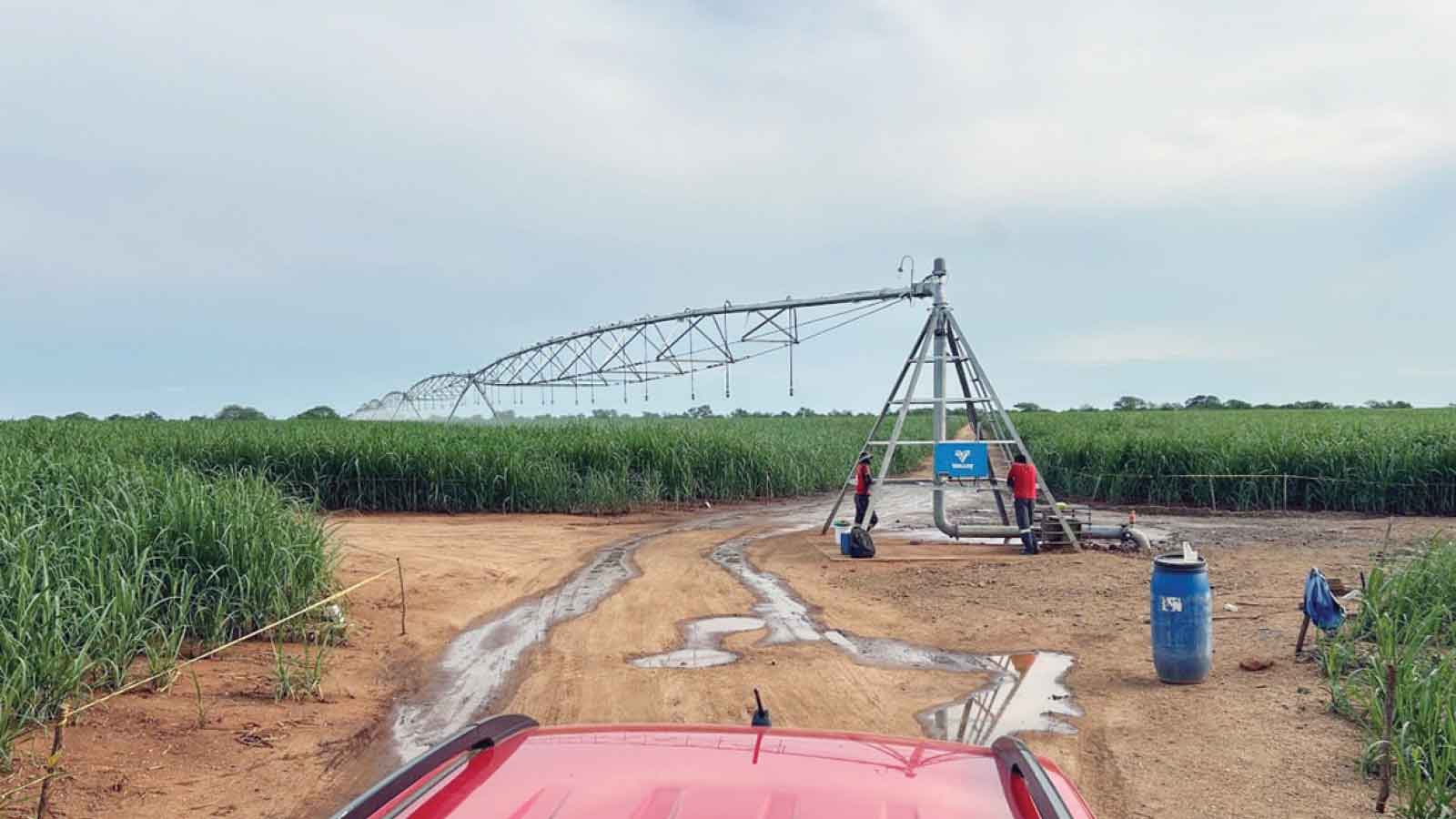
George Maponga
Masvingo Bureau
FOR centuries, the towering stone walls of Great Zimbabwe have stood as enduring evidence that innovation, engineering excellence and organised industry flourished long before colonialism.
Built without mortar by master craftsmen, the ancient city became the political and economic nerve centre of a civilisation whose prosperity was anchored in mining, agriculture, trade and manufacturing.
Today, more than five centuries after the decline of the Great Zimbabwe civilisation, Masvingo province is writing a new chapter in that legacy.
Across the province, billions of dollars are flowing into mining, agro-processing, renewable energy, irrigation and tourism, transforming what was once regarded as one of Zimbabwe’s driest provinces into one of its fastest-growing investment destinations.
Driven by the Second Republic’s rural industrialisation and modernisation agenda, Masvingo has set itself an ambitious target of growing its provincial economy to US$8 billion by 2030 through value addition, beneficiation and infrastructure development.
From vast sugar estates emerging in Mwenezi and lithium value-addition plants in Bikita to chrome smelters in Mashava, hydroelectric power stations, artificial intelligence-powered grain silos and world-class tourism infrastructure around Great Zimbabwe, the province is steadily repositioning itself as a national hub for agriculture, mining, energy and tourism.
Unlike previous eras when raw materials left the province with little local benefit, the new investment drive is centred on processing commodities where they are produced, creating industries, jobs and new urban centres while expanding export earnings.
Permanent Secretary for Masvingo Provincial Affairs and Devolution, Dr Addmore Pazvakavambwa, says agriculture, mining and tourism have become the three strategic pillars underpinning the province’s economic transformation.
A new industrial engine
Perhaps nowhere is Masvingo’s transformation more evident than in agriculture. Traditionally regarded as one of Zimbabwe’s driest provinces, Masvingo is increasingly leveraging its extensive water resources to build an agro-industrial economy.
Agriculture has already overtaken trade and manufacturing as the province’s largest contributor to gross domestic product (GDP), accounting for about 19 percent of economic output.
This growth is being driven not merely by increased production, but by investments in irrigation, agro-processing and value addition.
30 000-ha greenbelt project
Among the flagship projects is the Development Trust of Zimbabwe (DTZ)’s ambitious 30 000-hectare (ha) greenbelt project at Nuanetsi Ranch in Mwenezi.
Backed by a 25-year partnership between DTZ and eight private investors, the project will use water from Tugwi-Mukosi Dam to transform vast tracts of previously unproductive land into irrigated estates producing sugarcane, citrus and lucerne.
Already, more than 3 000ha have been put under sugarcane. DTZ general manager, Mr Emmanuel Jaricha, believes the project will fundamentally change the economic landscape of Masvingo.
“A new town will emerge at Nuanetsi Ranch because of this greenbelt project. Mapping of the area where a new town will be built has already been completed,” he said.
“Over US$70 million has been sunk into this greenbelt project that will see not only development of new cane fields, but also citrus plantations and lucerne.
“Eventually, the goal is to build sugar and ethanol processing plants here at Nuanetsi where we will value-add the cane, creating jobs and contributing to exports receipts.”
More than 1 200 direct jobs have already been created, while agro-processing facilities planned for citrus and lucerne promise to stimulate secondary industries across Mwenezi.
The project alone is expected to contribute close to US$2 billion annually to Zimbabwe’s GDP once fully developed.
Complementing the initiative is the US$40 million Kilimanjaro Sugar Project in Chiredzi, a partnership involving Tongaat Hulett Zimbabwe, the Government and local financial institutions.
The project has already opened nearly 4 000ha of new sugarcane fields earmarked for indigenous farmers.
Beyond expanding sugar production, the initiative supports Zimbabwe’s long-term strategy to increase ethanol production from approximately 155 million litres annually to 600 million litres by 2036.
Agro-processing
Instead of exporting raw agricultural commodities, Masvingo is increasingly processing them closer to where they are produced.
That philosophy is perhaps best illustrated by the Rutenga Multi-Service Centre.
Jointly owned by Sustainable Agriculture Technology (SAT), the Mwenezi Rural District Council and the local community, the facility processes sesame, sunflower and paprika into edible oil and paprika powder.
The centre has become a reliable market for thousands of smallholder farmers while significantly reducing cross-border smuggling of sesame into Mozambique.
“Our farmers used to be exploited by middlemen,” said SAT manager, Mr Siyanai Zingwena.
“Now, they have a guaranteed market, receive technical support and earn better incomes because the products are processed locally before export.”
Masvingo now produces almost 40 percent of Zimbabwe’s sesame, much of which passes through Rutenga before reaching export markets such as Japan.
Nearby, another innovation is transforming an indigenous resource once regarded as little more than a wild fruit.
The Mapfura/Marula Value Addition Plant, commissioned by President Mnangagwa in 2022, purchases marula fruit from rural communities before processing it into premium wines, cosmetic oils and livestock feed.
National Biotechnology Authority chief executive officer, Dr Dexter Savadye, said thousands of villagers now earn seasonal income from harvesting the fruit.
“Every year, we purchase over 200 tonnes of marula from local communities. What was once an underutilised natural resource is now creating jobs and producing export-quality products,” he said.
Innovation in rural communities
Industrialisation is no longer confined to cities. In Chivi district, Great Zimbabwe University’s International Centre for Dryland Agriculture (ICEDA) is pioneering a different model of rural development. The institution combines scientific research with commercial production, helping farmers cultivate drought-resistant crops before purchasing the harvest for value addition.
Its milling plant, Guyo RekwaChivi, now produces maize meal from sorghum, finger millet and rapoko that is sold across Masvingo province.
Executive dean, Dr Xavier Poshiwa, says the centre represents the university’s response to the national call for higher education institutions to become engines of economic development.
“We are researching crops suited for dry regions while creating industries around them. Farmers receive inputs and technical support and we purchase their grain for processing.”
ICEDA is also expanding into poultry, aquaculture and apiculture, creating employment while strengthening food security across some of Zimbabwe’s driest districts.
More than 20 000 farmers now benefit from the centre’s programmes.
Supporting this agricultural transformation is an aggressive expansion of irrigation.
Masvingo possesses the country’s highest concentration of dammed water, accounting for more than half of Zimbabwe’s stored water resources.
Projects are underway to expand irrigation around Tugwi-Mukosi, Mutirikwi, Manjirenji, Ruti, Bangala and Manyuchi dams, unlocking thousands of hectares for year-round production.
Together, these investments are transforming agriculture from subsistence farming into a modern industrial value chain that stretches from irrigation schemes to processing plants and export markets.
Moving beyond extraction
If agriculture is powering Masvingo’s rural economy, mining is driving its industrial transformation.
Rather than exporting raw minerals, the province is increasingly embracing beneficiation and value addition, creating industries that retain more value within Zimbabwe.
One of the clearest examples is Bikita Minerals, where Chinese investor Sinomine has invested more than US$383 million in a hybrid processing plant producing spodumene concentrate, petalite and cesium.
The investment has created more than 2 000 direct and indirect jobs while positioning Zimbabwe higher in the global lithium value chain.
The company is now preparing for an even bigger leap.
Assistant general manager Mr Thomas Mufumi says US$500 million has already been secured to construct Zimbabwe’s second lithium sulphate plant ahead of the Government’s ban on raw lithium exports next year.
Once complete, the plant will produce 125 000 tonnes of lithium sulphate annually, marking a significant shift from exporting raw ore to manufacturing battery-grade chemicals used in electric vehicle production.
That transition mirrors the Government’s broader industrialisation agenda — ensuring Zimbabwe exports finished products rather than raw minerals.
The shift towards beneficiation is equally evident in Mashava, where the US$70 million Zimbabwe Zhongxin Chrome Smelting Company has breathed new life into a town that had struggled economically following the collapse of asbestos mining.
Commissioned in January 2024, the smelter processes up to 4 500 tonnes of chrome ore every month through its two furnaces, creating more than 200 direct jobs while providing a ready market for thousands of artisanal miners in Mashava and surrounding communities.
Before the smelter was established, most small-scale miners sold raw chrome to middlemen, with much of the mineral leaving the country without significant value addition.
The processing plant has changed that equation by enabling chrome ore to be smelted locally, thereby increasing export value while stimulating economic activity in the once-declining mining town.
For Dr Pazvakavambwa, such investments are central to Masvingo’s industrial strategy.
“Our objective is not simply to increase mineral production but to ensure that minerals are processed locally,” he said.
Energy powering industrial growth
Industrialisation cannot thrive without reliable electricity.
Recognising this, Masvingo has positioned itself as one of the country’s emerging renewable energy hubs by leveraging its extensive network of dams to generate hydroelectric power.
The province already hosts Zimbabwe’s highest concentration of dammed water, providing enormous potential for clean energy generation.
One of the flagship investments is the 5-megawatt Great Zimbabwe Hydro Power Plant at Lake Mutirikwi.
Built at a cost of US$14,5 million by Great Zimbabwe Hydro Power Company and its partners, the facility has been supplying electricity to the national grid since January 2024.
Apart from improving electricity supplies to Masvingo City and surrounding areas, the project has demonstrated the commercial viability of small-scale hydropower generation.
Dr Pazvakavambwa said studies had already identified additional opportunities to replicate the project downstream.
“Studies have also shown that there is potential to replicate the Lake Mutirikwi hydropower plant downstream, where two more plants with the same capacity can also be built,” he said.
“We have started scouting for investors to undertake the project.”
Even bigger expectations surround the 17-megawatt Tugwi-Mukosi Hydro Power Project, which is expected to come on stream before the end of the year. Once operational, it will significantly strengthen electricity supplies for households, mines, irrigation schemes and manufacturing industries across the province.
The Government is also assessing opportunities to establish hydroelectric stations at Bangala, Manjirenji and the proposed Runde-Tende Dam, creating a network of renewable energy projects capable of supporting the province’s growing industrial base.
Complementing these investments is improved electricity transmission infrastructure.
At Bikita Minerals, Sinomine has invested more than US$20 million in a 132-kilovolt power line that has not only strengthened electricity supply to the mine but also connected schools, clinics, business centres and rural households in Bikita, Gutu and Zaka districts to the national grid.
The investment exemplifies the broader philosophy underpinning the province’s industrialisation drive — that major projects should create shared infrastructure capable of stimulating wider economic development.
Tourism a growth frontier
While agriculture and mining provide the foundation of Masvingo’s economy, tourism represents its third strategic pillar.
The province is home to some of Zimbabwe’s most iconic natural and cultural attractions, and the Government is investing heavily in infrastructure to unlock their full economic potential.
At the heart of this strategy is Great Zimbabwe, whose imposing stone walls continue to attract visitors from across the world.
A modern visitors’ centre has recently been completed at the World Heritage Site under a €4 million rehabilitation programme funded by the United Nations Office for Project Services (UNOPS), in partnership with UNESCO and the National Museums and Monuments of Zimbabwe.
The project, launched by President Mnangagwa in 2022, has transformed visitor facilities while preserving one of Africa’s greatest archaeological treasures.
Masvingo regional director for the National Museums and Monuments of Zimbabwe Mr Lovemore Mandima believes the upgraded facilities will significantly improve the visitor experience and increase tourist arrivals.
The province is also looking beyond Great Zimbabwe.
Attention has shifted towards developing the Zimbabwean section of the Great Limpopo Transfrontier Park, one of the world’s largest transboundary conservation areas linking Zimbabwe’s Gonarezhou National Park with South Africa’s Kruger National Park and Mozambique’s Limpopo National Park.
Plans are underway to upgrade roads, bridges, accommodation facilities and visitor amenities within the Gonarezhou National Park to match developments elsewhere within the transfrontier conservation area.
Improved aviation infrastructure is expected to complement these investments. Masvingo Airport is earmarked for expansion to accommodate larger aircraft, while Buffalo Range International Airport in Chiredzi has already had its runway upgraded to handle bigger planes, strengthening access to the province’s tourism destinations and creating new opportunities for investment.
Reclaiming a historic legacy
Centuries ago, Great Zimbabwe became one of Africa’s greatest centres of commerce because it transformed local resources into wealth through innovation, craftsmanship and
trade.
Gold, iron, ivory and agricultural products were processed and exchanged across vast trading networks, making the ancient city one of the continent’s earliest examples of an integrated economy.
Today, that spirit is re-emerging in a different form. Across Masvingo, irrigation schemes are feeding agro-processing industries, universities are driving innovation in dryland agriculture, indigenous fruits are being transformed into premium export products, chrome and lithium are increasingly being beneficiated locally, while renewable energy projects are powering a new generation of industries.
Rather than relying solely on the extraction of raw materials, the province is deliberately building value chains that create employment, attract investment and retain wealth within local communities.
If the towering walls of Great Zimbabwe symbolised the ingenuity of a civilisation that once dominated regional trade, the factories rising in Bikita and Mashava, the irrigation schemes spreading across Mwenezi, the research hubs in Chivi and the hydroelectric plants harnessing the province’s vast water resources point to a modern renaissance — one driven by innovation, value addition and industrialisation.
More than six centuries after Great Zimbabwe reached the height of its influence, Masvingo is once again positioning itself as a centre of production, enterprise and prosperity, proving that while empires may fade, the spirit of innovation that built them can endure across generations.