Online Reporter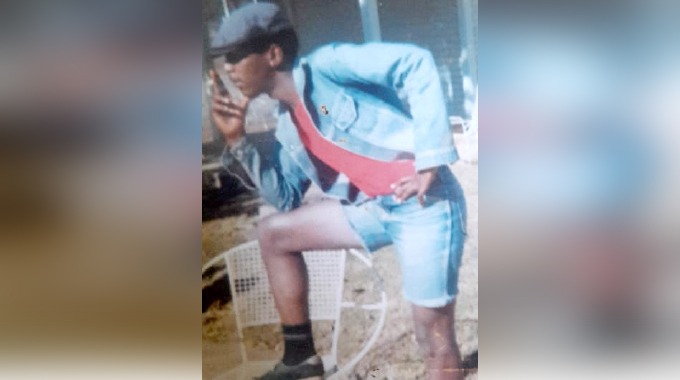
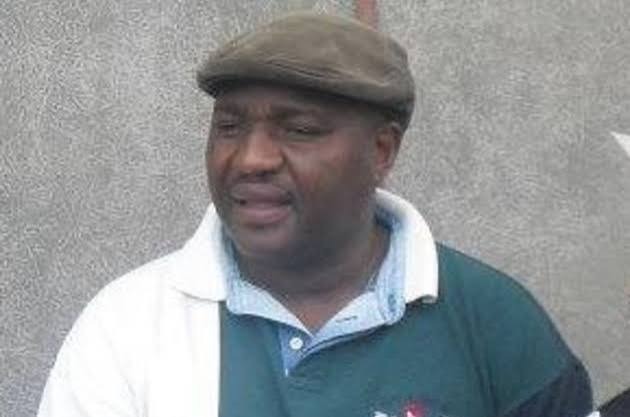
We conclude our interview with former freedom fighter, Comrade Mthabisi Sivako pseudonym Comrade Mathias Sangweni. During the armed struggle, he initially trained as a police officer before being sent for further training as an intelligence operative. Cde Sivako joined the armed struggle in January 1978, after leaving Mzingwane High School in 1977, where he had completed his Ordinary Level examinations. In the past two weeks, he described to our Assistant Editor, Mkhululi Sibanda (MS), how he left the country to join the armed struggle, his training as a police officer at Lilayi Police Training College in Lusaka, and his subsequent schooling in the art of intelligence gathering at the Moscow School of Intelligence. The latter was run by the Zapu intelligence branch — the National Order and Security (NSO) — which was headed by the late national hero, Dumiso Dabengwa. Below are excerpts from the interview. Read on . . .
MS: You mentioned that you also trained as an intelligence officer in Zambia under the NSO. After your training, where were you deployed?
Cde Sivako: I was posted as an intelligence officer to Makene Hospital in Lusaka. This was a Zapu hospital, and our role was to provide security. The hospital was established on a plot owned by a Zimbabwean expatriate named Makiwa, who had relocated to Zambia. I cannot divulge further details, as I arrived when the hospital was already operational. Some of the comrades deployed with me were Kelvin Chain, Shadreck, Reuben Nkomo, Nyoniyabo, Boxer, and Dokotela.
MS: Who were the doctors staffing the hospital?
Cde Sivako: We had qualified medical doctors — Dr Gordon Bango, who later joined the Government after independence and rose to the position of Matabeleland South Provincial Medical Officer, and Dr Malaba, who graduated in medicine from what was then East Germany. We also had medical officers from ZPRA, such as Comrade Khoza, and Sylvester Ndlovu, a dentist employed at the United Teaching Hospital of Zambia. The patients were injured comrades. However, those with critical injuries were evacuated to Cuba or the Soviet Union for specialist treatment.
MS: Who were your commanders?
Cde Sivako: As you may know, the NSO comprised several branches or departments, each headed by a director. We belonged to the Public Security division, which was led by Cde Noah Mvenge, a brother of Moses Mvenge who at some point was a Zanu-PF Member of Parliament. Under Mvenge, we had other senior officers such as Zephaniah Moyo, commonly known by his pseudonym, Jecokoniah or Bhatha. We also liaised with senior NSO officers like Gordon Butshe and Nephat Madlela, who headed other departments. While carrying out our duties, we sometimes wore military fatigues, other times civilian clothes, depending on the situation. However, we were always armed, either with pistols or AK-47 assault rifles.
MS: Was the hospital ever threatened by Rhodesian forces?
Cde Sivako: All of our camps, houses, or installations were under threat from the Rhodesian forces. Fortunately, the hospital did not come under enemy attack until the ceasefire period. I remained at Makene, providing security until that time. We were then flown to what was then Salisbury (now Harare) — our flight was the second to arrive. The first flight, which carried ZPRA commanders including the commander himself, Mafela (General Lookout Masuku), had departed earlier.
MS: Who were some of the people you travelled with from Lusaka to Harare?
Cde Sivako: Our delegation consisted mostly of intelligence officers from the NSO — essentially, the security personnel. We managed to smuggle weapons. After our arrival in the country, we were deployed across various regions.
MS: What role did you play during that period?
Cde Sivako: We were responsible for assessing the situation and preparing reports during the height of the country’s first election campaign. We were deployed throughout the nation and submitted our reports to our superiors in the NSO. Although I cannot reveal the contents of those reports, I believe they were very accurate. When the election results were announced — with Zapu failing to form the next Government — all Zapu and ZPRA cadres were understandably disappointed. At that time, the NSO had established its headquarters at Mverechena along the Harare-Chitungwiza Road. This was where our intelligence officers gathered — an assembly point that was also frequented by seniors such as Sam Madondo and Gordon Butshe. From there, we were integrated into the newly created State forces.
MS: Could you take us through your integration journey?
Cde Sivako: Within the NSO, some officers received training in customs and immigration as well as in police work, like myself. Consequently, some joined the department of immigration, others were sent to customs, while some, like me, joined the police. Others joined the Central Intelligence Organisation (CIO). I was posted to Morris Depot (now Mkushi), as I had an Ordinary Level qualification and had also received police training during the war in Zambia. Those deemed suitable for integration with ranks below that of Patrol Officer were sent to the Tomlinson Depot. I was among the first group to be integrated as officers in the Zimbabwe Republic Police (ZRP).
MS: Do you recall some of the individuals in your group?
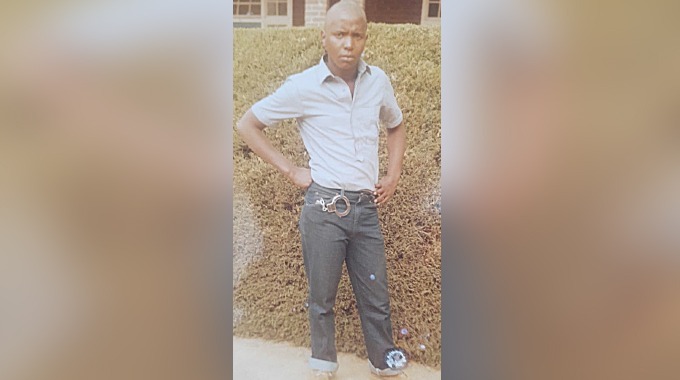
Cde Sivako: Yes, certainly. The most prominent was the former Commissioner-General of the Police, Augustine Chihuri (also known as Stephen Chocha), along with Comrade Zisengwe, among others from Zanla. We were also integrated alongside those who had served under the Rhodesian government. Our training lasted six months, after which we assumed the ranks of Patrol Officers. The training covered various aspects such as horse riding, motorcycling, and driving. I was subsequently posted to Mbare Police Station. A few months later, I was transferred to the motorcade of Prime Minister, Cde Robert Mugabe — I was part of the motorbike rider team.
MS: How was it working in the Prime Minister’s motorcade?
Cde Sivako: Initially, it was intimidating yet amusing. One’s youth often brings a sense of adventure, especially when riding such fast bikes. However, we were an integral part of the Prime Minister’s security team and were not permitted to leave anything to chance. I continued in this role until 1983, when I transitioned back to civilian life.
MS: Why did you leave the police force so early in your career?Cde Sivako: To be honest, my departure from the police force was not driven by the politics of the time. I was still maturing, and some personal missteps led to my exit. Following that, I returned to civilian life to partake in the family business — a full circle moment.