Online Reporter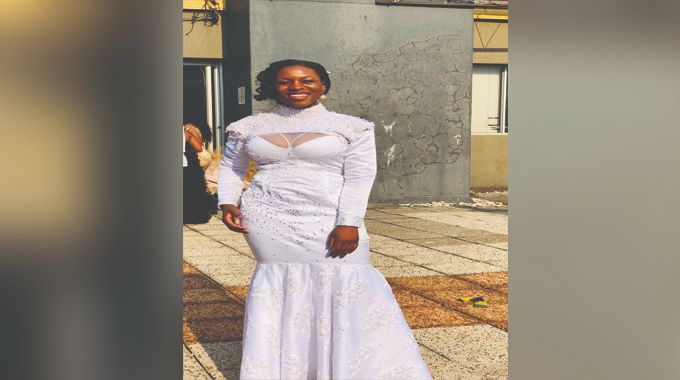
Mbulelo Mpofu, [email protected]
FOR Bulawayo-born and bred fashion designer Mirriam Chihera, the journey into fashion began long before she had the vocabulary to describe herself as a designer.
It started in the improvised backstage spaces of school talent shows, where bed sheets became dresses and safety pins doubled as styling tools.
While her formal practical subject was agriculture, Chihera’s attention was increasingly drawn to fabric, clothing and the possibilities that came with transforming ordinary materials into something expressive.
What began as childhood curiosity gradually developed into formal training, experimentation and, eventually, a career that has seen her work with clients in Zimbabwe, South Africa and the United Kingdom, including public figures such as South Africa-based Zimbabwean television personality Tino Chinyani and his wife, South African actress Simz Ngema.
Yet, beneath the celebrity fittings and cross-border clientele is a story rooted in resourcefulness, technical training and the realities of building a fashion career from Bulawayo.
Chihera recalls that fashion became particularly difficult to ignore during her high school years.
“My passion for fashion dates back to childhood, but it became undeniable in high school. I did agriculture as my practical subject, yet my heart was always in fashion,” she said.
“During school talent shows, I would make dresses out of bed sheets and use safety pins to style and dress other students for modelling.”
In retrospect, those improvised creations represented more than youthful experimentation.
“Backstage, with just a bed sheet and safety pins, I was already a designer and stylist without even knowing it,” she said.
The limitations of the materials available to her also became an unlikely form of training. Rather than seeing the absence of expensive fabrics as a barrier, Chihera learnt to work with what was available.
“Those early experiences taught me that fashion is not about having the most expensive fabric but about vision and resourcefulness,” she said.
“It taught me draping, creativity, and how to make something out of nothing – skills I still use today.”
That foundation was later strengthened through formal training at SewAfrica Fashion College in South Africa, where she obtained a National Certificate in Fashion Design and Pattern Cutting under Craft Production.
The experience introduced her to the technical discipline behind the creative process.
“That passion led me to train in fashion design at Sew Africa Fashion College in South Africa, where I learned the structure and precision behind the creativity,” she said.
A subsequent nomination as one of the best students in her year to participate in a Seta Bag Project became an important milestone.
For Chihera, the recognition provided evidence that the interest she had nurtured for years could translate into a viable professional path.
“Being nominated for the Seta Bag Project after completing my studies was the turning point. It was industry validation,” she said.
“That was the moment I realised fashion was no longer just what I loved doing after my agriculture practicals. It was my purpose and my future.”
The idea that eventually became her fashion business was conceived in 2017, although it would take several years before it became an operating enterprise.
Chihera’s choice of name was deliberately personal, drawing together elements of her identity and her attraction to glamour.
“23 is my birth date, ‘Mi’ is from my name, and ‘tz’ is from Glitz, which stands for glamour. So 23 Mitz Stitches is literally my identity stitched into a brand,” she said.
At the time, it was largely an idea and an aspiration.
The business began operating in 2022 and was formally registered in 2024.
In that period, Chihera says the idea evolved from simply having a personal identity in fashion to developing a professional practice capable of serving clients beyond Zimbabwe.
“At that time, it was just a dream and a name. When I started operating in 2022, that dream became work, and by registration in 2024, it became a business,” she said.
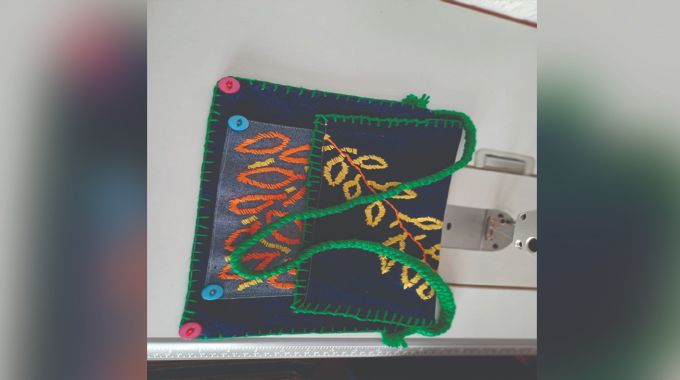
“The original idea was about identity, but it has evolved into an international bespoke brand dressing clients across Zimbabwe, South Africa, and the UK. The name stayed the same, but the vision grew.”
Her work encompasses bespoke custom wear for both men and women, a space that requires designers to navigate not only aesthetics but also individual body measurements, preferences, expectations and deadlines.
It is a process in which the relationship between designer and client can be as important as the garment itself.
Moving from a Bulawayo-based operation to serving clients in other countries has brought opportunities, but it has also presented practical challenges.
One of the biggest is ensuring accuracy when the client is not physically present for every stage of the process.
For Chihera, virtual fittings have become part of the job, requiring additional communication and attention to detail.
“Building a Zimbabwean-born brand from Bulawayo into South Africa and the UK has not been without challenges,” she said.
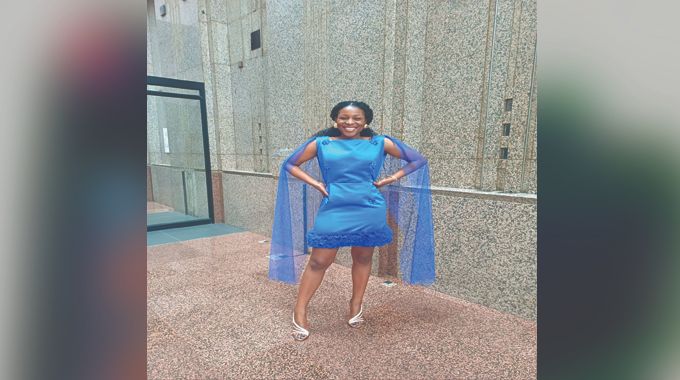
“Serving clients far from where I am means I have to work twice as hard to prove quality, get fittings done virtually, and ensure the finishing is perfect because there is no room for returns.”
Working in South Africa has also exposed her to a different scale of competition and helped shape her approach to her craft.
“Competing in South Africa’s fashion industry taught me that quality is the only language that matters,” she said.
“Whether you are in Bulawayo or Sandton, if your work is neat and your finishing is immaculate, clients like Tino Chinyani and Simz Ngema will find you. Those experiences taught me to be consistent, professional, and to let the work speak,” she said.
Working with recognisable public figures can bring visibility to a designer, but Chihera’s account of her celebrity clientele focuses less on the glamour surrounding their names and more on the working relationship involved.
Her experience with Chinyani, for instance, has been shaped by communication and trust.
“Working with Tino Chinyani has been amazing. He is very professional, clear about what he wants, and he trusts my creativity,” she said.
“He knows his style and allows me to bring it to life. That trust means a lot to me as a designer.”
For a bespoke designer, such relationships can require an understanding of where to follow the client’s brief and where to contribute creatively.
The designer is not simply producing a garment from a predetermined template but interpreting an individual’s desired appearance while bringing technical knowledge to the process.
Chihera’s philosophy towards this relationship is captured in the phrase, “Every stitch counts.”
While the words may describe attention to finishing, for her they carry a deeper personal meaning because of where her journey began.
“To me, ‘Every stitch counts’ is personal. It means integrity,” she said. “I grew up using bed sheets and safety pins, so I know what it feels like to want to look good with limited resources,” she said.
“Now, when someone trusts me with their bespoke outfit, I owe them perfection.”
That sense of responsibility does not mean imposing her own creative ideas on clients.
Instead, she sees bespoke fashion as a negotiation between the client’s vision and the designer’s craftsmanship.
“My creative vision is in the cut and the detail, but bespoke means the client comes first,” she said.
“I listen to what they want, advise on what will suit them, and then I bring it to life with neatness and flawless finishing. For both men and women, the balance is the same: their vision, my craftsmanship because, in the end, every stitch is my signature.”
For someone whose professional identity is closely associated with clothing, Chihera’s creativity extends well beyond the sewing machine.
She is a self-taught beadworker, can plait hair and has a strong interest in cooking.
The different interests may appear unrelated to fashion, but for Chihera they are all connected by the same impulse to create.
“People who only see my clothes might be surprised to know my hands are gifted in many ways,” she said.
“I am a self-taught beader, I can plait hair, and I absolutely love cooking and good food.”
Her explanation is simple: “I just love to be creative – whether it’s with fabric, beads, hair, or in the kitchen.”
— Follow on X@MbuleloMpofu