Online Reporter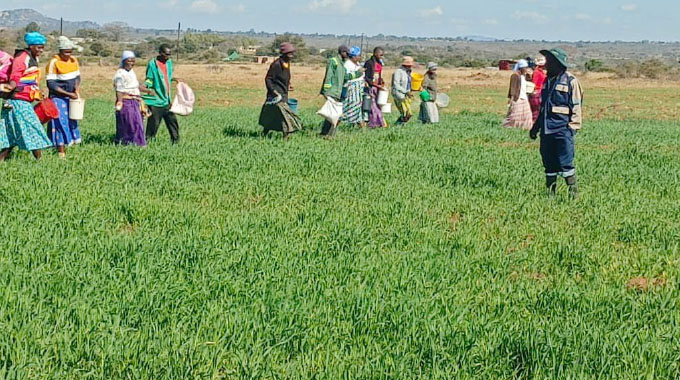
Theseus Shambare recently in Chivi
ONE way to put it is, “Zviro zviyedzwa — chembere yekwaChivi yakabika mabwe, ikanwa muto”. The literal translation is, “Things are meant to be tried out, an old lady from Chivi boiled stones and drank the soup.” Another way would be, “Yehlisa uvalo, ingqobo yisibindi.”
Loosely translated, both proverbs essentially mean, “Patience tests everything.”
At the core of this proverb is a call to never give up, even in the most hopeless of situations — a testament to human resilience, creativity and the will to endure.
For decades, this saying was not just folklore in Chivi District, Masvingo Province — it was a lived reality.
Droughts were relentless. Cracked soils, empty granaries and queues for food aid defined survival.
Today, that story is changing.
Chivi — one of Zimbabwe’s driest districts — is edging towards food security, powered by the Bwanya Irrigation Scheme, a climate smart agriculture project turning once barren land into a mosaic of green.

From waiting to working
On a recent afternoon, the steady hum of tractors filled the air at the 156-hectare scheme.
One was discing soil for a contracted sugar bean crop; just beyond, 40 hectares of winter wheat stood lush and green, their tender leaves rippling in the breeze at the vegetative stage.
Farmers moved methodically through the rows, hand applying top dressing fertiliser.
As they worked, they imagined the next step — using centre pivots not just for irrigation, but for synchronised, precision fertiliser application.
“This is a miracle for our people,” said scheme chairman Mr Ekem Tinago, standing beside one of the giant pivots that waters 72 hectares.
Water for the scheme is drawn from the Shashe River, downstream of Muzhwi Dam, channelled into holding reservoirs, then pumped into the irrigation network.
This dependable supply has turned parched land into fertile fields, proving that even in the harshest climates, patience and planning can coax life from the soil.
“We used to wait for mealie-meal from aid trucks. Now we grow our own food — with our own hands. One day, Chivi will not just feed itself — we will feed others.”
The remaining 84 hectares are irrigated by sprinklers, with each of the 300 households tending a 0,5 hectare plot producing maize, sugar beans and vegetables — for both home consumption and the market.
Climate change and the Chivi story
Masvingo lies in Natural Region IV, with rainfall averaging 450 to 650mm and frequent droughts. ZimVAC data shows over 60 percent of households here have faced chronic food insecurity in the past decade.
Climate change has worsened the odds. Erratic rains, rising temperatures and prolonged dry spells have made rain-fed farming a gamble.
“Waiting for rain became an act of faith,” said committee member Ms Christine Madau.
“There was a time when survival meant waiting — for rain, for donors, for luck. Now we feed our families. That changes everything.”
Youth and women leading the change
For years, young people saw migration or risky artisanal mining as their only escape.
“We used to believe South Africa was the only option,” said 26-year-old Lameck Chiwashira.
“Now, I can farm, earn, and still be with my family.”
Some youths once trapped in drug abuse or dangerous mining now spend their days planting and irrigating.
Women, too, have found a stronger voice.
“Before, we had no income and no say,” said farmer Ms Ennety Makusha.
“Now, I can pay school fees, buy household goods, and save — all from my harvest.”
A bigger vision
Bwanya is part of a US$47,8 million initiative by the Government, UNDP, and the Green Climate Fund to reduce climate vulnerability in drought prone districts.
“This is not just about infrastructure,” said UNDP Communications Officer Pylaia Chembe.
“It is about watering dreams, restoring dignity, and giving people control over their future.”
Challenges and resilience
Electricity for pumping, fencing and access to affordable inputs remain hurdles. But farmers are undeterred.
“We have survived the worst,” said Mr Tinago.
“If we can farm without rain, we can solve the rest. Partnerships will help us invest in the infrastructure we still need.”
Living the proverb
Bwanya’s story is a living example of patience rewarded through adaptation.
Agricultural experts say such schemes can lift entire communities by boosting food security, incomes and cohesion.
“Adaptation takes time,” said extension officer Mr Manford Tadias.
“Bwanya’s years of work are now paying off — and the benefits are multiplying.”
Walking through neat rows of green mealies, Ms Rudo Madau (63) smiled.
“I never thought I would see this in my lifetime. Before, our fields were bare. Now we harvest twice a year. We do not just eat — we sell.”
In Chivi, the proverb is no longer just an elder’s tale — it is written in every irrigated furrow and every grain harvested.