


 Online Reporter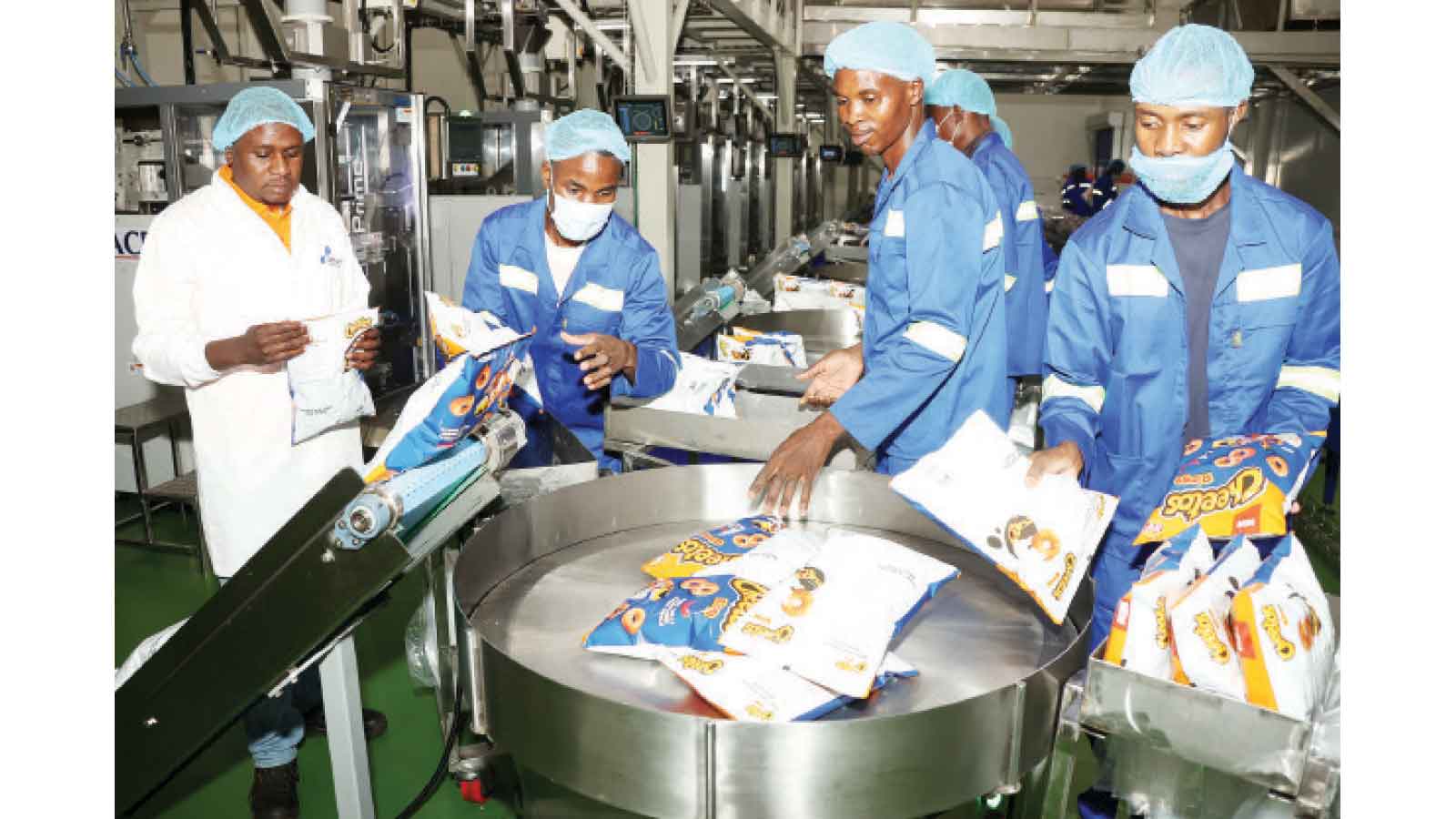
Communion with Bishop Lazarus
It seems beer is to our people what flowers are to other cultures — a major accompaniment in both good and bad times.
For almost every other event or occasion you might think of — wedding, funeral, soccer or a simple Sunday chill — beer is often the common denominator, used as a tonic for happiness and grief.
In fact, it has been for ages.
Our ancestors have long used beer as a reliable social lubricant — brewed not just for celebration, but for mobilisation.
Need a dozen strong backs to till a widow’s field by sunrise? Brew a pot of traditional ale, and the entire village will materialise with hoes in hand and songs on their lips.
From nhimbe work parties to marriage negotiations and funeral vigils, the humble sorghum beer has done what no Government memo ever could: turned obligation into a party.
The traditional brewing process itself is a communal ritual — women gathering to grind grain, stoke fires and monitor fermentation over days, all the while exchanging gossip, settling disputes and strengthening ties.
By the time the murky, sour-sweet liquid is ready, so is the community.
A calabash passed around a circle is a silent contract: I have drunk from your hand, so now I will hoe your land, build your kitchen or carry your bride price.
No written agreement, no lawyer, no small claims court. Just the ancient, sticky promise of shared grain and shared labour.
This is how our society was wired.
Of course, modern Zimbabwe has added its own chapters to this story.
Today, the lager beer that flows from corporate empires serves a similar function — just with better branding and a colder finish.
Urban friends do not call a nhimbe anymore; they invite each other for “a couple of rounds” at the local bottle store.
The currency has changed, but the equation has not: Beer plus company equals solidarity.
Apparently, this was not peculiar to this part of the world. John 2:1-11 reveals that Jesus’ first miracle was turning simple water into a delectable wine that even dazzled the master of the banquet at the wedding that took place at Cana in Galilee. Kikikikiki.
A whole lot of happy drinkers
Well, the country’s biggest brewer, Delta, told us last week that Zimbabweans have been doing a lot of heavy lifting when it comes to bingeing and indulging.
In the past year alone, Delta sold more than 7,8 million hectolitres of both clear beer and masese.
For those who suffer from arithmophobia (fear of numbers), Bishop Lazi will gladly assist to visualise this magic number.
The number 7,8 million hectolitres simply means 780 million litres.
This, folks, translates to a staggering 1,37 billion pints of beer. If this was water, it would be enough to supply 380 000 families with their daily household needs for the entire year.
And if it is indeed true that Africa — a continent that is a proud home of more than 1,5 billion souls — produces over 140 million hectolitres of beer annually, Delta’s sales would, therefore, make about 5,5 percent of the total continental volume. It gets even better.
All these jolly imbibers helped to cheer Delta to a record US$1,1 billion in revenues and a cool US$210 million in profit.
What is even more interesting is the fact that 94 percent of Delta’s sales (roughly about US$1 billion) were in real, hard greenback currency.
We do not print US dollars, by the way: We earn them through hard, honest work and grit.
Despite this sterling and phenomenal performance, which trumps its record volumes realised in 1998, Delta, however, still struggled to keep pace with demand.
It has now since set aside US$120 million, in addition to the US$44 million spent a year earlier, to boost capacity.
Perhaps most importantly, at last week’s analyst briefing, Delta made a very interesting revelation, which is at the heart of Bishop Lazi’s homily this week.
You see, Delta’s last peak performance was in 1998, when our gallant liberation war fighters were compensated for the injuries and trauma suffered during the liberation struggle, helping raise disposable incomes and drive spending.
“In the sorghum beer space, we have had, in the past, a peak year in 1998 when volumes were flowing everywhere. This year, we have beaten that number that we have always said is not quite possible to achieve,” said Delta’s CEO Matlhogonolo Mothibedi Valela.
But last year was different.
Performance was largely driven by rising rural incomes as a result of lucrative activities in agriculture, particularly tobacco and mining.
Remember, dear reader, that Zimbabwe had a record haul of tobacco (355 million kilogrammes) and gold (46,7 kilogrammes) last year, among other commodities.
Conversely, Delta’s performance could not be replicated in regional markets such as South Africa, where sales of masese were modest, and Zambia, which actually experienced a 27 percent decline in volumes as a result of electricity shortages and stiff competition from illicit brews. So, while our neighbours in Zambia were left in the dark — literally — and South Africans were merely sipping modestly, Zimbabweans were doing the heavy lifting.
And by heavy lifting, Bishop Lazi means lifting pint after pint of lager, masese and other beverages. Kikikikiki.
Now, what does this tell us?
It tells us that Zimbabwe is not just drinking more beer. It is earning more beer.
Because you cannot drink what you cannot buy. And you cannot buy what you have not earned. For decades, this country was in the economic doldrums — a ghost ship with torn sails, drifting while the rest of the world sailed past. But last week’s numbers tell a story about rural Zimbabwe suddenly having money in its pocket — not from handouts, but from honest sweat in the fields and shafts.
They also vindicate the observation that Zimbabwe is now one of the fastest-growing economies in the region. For years, we were told Zimbabwe was uninvestable, a pariah, a place where capital goes to die. And yet, here we are — a nation that does not print US dollars — generating over US$1 billion in just one company’s beverage revenues. That money did not fall from the sky. It was earned by a tobacco farmer in Marondera, a gold panner in Shurugwi, a cross-border trader at Beitbridge, and yes, even a civil servant who still finds room for a weekend beer.
Now, if you think Delta is singing alone, you have not been listening to the rest of the choir.
While Delta was drowning in demand, The Buffalo Brewing Company, which produces the opaque beer brand Nyathi that is giving Chibuku Super a run for its money, was running at full throttle. And here is the kicker: Nyathi has just commissioned additional brewing and filling capacity. That means they saw the thirst coming.
More than beer,
snacks and juices
This is hugely significant.
In the old Zimbabwe, businesses ran from crisis to crisis. In this Zimbabwe, they run from expansion to expansion.
But wait — there is more.
Much more. Varun Beverages, the Indian multinational that makes Pepsi and now Cheetos snacks, has decided that Zimbabwe is not just a pit stop.
It is a home. Incidentally, President ED last week commissioned their new Cheetos plant, which is now producing crunchy, cheesy snacks.
Since 2018, Varun has grown from one production line churning out 10 million bottles a month to a world-class hub with six lines producing nearly 120 million bottles.
That is a twelvefold increase. In eight years.
They are, however, not finished yet.
They have already laid a foundation stone for a juice and dairy blending facility.
They are planning to invest US$650 million over the next five years — including up to US$350 million on 500 megawatts of solar energy. So, what do Delta, Nyathi and Varun have in common? They are all betting on Zimbabwe. Heavily. This is not the behaviour of investors who think the country is about to collapse. This is the behaviour of investors who have read the room — and the room says Zimbabwe is rising. And ED, who is headstrong on realising his vision, is not slowing down; he is actually doubling down.
His administration continues to slash regulatory fees, licences and compliance costs across multiple sectors to create accommodative conditions for business.
It sends a message to the private sector to continue to grow, hire and build.
Of course, the sceptics will say: Bishop, this is just beer, snacks and juice.
Where are the heavy industries?
Well, every empire starts with a full belly and a cold drink. When people have money for masese and Cheetos, they also have money for school fees, for solar panels, for ploughs.
Consumer goods are the leading indicators.
They tell you that the farmer in Mvurwi is not just growing tobacco — he is prospering.
The gold panner in Kwekwe is not just surviving — he is spending.
And the best part? The heavy industries are also getting into their stride. The billion-dollar Manhize steel plant continues to go up the gears; its impact already being felt in the local construction industry and beyond.
Manhize has been rolling out rails, rods and billets — sinews and bones of modern construction — like there is no tomorrow.
Zambia and Mozambique are already now eyeing Zimbabwean steel.
For decades, we imported steel from South Africa. Now, the trucks are starting to point south — and north, and east — loaded with “Made in Zimbabwe” metal.
This is part of the beautiful story that is emerging out of our teapot-shaped Republic, which is stubbornly refusing to be held back by United States, United Kingdom and European union sanctions.
While the Bishop is toasting to Delta for joining the corporate billion-dollar club that also includes Zimplats and Innscor, he is also cheering Zimbabwe, whose journey to the promised land is becoming as realistic as it is smoother. Numbers never lie.
Zimbabwe is literally drinking to its own success.
Bishop out!



