Online Reporter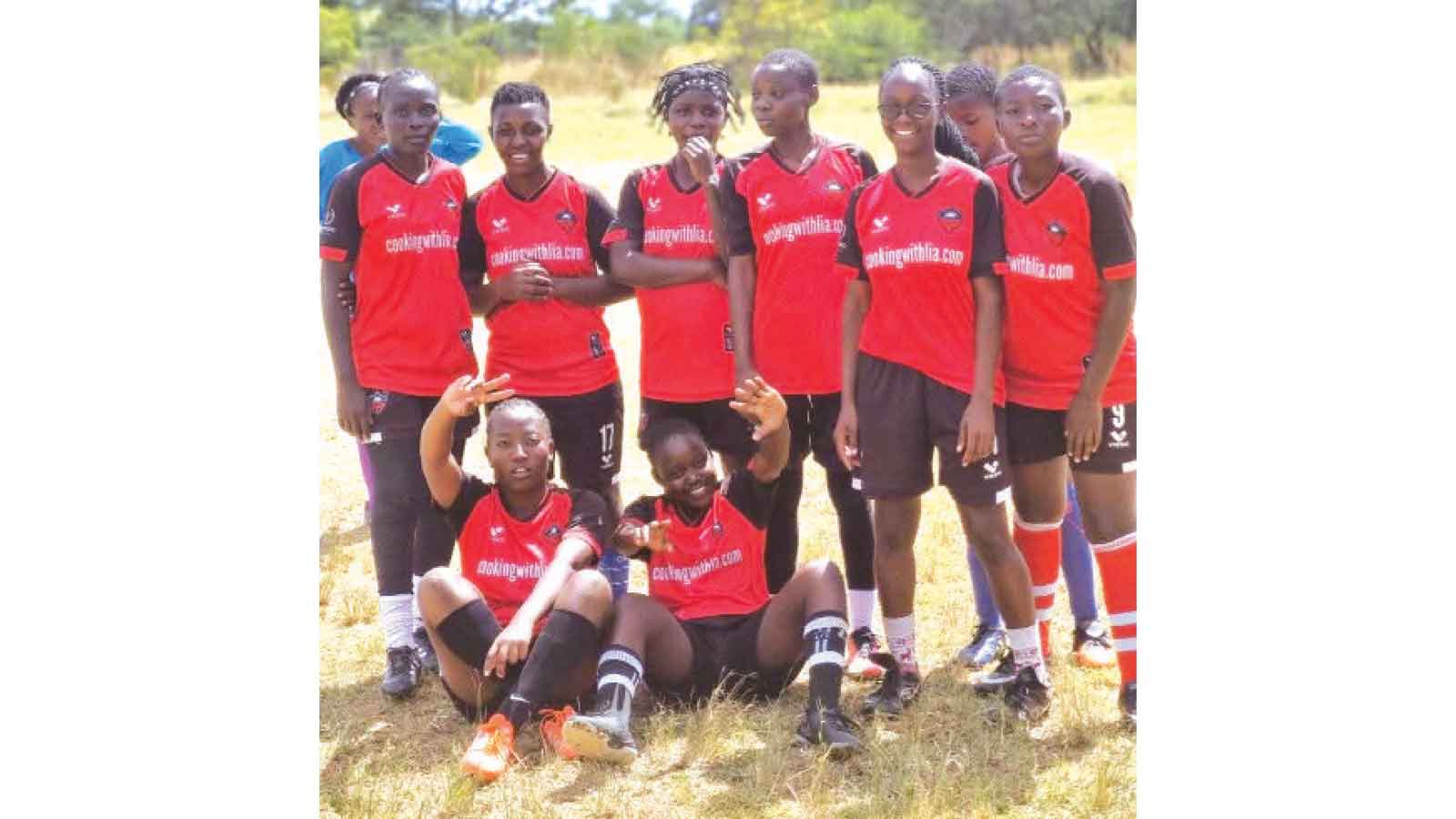
Veronica Gwaze-Zimpapers Sports Hub
IN Gweru, more than 30 young girls have found refuge in football, not because the game is glamorous, but because, for many of them, it has become the difference between purpose and peril.
Rise of Hope Academy (ROHA), the new Zimbabwe Women’s Premier Soccer League side, are sitting at the bottom of the table, winless after four games, leaking goals and learning brutal lessons in a league that does not forgive soft entries.
But the bigger story here is not their log position.
It is survival.
For these girls, many drawn from communities where early marriages, teenage pregnancies and drug abuse are not warnings but lived realities, football has become both a shield and sanctuary.
That is why, beyond the heavy defeats, the worn-out boots and the shared kit, ROHA’s struggle cuts deeper than sport.
This is not just a football club trying to stay in the top-flight. This is a social intervention fighting to keep girls in safe spaces. A closer look at the Gweru outfit tells its own story. Some players arrive in faded boots; others carry themselves with the kind of quietness that often comes from growing up unseen.
There is visible talent, yes, but also visible hardship. They do not walk with the swagger of established clubs.
They carry something heavier — the burden of proving they belong while battling the economic realities threatening to erase the platform giving them hope.
Their coach, Vusumuzi Chipedza, knows the scorelines paint one picture, but he is fighting for another.
“I would say we are a team that is fuelled by passion, held together by dreams, but burdened by the cold reality of financial strain,” he said.
“Our team is made up of young girls from the Gweru community. Some are still in school while others completed school, so to keep them away from social ills, football is the way.” And right now, that way is painfully fragile.
ROHA’s debut in the top-flight has been harsh. Four games, four defeats, 14 goals conceded, one scored.
Their latest setback, a 3-0 loss to Faith Drive, only reinforced the gulf between ambition and preparedness.
But Chipedza refuses to reduce this project to results alone.
“Definitely not the result anyone would have wanted, but truth be told, I am not heartbroken at all because this project is all about something much bigger than just a scoreboard,” he said.
“I have seen remarkable improvements with each game and it is quite encouraging. Definitely, four or so games from now our team will be very competitive.
“However, ROHA is beyond just scorelines because this is a project which was founded on values that are far beyond just winning games; we are all about the plight of a girl-child.”
That may sound noble, but noble causes still need money.
And right now, that is where ROHA’s dream is under real threat.
The club, which earned promotion as Central Region champions last year under the name TelOne Queens before rebranding, is running on fumes.
No reliable sponsorship. No financial cushion. One match kit. Constant logistical headaches.
For a team based in Gweru, geography itself has become another opponent.
At least 13 away matches will demand roughly 300km trips, each costing close to US$350 in travel expenses, money they simply do not have.
Currently, the squad and technical team squeeze into commuter omnibuses, often through goodwill rather than structure. That is not sustainable for a top-flight club.
“The club survives from hand to mouth; we have nothing in our coffers but we push hard to keep the club alive because for us it is the only way to keep the girls safe from societal ills,” said Chipedza.
His words land heavily because this is not football hyperbole.
Without sponsorship, ROHA’s season could collapse before it truly begins.
For bigger clubs, relegation battles are football problems.
For ROHA, financial collapse could mean vulnerable girls losing one of the few structured systems actively protecting them. That is what makes this story uncomfortable.
Zimbabwean football often speaks loudly about development, empowerment and the girl-child, but projects like ROHA expose how shallow those slogans can sound when community clubs carrying that burden are left to beg for survival.
If women’s football is truly about empowerment, then support cannot only arrive when there are trophies, national team call-ups or corporate photo opportunities.
It has to reach the grassroots, where football is still rescuing futures before it starts producing stars.
ROHA may be bottom of the table today, but in a country where too many girls still slip through the cracks, their real battle is not against Faith Drive, Herentals or any title contender.
It is against poverty, neglect and a system that praises transformation, but too often fails to fund it.
And unless someone steps in soon, one of the most meaningful projects for Zimbabwean women’s football may not be defeated by goals.
It may simply be starved out.