Online Reporter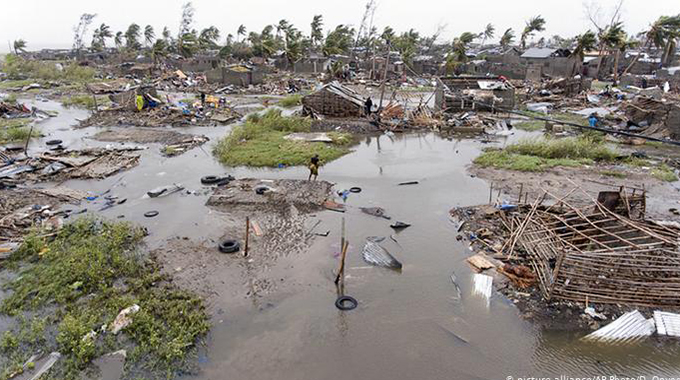
Sam Matema, Correspondent
DISPLACEMENT occurs when people are forced to move from one place to another. It is not a matter of choice. This type of movement is known as forced migration and happens for a variety of reasons. Some people are driven from their homes by social challenges, others by economic hardship, and many by political circumstances. Increasingly, however, environmental factors are becoming a major cause of displacement.
There are three main types of displacement. The first is development-induced displacement, which occurs when large infrastructure projects are undertaken. The second is political displacement, often arising from conflict and war. The third is nature-induced displacement, caused by floods, droughts, earthquakes and other natural disasters. In each case, people may be displaced within their own country or across international borders.
Zimbabwe has experienced all three forms of displacement. When construction of the Kariba Dam began in the 1950s, approximately 57 000 people were moved from the Gwembe Valley. While the dam brought electricity and water security, it also compelled communities on both the Zimbabwean and Zambian sides to leave their homes and ancestral lands. More recently, the establishment of the Chiadzwa diamond fields resulted in the relocation of 1 500 households to Arda Transau
Farm in Odzi. In 2014, flooding associated with the Tugwi-Mukosi Dam displaced more than 3 000 households. Over 12 000 people were relocated to Chingwizi Transit Camp. Conditions at the camp were challenging, with limited access to water, inadequate sanitation and insufficient shelter.
Climate change is worsening the problem of displacement. Its effects touch every aspect of life and are not confined to one place. They cross borders and affect communities across regions and continents. Importantly, climate change impacts some groups far more severely than others. This is what many refer to as climate apartheid. The poor and the vulnerable are often the first to experience its consequences.
Climate change is now one of the most significant drivers of migration. It acts as a multiplier of existing challenges. When rainfall fails, crops fail. When crops fail, hunger follows. And when food becomes scarce, people are often forced to move. Water shortages create further pressure as communities compete for limited resources. In some areas, this competition escalates into conflict. Experts warn that without meaningful action, climate stress could contribute to climate wars.
Evidence of this can already be seen in other parts of Africa. In the Sahel region, south of the Sahara Desert, resources are increasingly scarce. Grazing land has diminished, water sources are limited, and communities are competing for access to land and water. Research indicates that many of these conflicts are linked to climate change. More than 2.5 million people have been displaced across the Sahel as a result of these mounting pressures.
Zimbabwe is not immune to these trends. Droughts have become more frequent, floods more destructive, and cyclones now penetrate further inland than before. When agricultural livelihoods collapse in rural areas, people often move to towns and cities in search of employment, food and security. Such migration is rarely planned and typically occurs shortly after a disaster has struck.
When large numbers of people arrive in urban centres at the same time, city systems often struggle to cope. Housing becomes scarce, water infrastructure and power networks come under strain, and roads and health facilities become overcrowded. The result is urban informality. Informal settlements emerge on open land, unplanned markets develop, and transport systems operate outside formal structures. Illegal water and electricity connections become common. This is not necessarily because people wish to break the law, but because formal systems are unable to provide services quickly enough. Informal systems therefore emerge to fill the gap.
However, informality also creates new risks. During periods of heavy rainfall, informal settlements are often among the hardest hit. Homes built on wetlands or steep slopes can be swept away by floods, while poor drainage worsens the impact. As a result, people who were originally displaced by climate-related disasters frequently become even more vulnerable after moving to urban areas.
The law is clear that governments have a responsibility to protect displaced people. The Kampala Convention requires states to assist internally displaced persons, including those displaced by development projects, conflict and natural disasters.
In Zimbabwe, this responsibility rests with the Civil Protection Unit, which falls under the Ministry of Local Government and
Public Works. The unit operates under the Civil Protection Act and is responsible for coordinating responses to both natural and human-induced disasters. It works closely with other government departments and with non-governmental organisations to fulfil this mandate.
Zimbabwe has also made important international commitments. The country ratified the Ramsar Convention on Wetlands and currently chairs its Conference of the Parties. Wetlands play a vital role in flood management, water storage and water supply.
Protecting them is therefore an important part of reducing displacement and strengthening resilience.
Disasters are occurring more frequently and with greater intensity. This reality demands better preparation. Emergency response units must be adequately funded and trained. Effective early warning systems must be established. Strategic reserves of food, water and shelter should be maintained, and clear evacuation routes must be planned and communicated.
Cyclone Idai in 2019 provided a painful lesson. It exposed weaknesses in existing systems and highlighted the devastating consequences of inadequate preparedness. However, valuable lessons were learned. Since then, disaster-response capacity has improved at national, provincial and local levels. Coordination has strengthened, and communities are more aware of disaster risks. Nevertheless, there is still more that can be done. Zimbabwe can continue to learn from countries that have successfully confronted similar challenges.
Attention must also be given to addressing urban informality. The Second Republic has taken steps in this direction. One example is the policy of regularising informal settlements. In areas such as Epworth and Harare South, government efforts are under way to provide residents with legal tenure and improved access to services. Water infrastructure, roads and healthcare facilities are being expanded. Regularisation provides residents with greater security while enabling government to plan more effectively for disasters and urban development.
Climate change is not a temporary challenge. It will continue to force people from their homes and livelihoods. The critical question is how we respond. We must reduce emissions, adapt to the changes already taking place, protect ecosystems and build cities capable of accommodating new residents with dignity and opportunity.
Displacement is about far more than physical movement. It involves the loss of homes, farms, schools, livelihoods and community networks. It means rebuilding lives from difficult circumstances and often with limited resources. Government, communities and the private sector must therefore work together. Planning must take place before the next flood strikes and before the next drought takes hold.
The time to act is now. If we delay, the costs will be far greater in terms of lives lost, economic damage and missed opportunities. Zimbabwe already has the experience, legal frameworks and institutional structures needed to respond. What is required now is urgency, adequate resources and a collective commitment to protecting vulnerable communities. In the age of climate change, preparing for displacement is ultimately preparing for survival.
Honourable Sam Matema is the National Assembly Member for Buhera Central constituency, ZANU PF Manicaland Province Secretary for Administration, Climate Parliament Zimbabwe Chapter chairman and chairperson of the Parliamentary Portfolio Committee on Environment, Climate and Wildlife. He writes in his personal capacity.