Vusumuzi Dube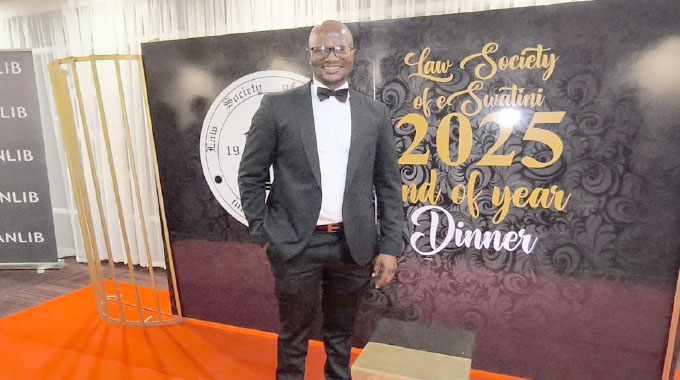
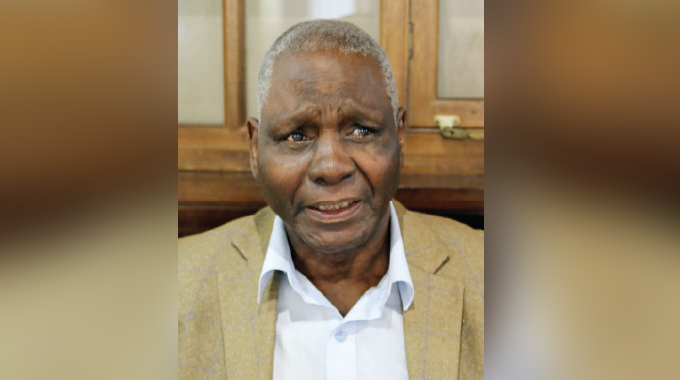
THE name Modicai Donga resonates with Bulawayo and Zimbabwe boxing having been one of the best talents to emerge in the last 30 years.
To many, he was the next big thing for Bulawayo, fighting as an orthodox boxer who could switch when need arose and lace his ring art with some good footwork and combination package in the ring.
Born and bred in Makokoba, Donga was inspired by big names of his early teens, who included local Arifonso Zvenyika, South African Baby Jake Matla, Mike Tyson, who were at their peak.
“Locally, Zvenyika stood out for me, he was ever in the news, that he was from Mbare and me Makokoba, gave me the belief that I also could do it.
“In South Africa, there was Baby Jack Matlala, a very outstanding and charismatic boxer. Internationally the Mike Tysons were at their peak, but the biggest of them all was Sugar Ray Leonard, what a boxer,” said Donga.
He said in their era as youths, boxing was big in Bulawayo, and communities spoke about yesteryear greats of the city like Ringo Star, Kid Power, Jack Ellis and Tar Baby.
In the immediate past, there had been another crop of very good amateurs who had shone both locally and nationally like Eddie Ndlovu, Ndafara, Ambrose Mlilo, Morris Chiwawula, Ndaba Dube, Joyful Mahlangu, Nokuthula Tshabangu, Sipho Moyo, Ndumiso Mabhena, Trust Ndlovu, Sanderson Nyebai and Fredrick Chisoro.
Some like Mlilo, Moyo and Ndlovu had turned professional and dominated their weight divisions.
“I had all the motivation to want to be the best in my weight division,” said Donga.
The idea of boxing crossed his mind in 1993 while a pupil at Sobukhazi High School in Mzilikazi suburb.
“Naturally, growing up in Makokoba and Mzilikazi, football was the in-thing. I played street football as a boy, but I just thought of something different as an extracurriculum activity. I had a cousin, Ronald Masuku, who was a boxer.
One day he took me to Barbourfields Gym, where there was Phillip Striker and a whole lot of army boxers training there occasionally.
“There was Ezwell Ndlovu, Ambrose, Nokuthula Tshabangu, Trust Ndlovu, Fredrick Chisoro, so many army boxers training there. I started training there without any intentions of becoming a boxer, but one evening at Iminyela changed everything,” said Donga.
He said there was a tournament in Iminyela in which his cousin fought a flyweight boxer from Harare. His cousin Masuku was defeated, leaving Donga in a rage.
“I trained furiously, and I declared I would take it upon myself to avenge my cousin Masuku’s defeat. Another tournament came by and I went there ready to fight and openly sought a fight with the guy who had beaten my cousin. I won that match convincingly and the referee of the match, the late Petros Masiyambumbi, met me outside the ring afterwards,” said Donga.
Masiyambumbi encouraged the young Donga to work harder and told the Sobukhazi lad that he had talent.
Donga was so good that Masiyambumbi noted his career and had him fight big amateur boxing names like Alexander Kwangwari, who had represented Zimbabwe at the Olympics and other international events.
“I was thumping the guys and I kept on pushing until I was part of the national teams in regional tournaments. I had a successful amateur career that yielded 36 fights in about four years and I was drafted into international teams,” said Donga, a retired army officer who is a practising lawyer based in Eswatini.
“In my first tournament in Mozambique, I won my fight and the next tour was South Africa. I lost to a boxer from Lesotho in the only loss I remember as an amateur,” said Donga.
As his stock grew, Rampage Ring promotions, a Bulawayo-based stable run by the late Jeff Dube was following. The tracking was a non-event in any case, Phillip Striker coached both amateurs and professionals at Tshaka Youth Centre, where they had moved to after vacating Barbourfields Stadium to allow the 1995 All-Africa Games facilities improvements.
Dube felt Donga was ripe and eager to add a bit of sparkle and youth to the stable, after realising that Nyebai, Ndebele, Mlilo, Tshabangu and Moyo were on the other side of the hill age-wise, coerced Donga to turn professional.
“When you are a novice boxer, you rarely have a say in who your opponent should be. You are at the mercy of promoters.”
His opponent for his debut fight, held at Harare Gardens, was against the stylish and very popular John Boy Konde in an event promoted by legendary Stalin Mau Mau.
“Naturally, when you are making that big leap, you have the fear of the unknown. As I entered the ring, everyone in the crowd was shouting his name, but I held on in the four rounds of action we had. I felt I had beaten him on points and deserved to be announced the winner. To my surprise a draw was declared in that fight which must have been around 1997,” said Donga.
Donga went on to fight 23 times as a professional, recording three losses and at one time, he held the welterweight, light middleweight and middleweight belts.
His professional losses were to Charles Manyuchi, John Chibuta of Zambia and Tyson Eushona of Namibia.
His World Boxing Organisation (welterweight) fight against Mohamed Ruti was one of the toughest fights.
“I eventually knocked him out in the 10th round, he was just too tough to deal with,” said Donga who had gone to the fight with renowned trainer Clyde Musonda.
He said that fight in 2005, was one in which he was highest paid in his professional career.
“Eish the least I received as a professional boxer was an equivalent of US$20 and the highest was US$5 000 for the World Boxing Organisation title fight. Boxing was not paying, it was good for those who fought for the love of it,” said Donga, whose victims include the hard punching Farai Master Kachigwada, Edmos Takawira and Ambrose Mlilo.
His 2004 fight against Mlilo was very much hyped. Mlilo went into the fight as a favourite.
He was not just any other boxer, but a man who had successfully accounted for Masiyambumbi, Arigoma Chiponda and Sipho Moyo.
“Honestly I did not understand the hype around Ambrose. I had beaten him at Windermere Hotel. I could have knocked him out in the third round but my trainer Phillip Striker whispered to me to give him a bit of respect since he was a big name in the city. But a flurry of blows and combinations flattened him in the eighth round,” said Donga.
Donga fought until 2012 and he said a courtroom incident had him thinking more about his career as a lawyer.
“I had fought during the weekend and it was a Monday morning and I was still swollen in the face. I was representing a client who was involved in an assault case. So the magistrate asked me if I had also been involved in the assault of the complainant,” said Donga, who had been years out of the army and at that time was a fully-fledged-lawyer before he moved to Eswatini.
Donga was born in Bulawayo 48 years ago and attended Ndangababi Primary School in Cross Dete, Hwange District before proceeding to Bulawayo’s Lobengula Primary School in Mzilikazi for Grade 3, with Sobukhazi his next destination.
He completed his A-levels at Northlea High School and joined the army as an officer cadet. While serving he studied law with the University of South Africa (Unisa).
Donga is now reading for his Doctor of Philosophy in Law qualification.
He has not shut out boxing in his life.
On 28 March, he will sponsor a boxing tournament to be held at Mpopoma Station in conjunction with the Zimbabwe Boxing Federation.
“I have not been shut out to boxing, I am launching BigFish stable on March 28,” said Donga from his Eswatini base.


 Online Reporter