daniel chigunwe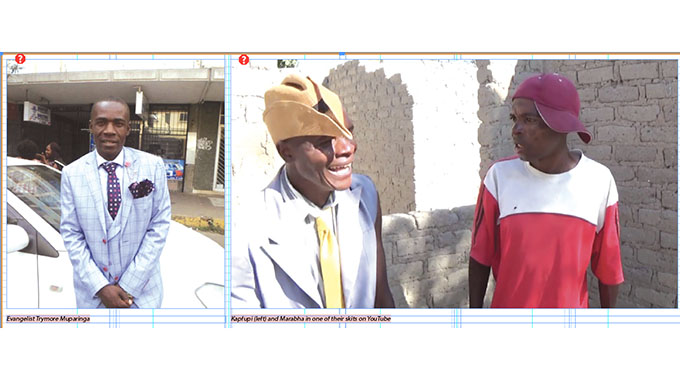
Lifestyle Editor
It is a wintry morning in Harare and a crowd gathers around a sunken platform along First Street glued to a theatre performance.
Here, First Street, which is the heartbeat of Harare’s pedestrian traffic straddling from north to south, intersects with Speke Avenue, whose pedestrians pour into city centre from the east to the west.
Therefore, the sunken platform is strategically positioned to capture traffic of passers-by.
Here, theatre groups take turns and crowd members also take turns to watch and leave, depending on their schedules. The show goes on.
So popular is street theatre that even angels on their flight to heaven would stop and gaze.
But that is past now. Social media skits have taken over forcing a dearth if not death of street theatre.
Times have changed. Even the street names have changed too. First Street is now First Street Mall.
Speke Avenue is now Augustino Neto Avenue, named after the great Angolan politician.
The sunken platform, is now a pulpit for street preachers, especially lay preachers. But, hey, the loss of street theatre has made obsolete the art of such artistes like Kapfupi, Marabha and Wasu among other brigade members of street theatre.
Suffice it to say, street theatre was moralistic, didactic, soothing and entertaining. It was a genre that helped many pull smiles on their faces. But it is gone, gone and gone. Gone!
For the old school, it was a rich tradition of art in Zimbabwe that was very famous and so many people gathered to watch comedians such as Freddy “Kapfupi” Manjalima, “Charles “Marabha” Mirisi and stuntman Simon “Wasu” Razerera, among others.
By then there was no social media, so anyone who liked them had to travel to the city centre to see them.

To tell today’s generation that at one point there was a man called “Wasu” in the streets, they cannot believe it because they are now used to social media where Felistas “Mai Titi” Murata, Admire “Mama Vee” Mushambi, and Mai Kirifodhi among others are dominating.
The migration of social media to Africa has killed what we call “the public sphere.”
What happened to street theatre?
The Herald on Saturday Lifestyle tracked down some of the famous street theatre actors, to find out where are they now and why they are quiet.
Kapfupi is still active in the arts fraternity though he has migrated to social media as he is no longer into street theatre.
Gringo is now late while Wasu is still alive and is said to have relocated to rural areas to focus on his family and farming.
Kapfupi, who is staying in Epworth and is still into acting, said it is time to forget about the street theatre and embrace social media, but unfortunately, some mainstream comedians were resistant to change.
“In the past, we used to go to the streets, but social media killed us.
“Now it is the time to shift our focus to social media because all of our fans are now on digital platforms, but the problem is some of our colleagues in this trade are reluctant to go digital,” he said.
May be you can see musicians who are begging, the likes of Daniel Gonora and his kids, and sometimes Tongai “Greatman” Gwaze..
Kapfupi said the comedy industry has shifted its focus from the streets to digital platforms except for a few musicians who are begging or those who are seeking fame.
“Today you cannot see us in the streets because things have changed, you may be surprised that even today I can go to the streets and no one can recognise me because we are no longer the masters of the streets unlike long ago.”
Kapfupi also said their most popular venue of the street theatre which is located at the corner of First Street and Agostinho Neto Avenue is now a pulpit.
“Our venue is now a church, you cannot see any comedian there, sometimes you can pass by that venue and it is empty.
“The last time I passed by, some vendors were selling their products,” he said.
Kapfupi, said his life as a street comedian was not easy. They used to survive on donations from the audience, now they are earning a decent living through social media.
Visually impaired Daniel Gonora who has been operating in the streets for over two decades said with social media, the public is no longer interested in gathering and watching someone performing in the streets.
Gonora is still in the streets, if you don’t find him at Market Square then Joina City is his stage.
He bemoaned the growth of social media as the earnings of street artistes have dropped drastically because only a handful of people still gather to watch them.
“These days many people can just go on to the internet to find what they want rather than spending an hour or more watching an artiste or a comedian in the streets.
“We used to earn a decent amount of money from well-wishers, but this has changed since we are struggling to pull a large number of fans,” he said.
Although social media has killed the street theatre, it is a blessing in disguise to so many comedians of today.
Without social media, it was very difficult to identify and know some of the comedians we have today.
It has brought so many characters into the limelight, the likes of Comic Elder, Mama Vee, Mai Titi, Madam Boss, Dan Grego, Mwendaz WeDrip just to mention a few.
Famous street preacher and comedian, Evangelist Trymore Muparinga who has over two decades been preaching in the streets said the advent of social media was a game changer to his mission.
Muparinga who has now a church of his own in Waterfalls, sometimes doing online services with his congregants confirmed he is no longer coming to the streets.
He said before social media he was famous like what he is today.
“I was in the streets for more than two decades, I used to preach for a mob which was less than 100 people but now with social media, I’m preaching to more than 100 000 people.
“During the first days I thought social media was coming to destroy our works but it was a blessing in disguise,” he said.
On YouTube, 1 000 views for a video can earn up to US$6. The estimated earnings for 1 million views range between US$1 200 to US$6 000.
“If you have more followers on social media and manage more viewers, you can earn a good living unlike in the past years when we solely depended on handouts in the streets,” said Muparinga.
Also, social media is a bridge that can bring the world together.
Our local comedians can perform for their fans across the whole country.
Mai Titi, said through social media she is famous in the UK, and this would not have been possible without the internet.
She is happy with her earnings from social media.
“Through social media, we are earning a good living by having millions of viewers. I have acquired all of my property through social media,” she revealed.
Mai Titi boasts of 1,5 million followers on her Facebook page.
She said the migration of social media to Africa was a game changer in her life.
“We don’t mind going to the streets to entertain our fans because on social media we are doing very well.
“Sometimes on social media, you can gain more views than on the mainstream media,” she said.
Also through social media, a comedian can get endorsement deals from various companies that want to market their products.
A good example is Tarisai Cleopatra Munetsiwa who is famously known as Madam Boss in the arts fraternity. She is living large through endorsement deals on social media.
“Through social media, I’m living large, I’m getting some lucrative deals from so many companies.
“I guess without social media, my life was not going to be like what it is today,” she said.
Another rising comedian, Blessmore Muchenje famously known as Mwendaz, said with social media any comedian cannot be forced to go to the streets to hunt fans.
Mwendaz is used to perform in public spaces such as public bars and ghetto shebeens. His only job is to buy data and upload content to his online platforms.
“In the past, we used to entertain people in public spaces like pubs and bars so in return our fans would buy beer for me.
“Things have changed now, we create our content and just post it on our social media pages, and our fans in the thousands numbers will then enjoy it,” he said.
Comedian, Admire Mushambi who is also known as Mama Vee, said without social media it would not have been easy for him to create a household name.
Mama Vee boasts of 1,2 million followers on Facebook.
“I guess if there were no social media it would have been very difficult to become a big name in this industry, especially with my type of content (of acting as a gay), I don’t think I was going to be streamed on our mainstream media.
“Thank God we have social media, so we just post our content and gain millions of viewers,” he said.
Times have changed indeed.



 Online Reporter