Online Reporter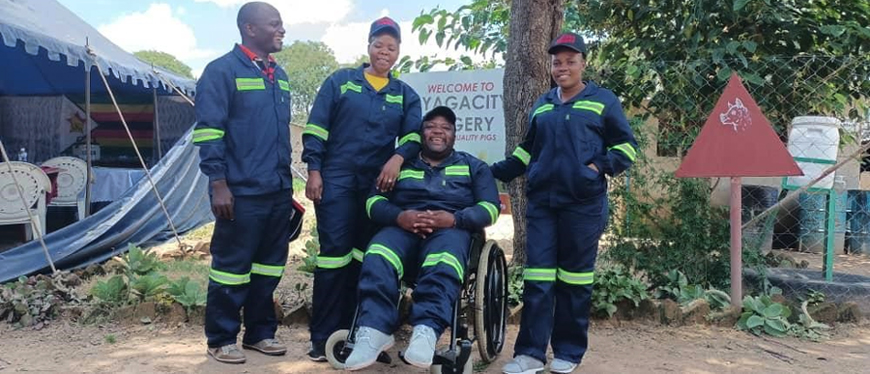
Samuel Kadungure
News Editor
IN a world where physical limitations often dictate one’s narrative, his story shines as a beacon of hope and resilience.
Mr Leonard Makoshera’s story is a powerful testament to perseverance and self-belief – serving as a poignant reminder that every individual deserves respect, dignity, and equal opportunities.
It underscores the importance of treating others with the same kindness and compassion we desire for ourselves – focusing on their abilities rather than their limitations.
Confined to a wheelchair since the tender age of 10, Mr Makoshera has refused to be defined by his disability. Instead, he has harnessed his indomitable spirit to inspire others and prove that ability knows no bounds.
Hailing from Nyanga South Constituency in Ward 19, under Chief Hata, his life is a testament to the power of perseverance and self-belief.
Despite being relegated to a wheelchair in 1988, when he was merely in Grade Four, he has defied the odds, emerging as a force to be reckoned with in his community.
Through his journey, he has come to embody the mantra – disability is not inability – challenging stereotypes and underscoring the importance of inclusion, potential, and an enabling environment.
It is a message he passionately shares with others, encouraging them to look beyond perceived limitations and tap into their inner reservoir of strength.
His inspiring outlook on life is a masterclass in resilience, urging others to venture beyond the confines of their comfort zones.
Disability is what you decide it to be – and never let anyone decide that for you, he advises, encouraging others to take risks and seize life’s opportunities.
“My name is Leonard Makoshera from Nyanga South Constituency in Ward 19 under Chief Hata. I am a physically challenged man on a wheelchair since when I was in Grade Four; that was in 1988. I did part of my primary education in Nyanga before I proceeded to Jairos Jiri Southerton, Harare where I completed Grade Four to Seven, before proceeding to St Ignatius College where I did my high school education. After that I obtained a Bachelor of Business Studies (AU – 2003), Master of Science (MSc) Purchasing and Supply Chain Management (Bindura University of Science Education- Zimbabwe (2019); Master of Commerce in Strategic Management and Corporate Governance (Midlands State University (2014); Level Four Foundation Diploma in Purchasing and Supply (Chartered Institute of Purchasing and Supply UK (CIPS UK) – 2011, among others,” he said. Currently, he is working on his proposal for my PHD, having worked in Government, the NGO and banking sectors.
“Disability is not inability. We should not stop people with disabilities from having skills, talents, and the capacity to achieve great things, contribute to society, and live fulfilling lives when given proper support and opportunities,” he said, challenging stereotypes by highlighting that disability is different from lacking capacity, emphasising potential, inclusion, and the importance of an enabling environment over perceived limitations.
Mr Makoshera said he refused to remain idle and sought activities that kept him active.
“While growing up, I had a passion in farming despite my physical challenges. My mother was a peasant farmer, and it is from the proceeds from gardening that she managed to send me and my siblings to school. It is from that early age that I developed an interest in farming as I discovered that one can make a living from it.
“I started looking for a small piece of land in 2015, mainly concentrated in the periphery of Harare. After seven years of searching and failing, in 2022, I decided to trace back to my rural area and utilise the small piece of land which I owned. I started with piggery after I got an inspirational from one of the successful piggery farmer, Mbuya Nyagano, from Nyagacity in Norton. I also got a lot of support from my wife – Mrs Mavis Gutsire-Makoshera – to do piggery as she has a passion in farming too. She has been my pillar of strength,” he said.
Mrs Makoshera had this to say: “I grew up with a passion for animals, but due to my husband’s condition, we had to think of a business project we could embark on together, and opted for piggery because pigs have limited movement – we clean and feed them in situ, and they provide a sort of entertainment. This business gives us the opportunity to be together, doing something as a couple, unlike a situation where he would work away from me and face mobility challenges alone. To women, work alongside your partners to prosper. Do not wait for men to provide everything.
“If you work with your spouse, you will meet with success unexpectedly, just as we did,” said Mrs Makoshera.
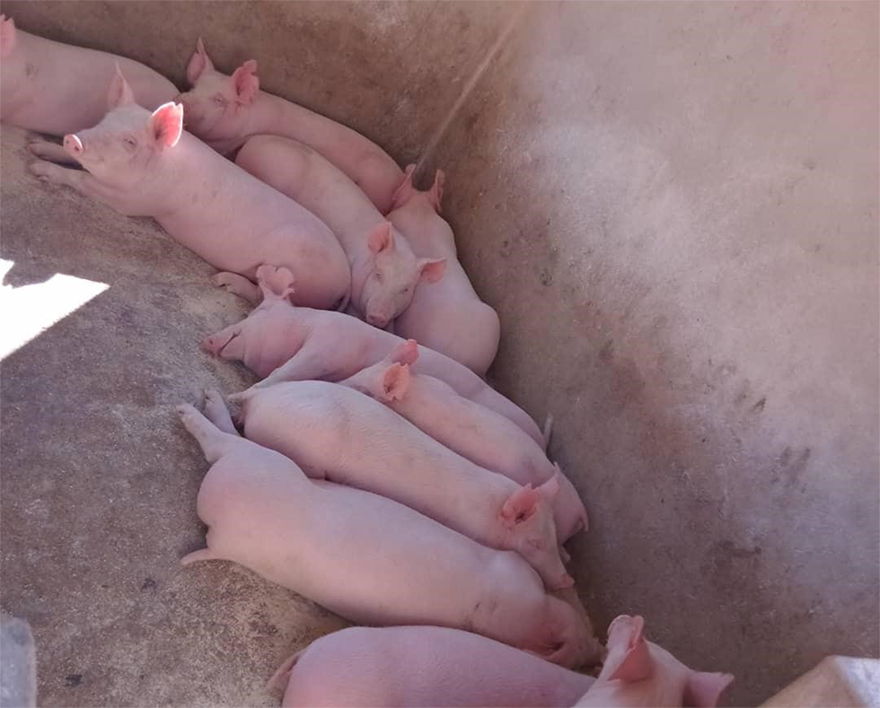
Their project has flourished, boasting an impressive 500-pig strong drove, with a monthly off-take of at least 50 pigs, cementing their position as one of Nyanga’s largest pork suppliers and a key player in Manicaland’s pork market.
Emboldened by his success, Mr Makoshera has diversified his operations, investing in a state-of-the-art grinding mill and pig feed mixer on site – a strategic move that enables him to source maize and wheat bran directly from local farmers, ensuring a consistent supply of high-quality feed while supporting the local agricultural economy.
“By manufacturing our own feed using locally sourced maize, soya meal, wheat barley, and premixes, we have significantly reduced our production costs, which typically account for around 70 percent of the total expenses. Our in-house grinding mill and mixer enable us to control quality and costs, making our piggery project more competitive and sustainable,” he said.
Beyond feed production, Mr Makoshera has implemented stringent biosecurity measures to safeguard his drove, including controlled access, regular vaccinations, and meticulous waste management that powers a biogas.
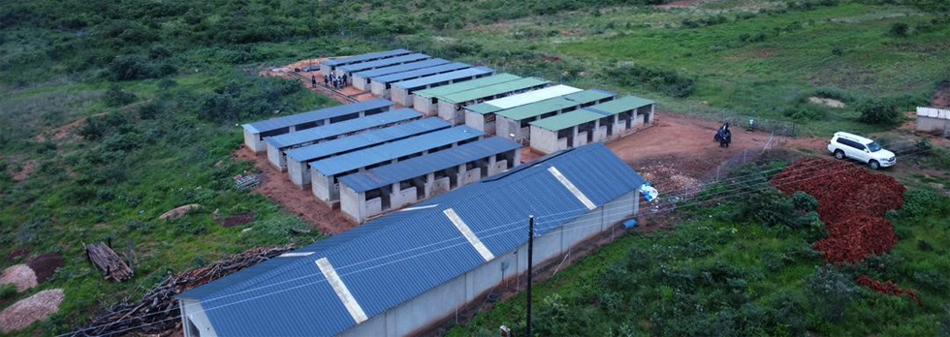
Modern piggery essentials, such as climate-controlled sheds, automated heating and feeding systems, and advanced manure management, further enhance the project’s sustainability and animal welfare standards. A dedicated veterinary care programme ensures the drove’s health, while a robust breeding programme focuses on genetics and breed improvement.
Additionally, Mr Makoshera has incorporated value-added processing capabilities, offering consumers a range of pork products, from sausages to bacon, thereby expanding his market reach and increasing revenue streams. This holistic approach has transformed his piggery into a thriving agribusiness, serving as a model for others in the region.
“Before embarking on the project, I send my first employee for training at Nyagacity in Norton. It is after this training that we built our first pigsty in 2022 using the little savings I had made from 2014. We started with five serviced guilts in January 2023, which we bought from Nyagacity. From 2023 to date, we have managed to grow our sow unit to 36. This is made up of 12 and two guilts and boars, respectively, which we imported from South Africa. I started with one five compartment pigsty and now I have 15. Every month, I am selling 40-60 porkers to the market,” he said.
Where to be in 2030?
“We are here to make sure that the National Development Strategy (NDS2) and Vision 2030 as pronounced by President Mnangagwa is a success, especially on food provision. I intend to grow the project from 36-100 sow unit by first quarter of 2027, and my target is to reach a sow unit of 500 by 2030. In order to impact the knowledge, I have gained, I would like to open a training school, which will be affordable to my target group of the less-privileged, especially those from my disability constituency. I also want to expand the project by adding other products lines, which include goat farming, fishery, rabbits, ducks and horticulture.
“I want to control my entire production cost by growing my own feed. The current space which l have is small and it does not fit into my vision of having 500 sow unit by 2030,” he said.
Impact of the project to the community
“I have a staff complement of 10, and seven of them are from the local community. We also support local builders, plumbers and electricians. Moulding of bricks is done by the local people. We have created a market for the local people as we procure all our maize from them for making feed. I drilled a borehole and the villagers have access to clean water. We also installed Starlink internet, which we have made it available for research by leaners in Grade Seven, Form Four and Six. Local schools and villagers have visited the project for look-and-learn,” he said.
Advice to others
“Being physically challenged does not mean inability. I encourage my constituency to do the same project and others they are passionate about. They should follow their dreams, goals and ambition. Your physical condition should not be a hindrance to your personal growth and success. Piggery project is very lucrative. For instance, I built extra 10 blocks of the pigsty and imported 14 pigs from South Africa through proceeds from this project. I also managed to electrify my homestead through proceeds from the project. Hence, I encourage others to follow suit. However, my biggest challenge is inadequate space. With Vision 2030 in mind, the space which I have is a hindrance to my goals, mission and ambitions,” he said.