Online Reporter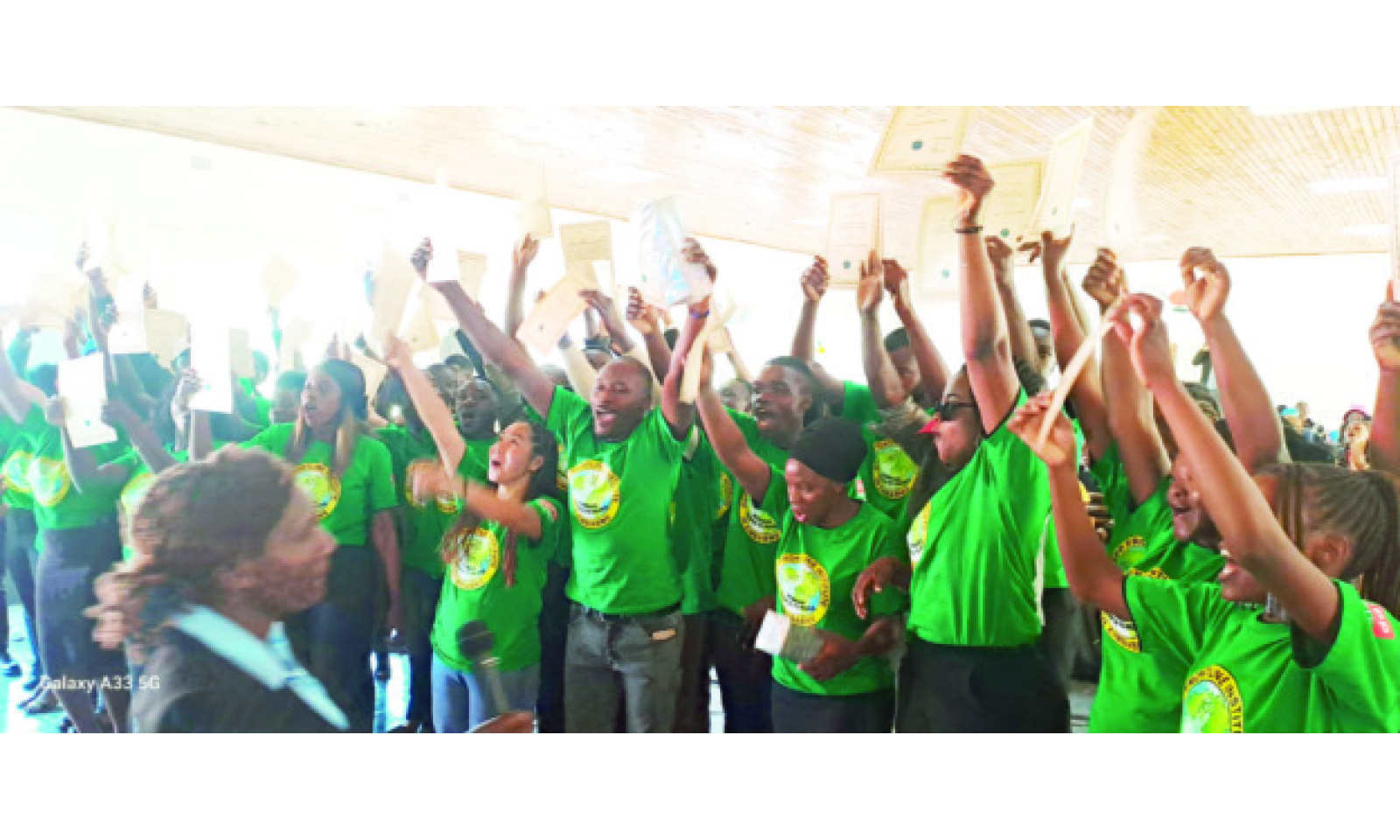
Fungai Lupande
Mashonaland Central Bureau
NESTLED in the rolling hills of Shamva, the Frontline Institute stands as a living monument to Southern Africa’s hard-won freedom — and a training ground for its future.
Inaugurated by Zimbabwe’s founding father, the late Cde Robert Mugabe, on behalf of the region’s liberation leaders, this institution embodies the unbroken chain between battles of the past and development challenges of today.
What began in Denmark during Apartheid as a leadership academy for freedom fighters has evolved into a dynamic hub where a new generation of African, Asian and Latin American change-makers learn to turn struggle into sustainable progress.
“The goal was never independence alone,” said Principal Doubt Musiwa at Friday’s graduation of 61 students from 10 nations.
“It was to equip those who fought with the skills to rebuild their countries with dignity and competence.”
Originally, cadres from ZANU PF (Zimbabwe), FRELIMO (Mozambique), MPLA (Angola), SWAPO (Namibia) and others trained abroad. But visionary leaders soon asked: Why learn nation-building in Europe when the work is here?
The institute’s 1980s relocation to Zimbabwe marked a pivotal shift — from preparing for freedom to engineering its dividends.
Today, its 6 346 alumni exemplify Cde Mugabe’s inauguration message, “Liberation without transformation is incomplete”.
Since then, the institute has evolved into a cornerstone of community-driven development.
Young people from rural and urban communities in Africa, Asia and Central and South America undergo rigorous, hands-on training in agriculture, project planning, leadership and climate-resilient solutions.
But more than skills, they leave with a mission, to return to their communities and drive transformation from the ground up.
“Our focus is not employment-seeking. Our graduates go back to start projects, mobilise people and create solutions using local resources, low-cost technologies and the spirit of collective action,” said Mr Musiwa.
From thriving demonstration gardens to outreach programmes in nearby communities, the institute’s model is practical, adaptable and proudly African.
Trainees work alongside villagers, test ideas, refine methods and learn from failures until real results are achieved.
This approach echoes the very ethos of the liberation struggle, that people are not passive recipients of help, but active agents of their freedom and progress.
“The fight against apartheid and colonialism may be over, but the struggle against poverty, disease and inequality continues,” he said. “Frontline is preparing our young leaders for this new battle, a battle for sustainable development, social justice, and climate resilience.”
The guest of honour at the graduation, the provincial director of Local Government, Mr Aaron Mazingaiso, said a powerful movement once raged in Africa, not of conquest, but of liberation.
It was a struggle that went beyond borders, a shared resistance against the brutal grip of colonialism and apartheid, said Mr Mazingaiso.
He added that Southern Africa’s liberation story is not just one of political victory, but of extraordinary solidarity, collective pain and enduring hope.
“At the heart of this historic movement were the Frontline States — Angola, Botswana, Mozambique, Tanzania, Zambia and later Zimbabwe,” he said.
“Bound by common purpose, these nations stood shoulder to shoulder in support of liberation movements across the region.
“It was a time when newly independent countries offered refuge, training bases and political backing to freedom fighters still under oppression.”
Leaders like Samora Machel, Julius Nyerere, Kenneth Kaunda, Robert Mugabe and others opened their borders and defied apartheid South Africa’s military aggression and economic sabotage.
From the ANC in exile, to SWAPO in Namibia, ZANLA and ZIPRA in Zimbabwe, FRELIMO in Mozambique and MPLA in Angola — the frontline became a battlefield for freedom, not just for individual nations, but for the soul of Africa itself.
It was a struggle for land, dignity, identity, and self-determination.
And as the decades passed, the sacrifices bore fruit, Mozambique gained independence in 1975.
Angola followed the same year and Zimbabwe broke its chains in 1980.
Namibia walked free in 1990 and finally, South Africa — after years of resistance, bloodshed and the unwavering spirit of African leaders.
But as the guns went silent, another struggle began, one against poverty, inequality, corruption and underdevelopment.
The post-independence period has not been without its challenges.
Dreams of prosperity were often stalled, but the fight has shifted from political domination to economic liberation and sustainable growth.
The Frontline Institute, born from the spirit of liberation, has emerged to carry the torch forward.
“They train a new generation of leaders not in warfare, but in development, climate action, community engagement and leadership,” said Mr Mazingaiso.
“The liberation legacy must not be romanticised nor forgotten. It must be understood as a foundation upon which today’s leaders and communities must build.
“The same unity that defeated colonial rule can defeat hunger. The same courage that faced apartheid can face climate change. And the same spirit that united freedom fighters can unite a generation for peace, innovation and equity.”
One of the graduates from Zambia, Samuel Siwakwi, said that during the training, he learned to break down complex projects into manageable tasks, assign clear responsibilities and deliver results that align with strategic goals.
“Project management knows no borders and I’m ready to lead initiatives cross geographical and cultural boundaries,” he said.
Xiao Fang from China said that when she first arrived in Zimbabwe from China, she could not speak a word in English.
In her home country, sugar isn’t commonly added to certain foods.
But here, customs were different. Rather than struggle or give up, she found a way.
“I didn’t understand anything. Now I can talk to people from other countries. I can understand the teacher. I can share ideas and work in a team,” she said.
“I have made many friends and learned so much. I hope my story inspires someone else to work hard and never give up on their dream.”
From South Africa, Mihlali Mditshane said she learned the value of comradeship, working together as one team.
“This experience has built my confidence and leadership. I’ve learned that men and women are equal, and everyone’s voice is important,” she said.
“Today, I stand proud and thankful. I’ve grown not just in knowledge but in understanding of people, teamwork and myself. I’m ready to return home with new skills, a new mindset, and a heart full of purpose.”
As the graduates return to their respective countries, they will begin implementing community-based projects.
Of the 61 graduates, 38 completed the basic project management course and 22 the advanced project management course.
During the year-long training, students participated in outreach programmes, income-generating projects, cultural exchanges, and agricultural production.
As the graduates return to their communities, they carry with them more than certificates; they carry vision, discipline and a commitment to transformation.