


 Online Reporter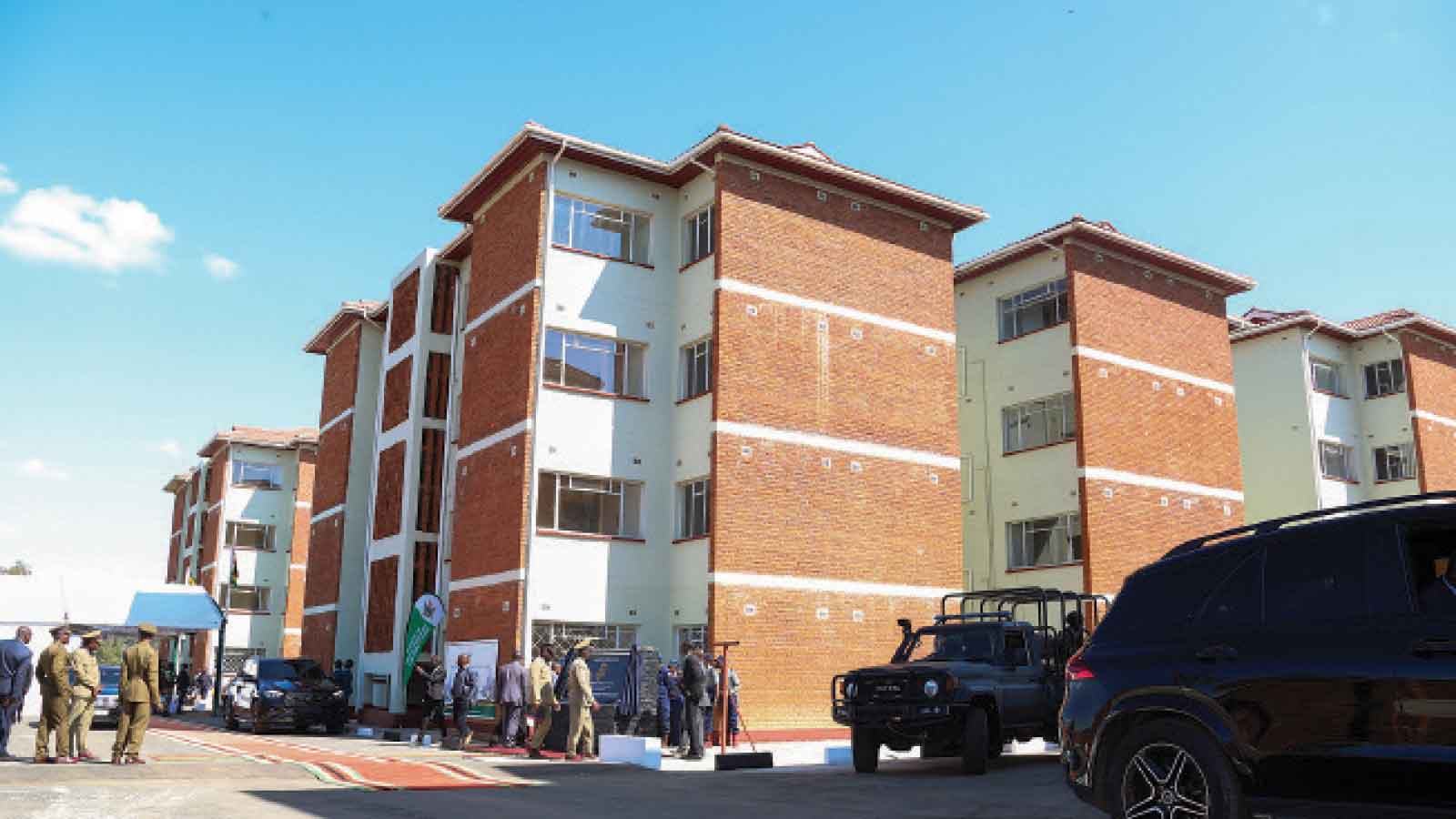
Zhemu Soda
ALLOW me to acknowledge the significant milestones we have collectively achieved — working hand-in-hand with our partners in human settlements delivery.
Among these achievements are:
Zimbabwe’s election to the UN-Habitat Executive Board for the next five years, representing the Southern Region of African States. This enhances the Government’s engagement and re-engagement efforts while demonstrating growing international confidence in Zimbabwe.
Securing a facility through Treasury to increase our shareholding in Shelter Afrique Development Bank from 1,25 percent to 5 percent, valued at US$8,8 million, with support from the Arab Bank for Economic Development in Africa (BADEA). This milestone will unlock greater access to housing finance for local developers and financial institutions.
Delivery of over 80 percent of the National Development Strategy 1 (NDS1) target of one million housing units by 2025 — a commendable achievement.
Capacitation of the Urban Development Corporation (UDCORP) through the purchase of four blocks (16 units each) of Manresa Flats, totalling 64 units. This has enhanced the Government’s pool housing stock and enabled UDCORP to unlock resources for the Knockmalloch Project, which has made significant progress in Phase 1.
Facilitation of issuance of title deeds: The ministry set a target of 2 000 properties for title deed facilitation in 2025. To date, 1 571 properties are ready for transfer.
Rent Regulations Amendment has been approved by the Attorney-General and is now at the gazetting stage.
Presidential Title Deeds Programme (Cowdray Park, Bulawayo): A total of 8 000 securitised offer letters have been issued to beneficiaries out of 13 000, under the Kwangu/Ngakwami Presidential Title Deeds initiative.
Maintenance of Government properties: a total of 234 houses were maintained, comprising 29 rehabilitations and 205 major maintenance works.
Completion of 37 houses for flood victims in Nsungwale, Binga — Successfully handed over to beneficiaries this year.
As we embark on formulating our new strategic plan, it is imperative that we draw lessons from the implementation of the National Development Strategy 1 (NDS1), consolidate our strengths and address areas of improvement.
I wish to highlight several key areas that deserve our focused attention.
Promoting densification
As we continue to tackle the ever-changing housing backlog, we must adopt strategies that maximise land utilisation.
Densification should become central to our planning, allowing us to provide more housing units without excessively consuming prime land.
Compact, well-planned settlements not only accommodate more people, but also support efficient infrastructure development and sustainable urban growth.
We need to develop and implement a comprehensive plan to ensure the effective realisation of the 40 percent densification requirement outlined in the Zimbabwe National Human Settlements Policy, together with its other key provisions.
This involves promoting coordinated efforts among relevant stakeholders, aligning planning processes with policy objectives and monitoring progress to guarantee that densification and sustainable human settlement goals are achieved in practice.
Presidential Title Deeds Programme
This flagship programme is a multi-stakeholder effort involving various ministries and private players.
Let us ensure that our planning provides the technical expertise and institutional coordination necessary for the effective issuance of title deeds.
The programme must continue gaining traction and deliver tangible results for our citizens.
His Excellency, the President of the Republic of Zimbabwe, Dr Emmerson Dambudzo Mnangagwa, has great interest in ensuring that the greater part of our citizens do obtain security of tenure for their properties, so we need to ensure that we play our part accordingly.
The imbalance between human settlement expansion and supporting infrastructure is a ticking time bomb.
We must rethink how we synchronise housing development with essential infrastructure to create functional settlements.
Innovative models and sustainable financing mechanisms should be explored to ensure holistic and liveable settlements with attendant infrastructure.
Fulfilling global and regional commitments
Zimbabwe operates within a global context.
Having ratified several international and regional housing and urban development protocols, we must ensure that our strategic plan captures these obligations.
We should budget for our subscriptions and maximise the benefits of bilateral and multilateral agreements to enhance housing delivery.
Let us also be cognisant of our role in institutions such as UN Habitat, as well as Shelter Afrique, and also ensure that we participate meaningfully and meet the obligations required of us as a country.
The time has come to transform our construction approaches through modern, efficient and sustainable technologies.
Let us explore innovative building materials and methods that reduce costs, promote environmental stewardship and enhance knowledge transfer within the local construction industry.
Our collaboration with the built environment fraternity needs to grow beyond the current setup so that we open up more opportunities for human settlements delivery to thrive and leverage research and collaboration with stakeholders and think-tanks while ensuring adherence to set standards.
Revitalising rural settlements
Our rural communities remain integral to national development.
True to the mantra of “leaving no one and no place behind”, we must devise inclusive strategies that cater to rural housing needs.
We must support the ongoing modernisation of rural homesteads and provide technical guidance to citizens investing in rural housing projects.
Rural transformation is a key pillar in achieving balanced national development.
Under NDS1, the target of one million housing units was a shared goal between the Government, the private sector and the public.
Collaboration remains essential.
We must, therefore, continue nurturing partnerships and designing human settlement projects through PPPs.
The growing participation of the financial services sector and individual developers in human settlements delivery presents an opportunity we must seize.
I am pleased to note that, as a Class A shareholder in Shelter Afrique Development Bank, Zimbabwe’s financial institutions now have better access to project funding.
In 2025 alone, US$25 million was disbursed to CBZ and Crown Bank, with US$12 million earmarked for ZB Bank.
Let us ensure that approvals and administrative processes remain efficient to sustain this momentum.
Accommodation for Government employees
Providing decent housing for civil servants remains a critical priority.
Let us leverage the presence of the Ministry of Finance, Economic Development and Investment Promotion and the Office of the President and Cabinet to deliberate on strategies to accelerate delivery on stalled, ongoing and new projects.
Their collaboration and guidance will be instrumental in realising this goal.
The Second Republic has made clear commitments to deliver tangible development outcomes.
We cannot allow the culture of stalled projects to persist. Let us identify practical solutions to revive incomplete housing projects and eliminate bottlenecks.
No Zimbabwean should live under unsafe or inhumane conditions, such as those seen in Kasese living under pylons.
Let us uphold our pledge to deliver dignified shelter for all.
Strengthening UDCORP’s institutional capacity
UDCORP plays a crucial role in our housing delivery value chain.
We must ensure that the corporation adheres to sound corporate governance principles and successfully implements its turnaround strategy.
The progress witnessed in the Knockmalloch project is commendable, and we should continue to provide strategic oversight and support as they rebuild their brand and address legacy issues.
The ministry successfully commemorated the belated World Habitat Day on November 13, 2025 in Umguza district, Matabeleland North province. The global observance was held under the theme “Urban Crisis Response”.
It underscored the importance of functional, compliant and resilient settlements.
Let us apply these principles in our future planning and implementation.
As we look ahead to the 2026-2030 strategic period, let us remain united in purpose, innovative in thought and diligent in execution.
The task before us is great, but our collective will and expertise are greater.
Together, we can and shall deliver on our mandate to provide decent, affordable and sustainable housing and social amenities for all Zimbabweans.
Zhemu Soda is the Minister of National Housing and Social Amenities. He delivered these remarks recently during the ministry’s strategic planning workshop for the period 2026-2030.



