

 Online Reporter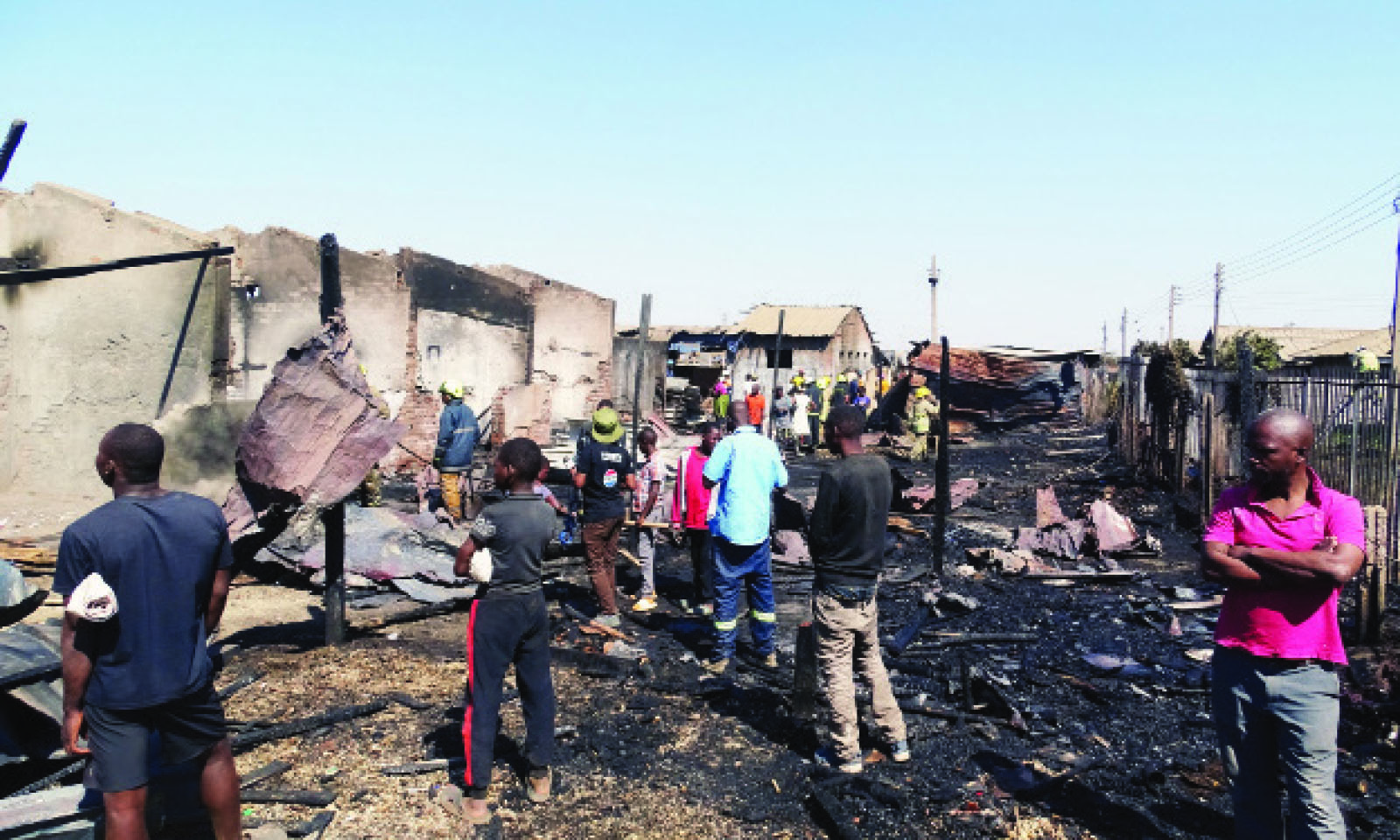
Lynnet Khaka and Takunda Gambiza
Every time an inferno rips through Glen View 8 Home Industry Complex, Harare’s largest informal furniture market, the same haunting question resurfaces: should the craftsmen and traders who have built their lives here be relocated to a safer space, or is there another way to end the cycle of destruction?
For nearly two decades, the complex has been the beating heart of Zimbabwe’s furniture-making industry — a sprawling hub where timber, steel and sweat are transformed into wardrobes, beds and sofas that furnish homes across the country.
Yet, it has also become a graveyard of ambition.
Since its establishment, at least 15 fires have reduced millions of dollars’ worth of goods to ashes, the most recent blaze on Sunday destroying furniture worth over US$10 000.
The latest blaze has prompted authorities to take decisive action.
More than 4 000 artisans and craftsmen are set to be relocated to the nearby Chemhanza Grounds in Glen View 3, paving the way for the redevelopment of Glen View 8 into a modern small and medium enterprises (SMEs) facility.
Harare City Council Small to Medium Enterprises Committee chairperson, Councillor Denford Ngadziore, said the relocation is expected to begin “within a few days.”
“As council we had a joint committee where we resolved to relocate all the 4 000 traders who are here,” he said.
“The land at Chemhanza is five hectares, enough to fit all the traders. Within a few days we should be done, then the traders will be relocated.”
He said ablution facilities and potable water are already being installed at Chemhanza, while designs for a redeveloped Glen View 8 facility — with modern fire hydrants, safety infrastructure and structured trading spaces — have been approved.
The intervention, he added, is being done in collaboration with Government agencies, including the Department of Civil Protection, after President Mnangagwa declared Glen View 8 a state of disaster.
But while relocation may look like the long-awaited solution, not all traders are convinced.
For many, the fires have already left deep scars.
“I watched helplessly as my stock worth nearly US$8 000 turned into ashes.
“I have no insurance, and this business was my only source of income,” said furniture dealer Mr Tawanda Moyo.
Maria Manyika, another trader, said she had lost count of how many times fire had gutted her stand.
“Most of the fires happen at night. I fear another one might strike at any time. Even if they relocate us, what guarantee is there that the same problem won’t follow?” she asked.
For many entrepreneurs, the losses have been crippling, but the uncertainty of relocation has sparked new anxieties.
While some see moving to Chemhanza as a necessary step, others argue it could dismantle an economic ecosystem that has defined Glen View 8 for years.
“The move to relocate us is a good initiative, but it might affect us financially. I am already struggling with rent and school fees after losing everything in Sunday’s fire,” said one trader who requested anonymity.
“We just need more time to prepare.”
City of Harare officials insist that the congestion, lack of fireproofing and poor planning at the complex have turned it into a tinderbox.
More than 4 000 traders are crammed into makeshift wooden stalls, many of them built side-by-side with no firebreaks or escape routes.
Fuel, thinners, paint, sawdust and other highly combustible materials are often stored under the same roofs as finished products, creating the perfect conditions for a runaway blaze.
With no proper hydrants, fire-resistant walls or accessible service lanes for emergency vehicles, the fire brigade repeatedly struggles to contain outbreaks, allowing flames to spread unchecked.
Council officials argue that the very design of Glen View 8 was flawed from the beginning.
What started as an informal cluster of workshops nearly two decades ago grew haphazardly into a vast, unregulated industrial site without adherence to building codes or safety standards.
Over the years, narrow passageways have been walled off by traders seeking to maximise space, further complicating access.
The risks are compounded by poor sanitation and inadequate utilities.
Traders often rely on open fires or improvised electrical connections for heating and lighting, while water supplies at the site are unreliable.
Fire hydrants that were once functional have long since been vandalised or blocked, leaving firefighters dependent on water bowsers that take time to arrive on site.
Authorities say these factors have made it virtually impossible to guarantee safety at Glen View 8 in its current form.
To them, relocation is not simply a policy choice but a matter of urgency, especially after President Mnangagwa declared the complex a state of disaster following repeated infernos.
Council says the redevelopment of the site into a modern facility will finally address these long-standing structural weaknesses.
Residents’ associations, however, caution that relocation alone will not solve the problem.
They argue for a holistic approach — redesigning trading spaces, enforcing fire safety, investing in firefighting equipment and ensuring that any new sites are properly serviced.
Combined Harare Residents Association director Mr Reuben Akili stressed the need for dialogue.
“Relocation must be done transparently and through consultation, so that the original occupants are not disadvantaged,” he said.
“Government and council could even create safer satellite industrial parks while gradually decongesting the current site.”
For traders like 29-year-old single mother Ruvimbo Chivasa, the uncertainty is personal.
“My clients know me here. If we are moved to the outskirts, will they follow me? Will I still be able to sell enough to feed my family?”
What is clear is that time is running out.
Each blaze not only wipes out stock and stalls but also erodes trust in the city’s ability to protect its entrepreneurs.
The resilience of Glen View’s traders has been remarkable, but resilience alone cannot substitute for policy.
For now, Glen View 8 remains both a testament to Zimbabwean ingenuity and a stark reminder of the human cost of inaction.



That we have had 15 fires already and nothing has been done shows the height of stupidity of the traders. By now they should have organised themselves to develop a safer place to operate from. If they can make furniture for the market it shows they are clever. Why they don’t think about ways to avoid fires is just surprising. Waiting for council or government doesn’t work.