
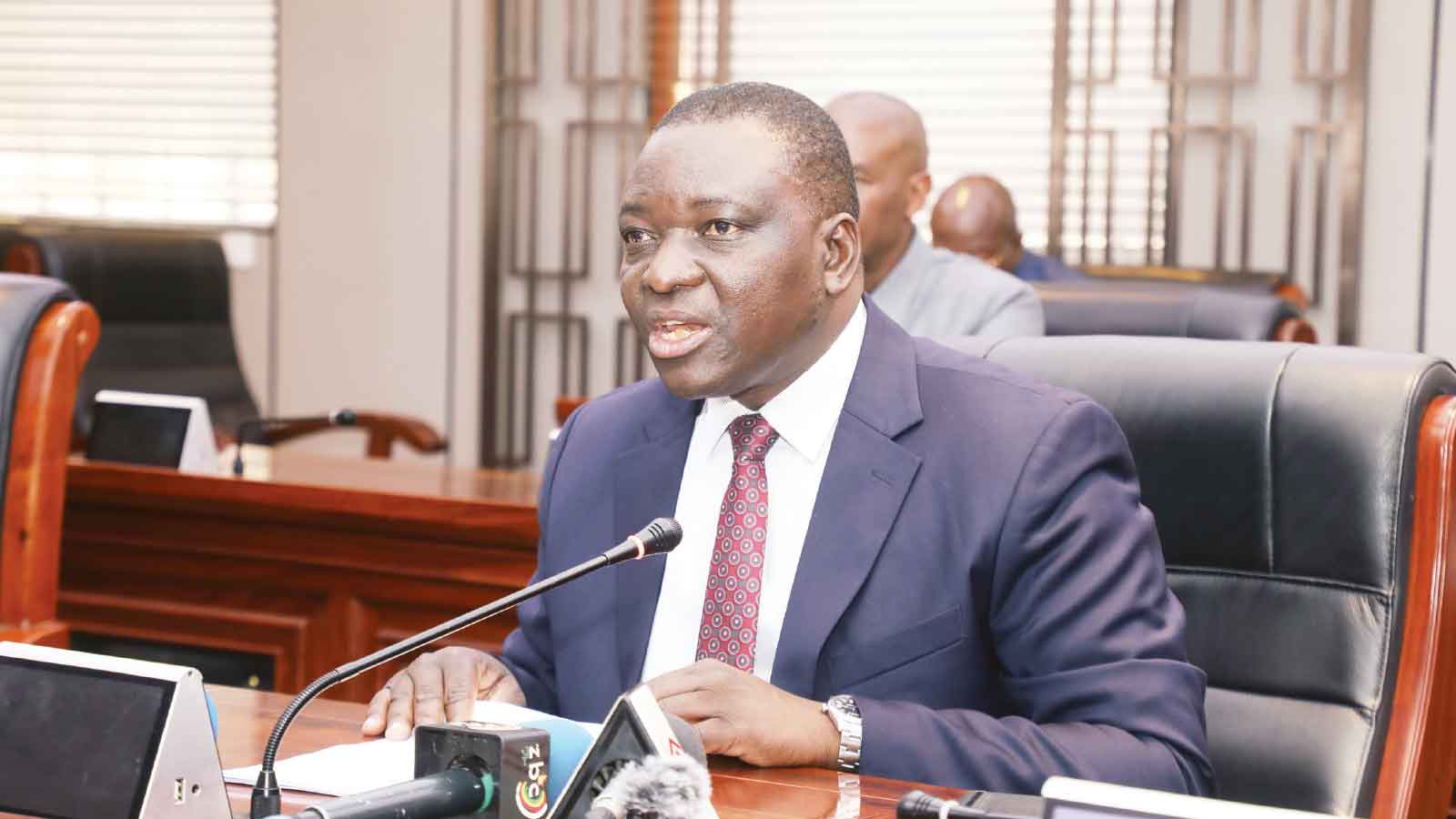
We publish here 22nd the post Cabinet media briefing presented by Information, Publicity and Broadcasting Services Minister, Dr Zhemu Soda, in Harare yesterday.
Cabinet noted and approved an update on the 2025/2026 summer crop marketing and 2026 winter crop production plan, as presented by the Minister of Agriculture, Mechanisation and Water Resources Development, Honourable Dr Anxious Jongwe Masuka.
Based on the second round of Crop, Livestock and Fisheries Assessment Report, the country is expecting a surplus Strategic Grain Reserve ranging between 550 945 tonnes and 964 945 tonnes at varying consumption levels. Government stocks held at the Grain Marketing Board as at July 1 stood at 194 142 tonnes and the Grain Marketing Board also holds a total of 67 929,59 tonnes in third-party grain stocks since the completion of the AI-powered silos, which capacitated the entity to provide commercial storage services directly or through the warehouse receipt system.
To date, a total of 1 963 292 hectares, 552 290 hectares and 56 562 hectares of maize, sorghum and soyabeans respectively, has been harvested, with respective production of 2 683 907 tonnes, 338 785 tonnes and 119 067 tonnes.
Cabinet advises that as at July 1, a total of 260 444 tonnes of crops comprising maize, soyabean, sorghum and sunflower had been formally marketed, compared to the 148 134 tonnes marketed at the same time in 2025, translating to a 76 percent increase in the marketed crops. The Grain Marketing Board continues to make efforts to ensure timely payments for deliveries.
A total of 346,2 million kilogrammes of tobacco had been sold as at July 1, at an average price of US$2,50/kg, reflecting a 6 percent increase in volume and a 25 percent reduction in average price compared to the previous season. Tobacco exports remain firm, with cumulative tobacco exports as at 1st July, 2026 reaching 112 million kilogrammes valued at US$683 million at an average price of US$6,09/kg.
Wheat Production is again expected to scale new heights after 133 048 hectares were planted during the current season, surpassing the targeted 125 000 hectares by 6 percent. Barley production remains focused on supplying the brewing industry and, accordingly, a total of 7 013 hectares has been planted.
Meanwhile, a total of 243 850 tonnes of Irish potato production is expected from the 9 000 hectares planted. To date, 100 055 tonnes has been produced from 3 450 hectares, at an average yield of 29 tonnes per hectare, compared to the 26 tonnes realised in 2025.
GASTRONOMY TOURISM STRATEGY
Cabinet approved the Gastronomy Tourism Strategy, as presented by the acting chairperson of the Cabinet Committee on Economic Development, and Minister of Local Government and Public Works Honourable Daniel Garwe.
Cabinet highlights that gastronomy tourism has been designated a priority high-value product to accelerate Zimbabwe‘s transformation into a competitive and sustainable tourism destination by 2030. Zimbabwe’s gastronomy has emerged as a transformative force in the global tourism landscape, positioning the country as a hub of traditional culinary excellence. Rooted in Ubuntu, the tradition of sharing meals is a symbol of care and hospitality, uniting communities and generations. Gastronomy Tourism presents a practical and scalable pathway for delivering rapid socio-economic outcomes across communities and sectors. To this end, the Zimbabwe Gastronomy Tourism Strategy (2026- 2030) provides a structured policy framework to guide the development, coordination and institutionalisation of gastronomy tourism across the tourism value chain.
The objectives of the Zimbabwe Gastronomy Tourism Strategy (2026-2030) are as follows: to develop contemporary culinary expertise and innovation that positions Zimbabwe as a regional hub for gastronomy tourism; to establish gastronomy tourism as a catalyst for inclusive growth by strengthening tourism value chains; to design and diversify gastronomy tourism experiences that deliver Zimbabwe authentic immersive encounters; and to preserve and promote Zimbabwe’s cultural food heritage as a key driver of tourism growth.
The guiding principles for the strategy include the following: culture and heritage preservation, while fostering cultural innovation and experiences; inclusivity through empowering local communities (women, youth and persons with disabilities) by creating pathways for small businesses; fostering partnerships among government, private players and local communities to strengthen the gastronomy tourism value chain; and promoting gastronomy to drive economic growth for future generations and integrating sustainable practices to develop Zimbabwe’s gastronomy.
The nation is being informed that the Zimbabwe Gastronomy Tourism Strategy (2026-2030) is anchored on the following strategic pillars:
Development of contemporary culinary expertise and innovation that positions Zimbabwe as a regional hub for gastronomy tourism; revival and institutionalisation of Service Excellence Schools; strengthening joint partnerships with research institutions, academia and communities; positioning gastronomy tourism as a catalyst for rural industrialisation and community development through the strengthening of tourism value chains; fostering sustainable gastronomic waste management practices and promoting Zimbabwe’s cultural food heritage as a key driver of tourism growth. Cabinet highlights that under the contemporary culinary expertise and innovation pillar, Government will expedite the establishment and operationalisation of the National Tourism (Culinary Arts) Academy in Victoria Falls. The academy will address skills gaps in professional culinary arts, food presentation, sustainable sourcing and gastronomy tourism management.
The strategy will therefore position Zimbabwe cuisine as an attractive, and competitive offering on both the domestic and international markets.
UPDATE ON THE REPATRIATION AND RE-INTEGRATION OF ZIMBABWEAN NATIONALS FROM THE REPUBLIC OF SOUTH AFRICA
Local Government and Public Works Minister Daniel Garwe presented an update report on the repatriation and re-integration of Zimbabweans from South Africa, which was adopted by Cabinet.
The nation is advised that a Whole-of-Government and whole-of-society approach has been adopted for the repatriation and re-integration exercise as well as in-country coordination arrangements in order to facilitate safe, orderly and dignified movement of Zimbabweans from the diaspora. To that end, an Inter-Ministerial Committee was established at the Beitbridge Reception Centre to oversee the receiving, registration and transportation of the returnees and a wide range of interventions are being implemented to facilitate the repatriation and re-integration exercise including the following:
- Establishment of an inter-ministerial 24-hour command centre at Beitbridge Boarder Post to coordinate the response;
- Deployment of 50 ZUPCO buses to transport returnees from Beitbridge reception centre to their respective provinces;
- Provision of reception, registration, profiling, screening, social protection, psychosocial support and re-integration services at Beitbridge reception centre and at receiving district centres;
- Provision of temporary accommodation facilities;
- Establishment of a temporary clinic and deployment of ambulances for emergency response;
- Hiring of mobile ablution facilities to improve sanitation services; and
- Continuous mobilisation of resources to sustain transportation, reception and re-integration operations.
The private sector, United Nations Agencies, other development partners and well-wishers are also complementing these Government efforts.
To date, about 21 291 Zimbabwean nationals have been repatriated through Government-assisted arrangements since the commencement of the exercise on May 28, 2026, while about 56 832 returned independently through self-repatriation mechanisms during the same period.
The nation is also advised that the Malawian nationals who had been stranded at Dulibadzimu in Beitbridge, have since been successfully repatriated through the intervention of the relevant diplomatic mission.
BRIEF ON THE INAUGURAL NATIONAL MICRO, SMALL AND MEDIUM ENTERPRISES AND COOPERATIVES INDABA
As part of efforts to promote private-sector-led economic growth, Cabinet approved the brief on the inaugural National Micro, Small and Medium Enterprises and Cooperatives Indaba to be held from July 16-17, which was presented by Women Affairs, Community, Small and Medium Enterprises Development Minister Monica Mutsvangwa.
The objective of the Indaba is to enhance the contribution of MSMEs and cooperatives in inclusive economic transformation and sustainable development through fostering strategic partnerships. The indaba will attract over 1 500 delegates drawn from the MSMEs and cooperatives sector; Government; private sector; development partners; and academia from across the country. The expected outcomes include enhanced visibility and recognition of the MSMEs and cooperative sector’s contribution to national development; increased commitments towards improved access to finance, digitalisation, markets and infrastructure support; improved coordination mechanisms in the sector; and increased collaboration and partnerships within the MSMEs and cooperatives ecosystem.
PRINCIPLES OF THE NATIONAL BIOTECHNOLOGY AUTHORITY BILL
Cabinet received and approved the principles of the National Biotechnology Authority Amendment Bill, as presented by the Minister of Higher and Tertiary Education, Innovation, Science and Technology Development, Honourable Dr Fredrick Makamure Shava.
The Bill seeks to amend the National Biotechnology Authority Act [Chapter14:31] by expanding the scope of the Act in order to align it with the provisions of the Constitution of Zimbabwe and to include emerging biotechnologies.
The amendments will also align the Act with Education 5.0 and strengthen the enforcement of the National Biotechnology Authority regulations, including through the introduction of civil penalties for which the authority can impose fines directly.
REPORT ON THE SADC VIRTUAL EXTRAORDINARY SUMMIT OF HEADS OF STATE AND GOVERNMENT: 29 JUNE 2026
The Minister of Foreign Affairs and International Trade, Prof Dr Amon Murwira presented the report on the SADC virtual extraordinary summit of Heads of State and Government held on Jun e29, which Cabinet noted.
The objective of the extraordinary summit was to consider the report by the chairperson of the Organ on Politics and Security situation in Madagascar following the SADC fact-finding missions to Madagascar. The report noted that there was relative peace and security in Madagascar and that the transitional authorities had demonstrated commitment to implement the programme for the refoundation of Madagascar.
The president of the refoundation of Madagascar welcomed the support extended by SADC and other partners and underscored the importance for all assistance to remain apolitical and be channelled through formal government structures. The refoundation government was urged to remain committed to a clear, time-bound, transparent and inclusive reform process.
REPORT ON THE 50TH DAR-ES-SALAAM INTERNATIONAL TRADE FAIR
Cabinet noted and approved the report on the 50th Dar-es-Salaam International Trade Fair held from July 1 to 4 in Tanzania, as presented by the Minister of Foreign affairs and International Trade, Honourable Prof. Dr Amon Murwira.
Zimbabwe participated at the Trade Fair under the leadership of the Minister of Foreign Affairs and International Trade. The objectives of the mission were to advance Zimbabwe’s Constitutional mandate for regional economic integration; to leverage the golden jubilee of Tanzania’s flagship trade exhibition; to showcase Zimbabwean innovation, goods and services; and to consolidate strategic partnerships by engaging counterparts on priority trade and investment opportunities, thereby reinforcing Zimbabwe’s diplomatic presence and credibility in regional and global markets.
On the margins of the fair, senior officials engaged their counterparts to advance the agenda for the upcoming Zimbabwe-Tanzania Joint Permanent Commission of Cooperation, scheduled for July 16- 18. The discussions advanced some critical trade facilitation initiatives which the two sister republics are jointly working on.
The delegation therefore successfully broadened global market access and secured strategic investment interest, thereby transitioning historic liberation bonds into deepened economic cooperation for mutual prosperity.
REPORT ON THE 18TH MEETING OF THE COUNCIL OF MINISTERS RESPONSIBLE FOR TRADE UNDER THE AFRICAN CONTINENTAL FREE TRADE AREA
The Minister of Foreign Affairs and International Trade also presented the report of the African Continental Free Trade Area (AfCFTA) 18th Meeting of the Council of Ministers responsible for Trade, which was held in Abuja, Nigeria on the 2nd of July, 2026.
The meeting advanced Zimbabwe’s constitutional commitment to regional economic integration and fulfilled its national obligations as a member State of the African Union.
Central to these objectives was a comprehensive review of the progress made in transitioning the AfCFTA from the negotiation to implementation phase, alongside an assessment of how the evolving global trade environment impacts Africa’s industrialisation, regional value chains and intra-African trade.
To further drive continental growth, the council adopted the AfCAFTA Agri-trade Action Plan, a strategy designed to transform agriculture into a driver of agro-industrialisation and food security, a move Zimbabwe strongly endorsed to strengthen regional value chain. The meeting concluded with the unanimous endorsement of Zimbabwe to host the 19th Council of Ministers Meeting in Victoria Falls in 2027 as well as hosting the 2029 Intra-African Trade Fair.
BRIEF ON RESUMPTION OF AIR ZIMBABWE OPERATIONS BETWEEN HARARE AND LONDON
Transport and Infrastructural Development Minister Felix Mhonapresented the report on the resumption of Air Zimbabwe operations between Harare and London.
The nation is advised that the airline will resume operations by end of this month and will utilise a leased Airbus A330-300 aircraft from Plus Ultra in Spain with combined 302 seats, having a configuration of 30 business class and 272 economy seats.
The airline will initially operate three weekly flights between Harare and London on Wednesdays, Fridays and Sundays.
This positive outcome demonstrates the utility of the President’s engagement and re-engagement policy and is testament to his continued commitment to positioning Zimbabwe as a competitive destination.