
Martin Kadzere
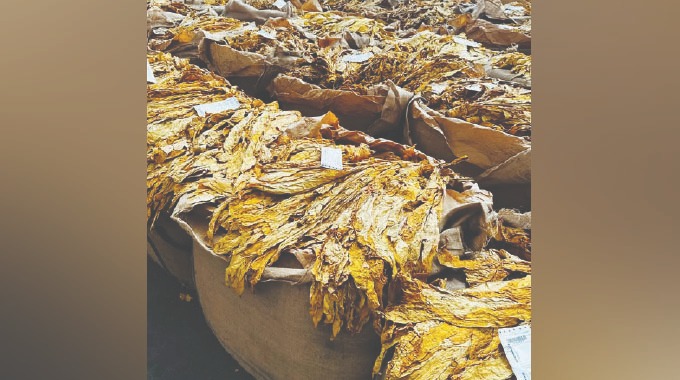
Zimbabwe must diversify its tobacco production by shifting from reliance on Flue-Cured Virginia volumes and embracing alternative varieties to unlock global manufacturing competitiveness and halt rampant deforestation, an industry executive has said.
Speaking at the recently held Mid-Term Review and High-Level Policy Dialogue, Chevron Tobacco executive director Mr Tapiwa Masedza said a strategic focus on oriental, sun-cured and burley tobacco was critical if the country is to transform from a raw leaf exporter into a dominant global cigarette manufacturing hub.
He argued that while Zimbabwe’s recent record production of 355 million kilogrammes represents a massive leap, competitive advantage in manufacturing requires a full basket of the varieties that constitute premium global cigarette recipes.
Tobacco is a major pillar of Zimbabwe’s economy. It is the country’s largest agricultural export after gold.
“We should look at other tobaccos which can give us a more competitive advantage in terms of blend type and manufacture,” Mr Masedza said.
To achieve this, he highlighted three distinct varieties that Zimbabwe needs to revive aggressively or scale up to broaden its market reach.
Premium oriental tobacco, which has been historically grown in localised pockets, remains highly sought after by global merchants for its distinct blending properties despite being a complex variety to cultivate.
Additionally, sun-cured tobacco leaf is characterised by an intense aroma and unique flavour profile, but it is currently locked in a severe global supply deficit with market demand far outstripping available stocks.
Burley tobacco, once a mainstay of Zimbabwe’s agricultural economy, is currently mounting a significant resurgence on the back of new, structured contract farming value chains.
Beyond the commercial blending advantages, Mr Masedza emphasised that a major shift toward oriental, sun-cured and burley varieties directly answers global environmental, social and governance (ESG) demands.
Unlike Virginia tobacco, which relies heavily on wood energy for flue-curing – a primary driver of agricultural deforestation across Zimbabwe’s smallholder farming regions – these three alternative varieties are cured using natural air and sunlight.
“If you look at how they fit into global sustainability, these three – sun-cured, burley, and oriental – do not use fire,” Mr Masedza noted, adding that because “they do not use fire, meaning we bypass the issues of deforestation.”
By mitigating the carbon and deforestation footprint linked to smallholder FCV farming, Mr Masedza believes Zimbabwe can significantly elevate its market positioning.
A sustainable, multi-variety tobacco ecosystem would incentivise global tobacco majors to set up local cigarette and cut-rag factories rather than just shipping out raw leaf.
“By that, Zimbabwe can then become very competitive in terms of people coming in and saying, ‘Let me set up my cigarette factory here in Zimbabwe.’ These are the things that we really want to look at,” Mr Masedza said.
The call for value addition comes as Zimbabwe pushes forward with its National Development Strategy 2 initiatives to process 30 percent of its tobacco locally.
Currently, despite producing record-breaking harvests that generate over US$1 billion annually for growers, more than 90 percent of the country’s tobacco is exported in an unprocessed, raw form, surrendering the highest profit margins to non-producing countries that handle the final manufacturing stage.